Siddhartha
What's it about
What if the path to inner peace isn't about following a guru, but about forging your own? Stop searching for external answers and discover the profound wisdom that only comes from direct experience. This is your guide to finding truth on your own terms. Journey with Siddhartha, a young man who tries it all—asceticism, wealth, and love—only to find enlightenment in the most unexpected place. You'll learn why failure is a better teacher than success and how embracing the simple flow of life can lead to ultimate fulfillment.
Meet the author
Winner of the Nobel Prize in Literature, Hermann Hesse is one of the 20th century's most influential writers on the themes of authenticity and spiritual awakening. Born to missionaries with deep connections to India, Hesse's life was a personal search for meaning outside of traditional structures. This profound inner journey and his immersion in Eastern thought became the heart of his masterpiece, Siddhartha, a timeless guide to finding one's own truth.
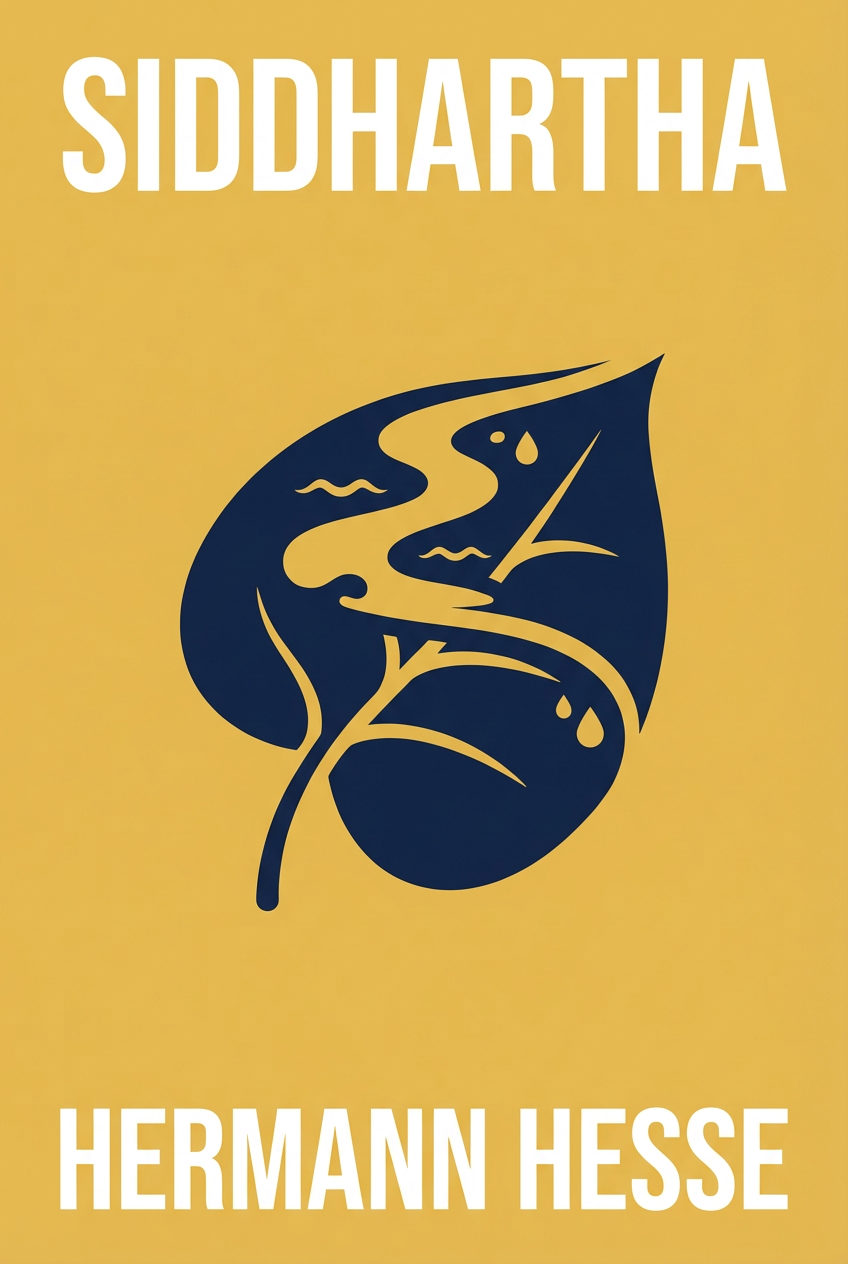
The Script
An apprentice cartographer is given the most prestigious assignment of his young career: to create the definitive map of the great, winding river that serves as the continent's lifeblood. He is granted access to every conceivable resource—decades of geological surveys, advanced topographical data, and the meticulous, hand-drawn charts of every expedition that came before him. For months, he locks himself away, synthesizing the information. He renders each bend with geometric precision, calculates the depth of every channel, and labels each tributary with scholarly care. The final parchment is a marvel of technical accuracy, a flawless, god's-eye view of the river in its entirety.
He presents the map to his mentor, beaming with pride. The old master unrolls the parchment, tracing the river's path with a gnarled finger. After a long silence, he looks up and asks a single, devastating question: "But have you felt its current pull you downstream?" The apprentice falters. He can recite the river’s flow rate for any season, but he has never actually set a boat upon its waters. The mentor explains that a map, no matter how perfect, only captures a frozen moment from a safe distance. It communicates facts, not wisdom. It cannot convey the river’s spirit—the way the morning mist clings to the water, the sudden fury of an unseen eddy, or the profound peace of surrendering to its flow. To truly know the river, he insists, you must journey with it. This chasm between inherited knowledge and lived experience, between the map and the territory, is a fundamental human struggle.
This very struggle with inherited maps of meaning consumed the German writer Hermann Hesse in the aftermath of World War I. A novelist and poet already known for his explorations of the individual's inner life, Hesse found himself in a profound spiritual crisis. The traditions and doctrines of the West felt like hollowed-out structures, offering answers that no longer resonated with the questions his soul was asking. He saw a society desperately trying to rebuild using old blueprints for a world that no longer existed. Turning his gaze eastward, he immersed himself in the philosophies of India to understand a different approach to the search itself. From this deep study, he crafted Siddhartha, a deceptively simple story about a man who rejects every path offered to him—the path of ritual, the path of self-denial, the path of worldly pleasure—in order to finally learn from the only teacher that cannot lie: the river of his own experience. The book became his meditation on the idea that true wisdom can never be received; it must be discovered.
Module 1: The Path of Rejection
We begin with Siddhartha, a brilliant young man born into the highest priestly caste. He has everything. He knows the holy texts. He masters the rituals. He is admired by everyone. Yet, he feels an agonizing emptiness inside. The answers he has been given do not match the questions his soul is asking. This leads him to a radical conclusion.
The first core insight is that learned knowledge can lead to profound emptiness. The rituals, the scriptures, the wisdom of his elders—they are like a beautiful vessel with nothing inside. They describe the water of life but do not quench his thirst. He realizes the necessity of experiencing the ultimate truth, the Atman, directly. The map is not the territory. For the modern professional, this is a powerful warning against collecting frameworks and certifications without genuine application. You can read every book on leadership, but it means nothing until you face the messy reality of leading a team through a crisis.
So, what does he do? He decides to leave. This brings us to the next point. True understanding demands personal, direct experience. Siddhartha’s father forbids him from leaving to join the Samanas, a group of wandering ascetics. Siddhartha doesn't argue. He doesn't debate. He simply stands in one spot all night, his resolve so total and silent that his father has no choice but to relent. He understands his son has already left spiritually. It is the clear recognition that no one can walk your path for you. You have to take the first step, even if it means disappointing those you respect.
Now, let's turn to his time with the Samanas. This is a path of extreme self-denial. He fasts for weeks. He endures blistering heat and freezing cold. He meditates to escape his own consciousness. The goal is to kill the self, to annihilate the ego through sheer force of will. But after years of this, he discovers a startling truth. Radical self-denial is just another form of escape. He tells his friend Govinda that his practices are no different from a drunkard escaping his troubles with rice wine. It's a temporary flight from the self, a brief numbing of the pain of existence. But the self always returns. The suffering always returns. He learned many tricks to deceive his ego, but he never found the fundamental truth he was seeking.
This journey of rejection culminates in his meeting with the Buddha, Gotama. Siddhartha recognizes immediately that this man has achieved enlightenment. His peace is palpable. His teachings are flawless, a perfect, logical system for ending suffering. Govinda is captivated and joins the Buddha's followers. But Siddhartha does not. Here lies the final, most audacious insight of this phase. Even perfect teachings are useless without personal discovery. He tells the Buddha that his doctrine is brilliant, but it cannot convey the one thing that matters: the experience of enlightenment. That is something the Buddha had to find for himself, and it's something Siddhartha must find for himself, too. He walks away from the most enlightened man on earth, completely alone, ready to finally become his own teacher.