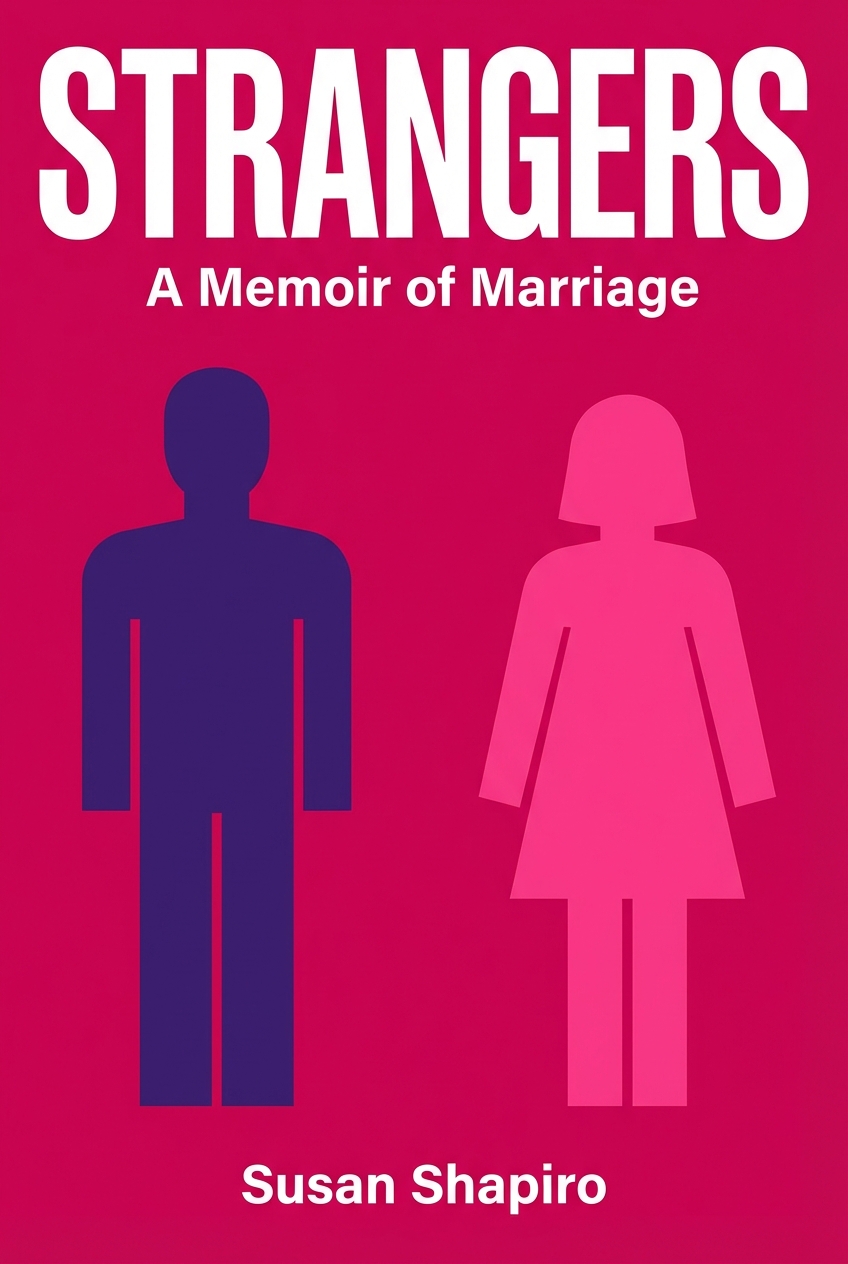
Strangers
A Memoir of Marriage
What's it about
Is your marriage stuck in a rut, or do you feel like you've lost the spark that once defined you and your partner? Discover how a daring, unconventional experiment—living apart while staying together—can reignite passion, foster independence, and save a relationship on the brink. This memoir unpacks the surprising journey of a couple who challenged marital norms to find themselves and each other again. You'll learn how setting boundaries, pursuing individual goals, and embracing creative separation can transform a stale partnership into a thriving, deeply connected union.
Meet the author
Susan Shapiro is an award-winning professor at The New School whose popular "instant gratification takes too long" writing method has launched the careers of many bestselling authors. After twenty years of a difficult marriage, she used her own renowned technique to analyze its secrets, uncovering the hidden truths that threatened her partnership. Her honest exploration of love, therapy, and family history reveals how confronting the past is the only way to build a future together.
The Script
Every so often, a long-lost acquaintance resurfaces on a social media feed, their face a little older, their life condensed into a few curated photos. There’s a brief flicker of curiosity—a mental flip through a dusty Rolodex of shared memories—before you scroll on. But what happens when one of those ghosts isn't just a flicker? What if it's an unresolved chord from a pivotal time in your life, a question mark that has lingered for decades, quietly shaping your choices and coloring your relationships ever since? This is a splinter in the mind, a narrative with a missing final chapter. The absence of an ending becomes its own story, a persistent hum beneath the surface of an otherwise complete life, making you wonder if closure is a myth or something you must hunt down yourself.
That persistent hum became a roar for journalist and writing professor Susan Shapiro. After twenty years of a happy marriage, professional success, and a life she had meticulously built in New York City, she found herself obsessively Googling the man who had abruptly vanished from her life two decades earlier. This was a consuming mission that took over her life, leading her down a rabbit hole of private investigators and cross-country searches. Shapiro, who teaches the art of the personal essay, realized this obsession was more than just a story—it was an excavation of her own past and the universal need for answers. She wrote Strangers to explore why the ghosts of our past can hold such power over our present.
Module 1: The Anatomy of Addiction
The book immediately dismantles the simple idea that addiction is just a bad habit. Instead, it presents addiction as a complex, multifaceted tool we use to navigate the world. It’s a shield, a social key, and a form of self-medication all rolled into one. The first crucial insight is that addiction is often a substitute for intimacy and emotional expression.
For the author, Susan, smoking was a way to manage difficult feelings. Her first therapist noted she would light a cigarette during sessions to avoid talking about painful subjects, literally "inhaling her hurt instead of expressing it." This pattern extended to her romantic relationships. A substance abuse specialist bluntly tells her ex-boyfriend that love itself can be an addiction, using the language of dependency to describe their intense connection. This reframes addiction as a misguided search for connection and comfort.
Building on that, the book shows how addiction becomes deeply woven into our personal and social identity. Susan and her best friend, Claire, had chain-smoked together since they were thirteen. When Claire quits, Susan doesn't feel happy for her; she feels abandoned. The shared ritual was a pillar of their friendship. Its removal felt like a personal rejection. This reveals how much of our identity can be tied to these shared behaviors. Quitting is about changing who you are, and that can be terrifying.
And here's the thing: this identity is often constructed. As a teenager, Susan felt like an outcast—"ugly, fat, alone." A trip to Europe became her chance to reinvent herself. She lied about her age, smoked foreign cigarettes, and quoted French poetry. Smoking became a tool to craft a "cooler," more worldly persona. It was her armor, a prop that made her feel confident and protected. This constructed identity helped her escape deep-seated insecurities. For many, an addiction is the foundation of a carefully built self-image.
Consequently, quitting an addiction is a grueling psychological battle. Dr. Winters, a former smoker himself, is brutally honest about this. He tells Susan, "When you stop smoking, you’re not going to feel better. You’re going to feel like hell for a year." He argues that true recovery requires confronting the deep psychic issues behind the habit. The book details Susan's first smoke-free days as a nightmare of physical withdrawal—sweating, insomnia, irritability—and obsessive psychological torment. She compulsively eats junk food, researches heroin addiction, and feels a profound sense of loss. This illustrates that the real work of quitting is emotional, not just behavioral.