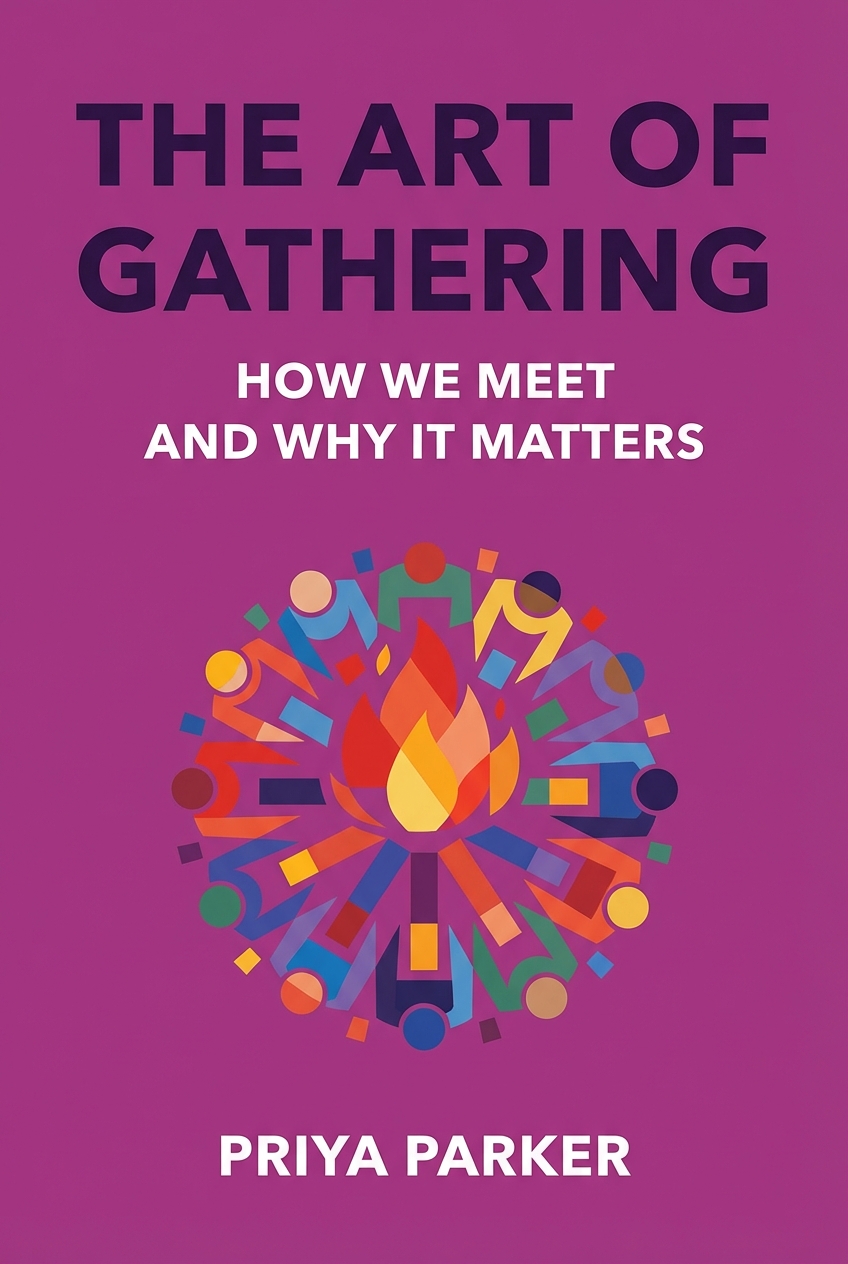
The Art of Gathering
How We Meet and Why It Matters
What's it about
Ever hosted a meeting or party that fell flat? Discover the secret to transforming any get-together from a dull obligation into a memorable, transformative experience. Learn how to ditch the stale routines and design gatherings that truly connect people and achieve their purpose. You'll get a step-by-step guide to crafting powerful gatherings, starting with defining a specific, disputable purpose. Parker reveals how to use thoughtful exclusion, create temporary alternative rules, and prime your guests for connection long before they arrive, ensuring every event you host is unforgettable.
Meet the author
Priya Parker is a master facilitator and strategic advisor who helps leaders and communities navigate complex conversations and create transformative gatherings for organizations like the World Economic Forum and the Museum of Modern Art. Her unique expertise stems from a background in conflict resolution and a bicultural upbringing, which gave her a firsthand understanding of how bringing people together thoughtfully can bridge divides and spark meaningful change. Parker has dedicated her career to decoding the anatomy of gatherings, guiding others to make their own events more purposeful and powerful.
The Script
Every year, a city planner pores over blueprints for a new public square. She meticulously designs the space for optimal foot traffic, placing benches under shade trees and ensuring walkways are wide and welcoming. The day it opens, however, something strange happens. People don't use the benches; they cluster on the low, wide retaining walls. They ignore the grand, open plaza, preferring to gather in a small, unintended alcove near a fountain. The plan, so perfect on paper, has met reality. The planner designed a space, but she failed to design the gathering itself. We do this all the time. We send out calendar invites for 'meetings,' plan 'parties,' and organize 'conferences,' focusing on the logistics—the what, where, and when. We pick the menu, the playlist, and the venue, assuming that the human connection will just magically happen once people are in the room. But more often than not, we're left with that same feeling as the city planner: a sense of polite, functional emptiness in a space that was meant for so much more.
This gap between our intentions and the actual experience of being together is precisely what Priya Parker has spent her life navigating. Parker is a professional facilitator who helps people have difficult and transformative conversations. Working with groups on sensitive issues from post-conflict peace dialogues to corporate boardroom showdowns, she noticed a universal pattern. The gatherings that succeeded were the ones with a clear, specific, and often daring purpose. She realized that most of us are gathering on autopilot, following inherited scripts without ever asking why we're truly coming together. Parker wrote The Art of Gathering to share the principles she discovered in these high-stakes environments, showing that with intention and a little bit of creative rebellion, any gathering can become memorable and meaningful.
Module 1: Find Your Purpose, Your Bouncer
The first, most critical step is to commit to a specific, bold purpose. We often mistake the category of a gathering for its purpose. A "birthday party" is a category. A "networking event" is a category. A "board meeting" is a category. These labels tell us nothing about why we should show up or what we hope to achieve.
This leads to gatherings about nothing. Think of a networking night where the purpose is "to help people meet." The result is often an awkward exchange of business cards. It fails to create any real connection. The author argues a purpose is distinct from a category. A deeper purpose might be "to build a tribe of collaborators who want to meet again" or "to get honest feedback on our product's biggest weakness." That changes everything.
To find your purpose, you have to drill down. Ask "why?" repeatedly. A neighborhood potluck is about more than just eating. Why have it? To reconnect after the school year. Why is that important? To forge community bonds that make the neighborhood safer. Now you have a real purpose.
From this foundation, a good gathering purpose is specific, unique, and disputable. "To celebrate love" is a nice but useless wedding purpose. It's indisputable. Who would argue against it? But what about "a ceremonial repayment to our parents for their support"? Or "a ritual to meld our two distinct tribes of friends"? These are disputable. They take a stand. They create energy and provide a clear filter for making tough decisions.
Here's the thing. Once you have this purpose, you must use it. Your purpose is your bouncer. It decides who gets invited, what you talk about, and where you meet. A purpose is a strict filter for every choice you make. If you're planning a retreat to foster deep connections among your leadership team, your purpose might exclude a major donor who wants to bring a friend. Protecting the purpose is more important than accommodating everyone. A purpose you aren't willing to defend is just a wish.