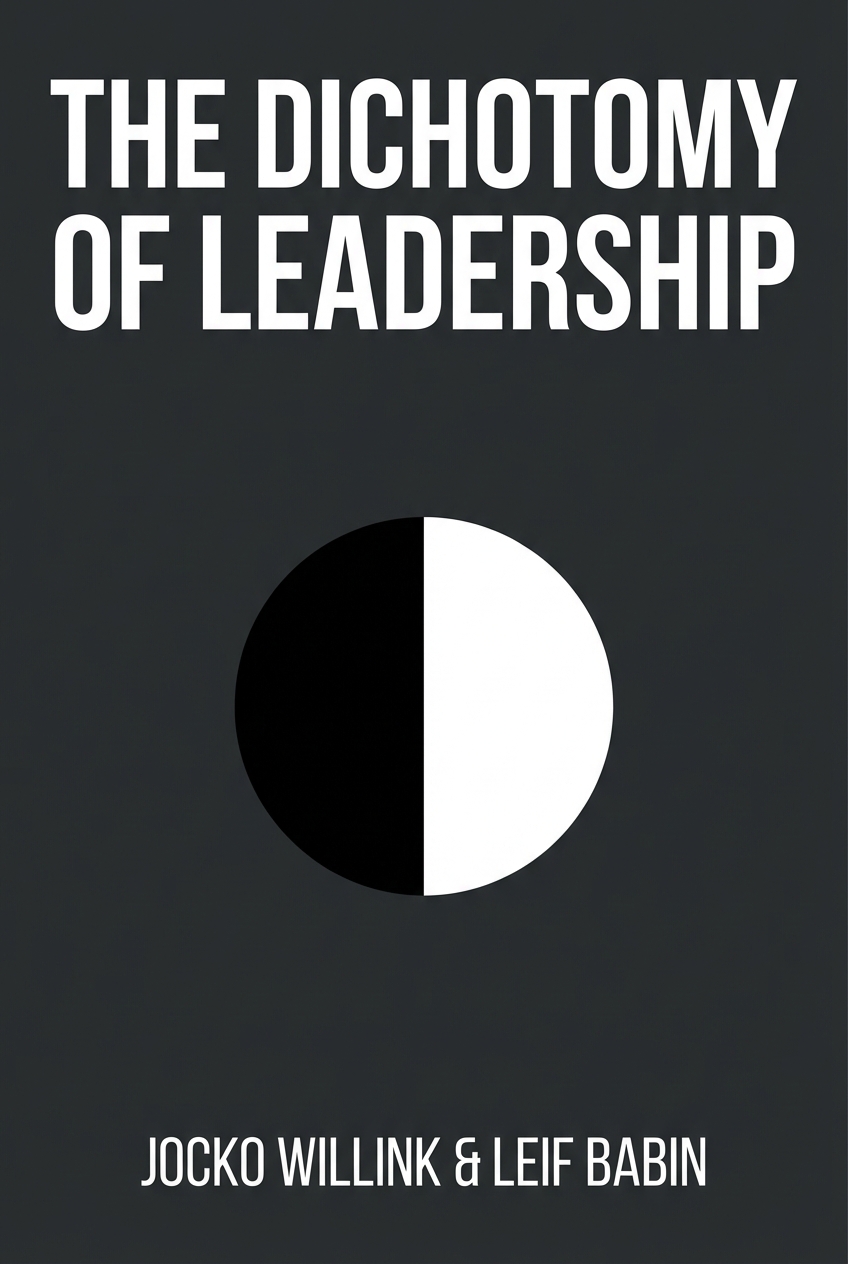
The Dichotomy of Leadership
Balancing the Challenges of Extreme Ownership to Lead and Win
What's it about
Tired of leadership advice that feels too rigid or too soft? What if the secret to effective leadership isn't about choosing one extreme, but mastering the balance between them? Discover how to lead with both authority and humility, and when to be aggressive versus when to be prudent. This summary of The Dichotomy of Leadership unpacks the counterintuitive principles used by two U.S. Navy SEAL officers to lead and win. You'll learn the practical framework for balancing opposing forces, like when to take extreme ownership and when to empower your team, transforming you into a more dynamic and respected leader.
Meet the author
Jocko Willink and Leif Babin are highly decorated, retired Navy SEAL officers who led the most elite special operations unit in the Iraq War, Task Unit Bruiser. Their combat experience in the brutal, complex environment of Ramadi taught them the leadership lessons that are the foundation of their principles. After returning from war, they created Echelon Front to teach these same winning leadership strategies to others, helping individuals and organizations build their own high-performance teams and dominate their battlefields.
The Script
The most dangerous leaders aren't the tyrants or the micromanagers; they're the ones who have mastered a single, celebrated leadership virtue to perfection. The leader who is always aggressive eventually becomes reckless. The one who is eternally humble becomes a doormat, unable to command. The hyper-disciplined commander can crush creativity, while the overly hands-off mentor can foster chaos. We are taught to pursue these qualities—humility, courage, discipline—as absolute goods. Yet, when taken to their extremes, these very strengths become catastrophic weaknesses. The true path to effective leadership is found by constantly fighting to balance on the razor's edge between two opposing truths. This is the fundamental, often maddening, challenge that derails even the most well-intentioned leaders: mastering the art of the 'and.'
This constant tension between essential but contradictory principles is a reality that Jocko Willink and Leif Babin lived daily. As decorated commanders of the most highly decorated special operations unit of the Iraq War—Task Unit Bruiser of SEAL Team Three—they were responsible for leading elite teams where the consequences of imbalance were life and death. After returning from combat, they began training the next generation of SEAL leaders and discovered this same struggle was universal. The most common questions they received focused on how to lead when faced with impossible contradictions. "The Dichotomy of Leadership" was born directly from those training sessions, created to provide a framework for navigating the fine line between the opposing forces that every leader must confront, from the battlefield to the boardroom.
Module 1: The Core Dichotomy — Own It All, but Empower Others
The foundation of effective leadership is a paradox. You must take total responsibility for every outcome, a concept called Extreme Ownership. Yet, if you do everything yourself, your team will fail. This module explores the balance between taking ownership and empowering your team through Decentralized Command.
The central insight is that a leader must take full responsibility for the mission, but empower subordinate leaders to own their piece of it. In the military, Jocko and Leif couldn't micromanage every SEAL on every mission. The operational tempo was too high. They had to trust their junior leaders to plan and execute. At first, Jocko planned everything. His junior leaders just waited for orders. They showed no initiative. So, he was forced to change. He assigned four separate missions to four junior leaders. He let them plan and lead. The result? They developed innovative plans and executed with confidence. Their initiative was unlocked.
This directly translates to the corporate world. A CEO was frustrated with his stalled product launch. His senior leaders seemed passive. Jocko observed the CEO's daily meetings. The CEO made every decision. He was the "Easy Button" for every problem. By taking too much ownership, he had smothered his team. There was no ownership left for them to take. The solution was to pull back. The CEO reduced meetings. He empowered his leaders to make decisions. The team regained initiative. The product launch got back on track.
Another key insight is to recognize the symptoms of imbalance and correct your course. How do you know if you're out of balance? Look for the signs. If your team is passive, waits for direction, and shows no creativity, you are likely micromanaging. You are too far on the side of Extreme Ownership. On the other hand, if your teams are uncoordinated, overstep their authority, or focus on the wrong priorities, you are likely too hands-off. You have decentralized command without clear guidance.
The correction is simple but requires discipline. If you're micromanaging, you must pull back. Explain the mission's goal, the "why," and let the team figure out the "how." Monitor their progress, but don't give them the answers unless the plan is catastrophic. But if you've been too hands-off, you need to provide more clarity. Define the chain of command. Clarify roles and responsibilities. Ensure everyone understands the strategic goals. This is about providing the guardrails so your team can operate with autonomy and alignment.