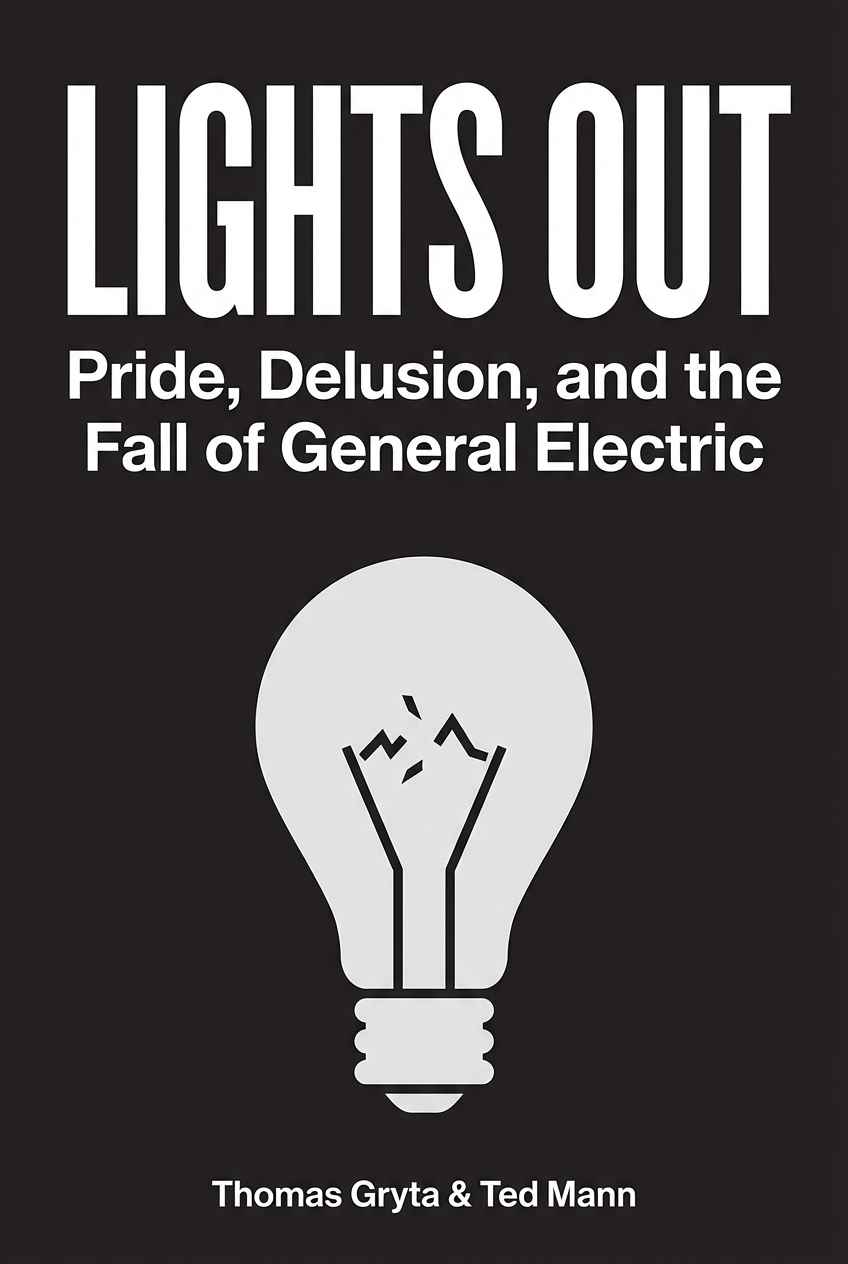
Lights Out
Pride, Delusion, and the Fall of General Electric
What's it about
How does a company once worth over $600 billion simply collapse? Discover the shocking story of General Electric's downfall, a cautionary tale of corporate hubris, disastrous leadership, and a culture that valued short-term wins over long-term stability, revealing fatal flaws you might see in your own organization. You’ll learn how GE's legendary CEO Jack Welch planted the seeds of destruction with his relentless focus on impossible targets and financial engineering. Uncover the critical missteps his successor, Jeff Immelt, made that accelerated the company’s demise, providing a powerful lesson in what not to do when leading through crisis.
Meet the author
Thomas Gryta and Ted Mann are award-winning Wall Street Journal reporters who have spent years covering the stunning collapse of the American icon, General Electric. Their deep-dive reporting, built on exclusive interviews with insiders including former CEO Jeff Immelt, provided them with unparalleled access to the boardrooms and backrooms where GE's fate was sealed. This firsthand knowledge allowed them to piece together the definitive account of corporate pride and hubris, revealing the hidden story behind one of business history's greatest falls from grace.
The Script
In 2007, Tina Fey stood at the center of the television universe. As the creator, writer, and star of 30 Rock, she was celebrated for her almost supernatural ability to manage a sprawling creative enterprise while also being its main on-screen talent. The show was a finely tuned machine, a weekly miracle of comic timing and logistical precision. It seemed she could do no wrong. Yet, just a few years later, in her memoir Bossypants, Fey revealed the relentless, often panicked effort required to keep that machine running. She detailed the constant, exhausting vigilance needed to prevent small problems from spiraling into show-killing catastrophes. It was a portrait of a brilliant leader fighting a daily battle against organizational entropy, holding a complex system together through sheer force of will.
That same battle against entropy, but on a global industrial scale, is what fascinated Wall Street Journal reporters Thomas Gryta and Ted Mann. For years, they watched General Electric—an institution once seen as the gold standard of American management, a corporate titan as iconic as 30 Rock was to comedy—begin to flicker and fade. They saw a similar story unfolding, but with far greater consequences. The company that had once been the training ground for the world’s best executives was now a cautionary tale of hubris and decay. Gryta and Mann dedicated themselves to uncovering the hidden story, piecing together the critical decisions and cultural shifts that took place behind the closed doors of a corporate empire as it slowly, then suddenly, lost its way.
Module 1: The Cult of Performance and the Illusion of Health
General Electric was built on a myth. The myth was that GE always won. It always hit its numbers. It always grew. This belief was so ingrained that it became a religion, first under the legendary Jack Welch and then under his successor, Jeff Immelt. But behind the curtain of "success theater," the company was rotting from the inside.
The core problem was a culture that valued performance over truth. Meeting financial targets was paramount, often leading executives to prioritize short-term appearances over long-term sustainability. At GE, missing your quarterly goal wasn't just a setback. It was a career-ending failure. This created immense pressure. Executives learned that it didn't really matter how they hit their numbers, just that they did. This led to a system of creative accounting and financial engineering designed to produce smooth, predictable earnings growth.
Here's how it worked. GE's massive financial arm, GE Capital, became the company's secret weapon. If an industrial division was falling short of its profit target for the quarter, GE Capital could step in. It might sell an office building, a fleet of airplanes, or a portfolio of loans to generate a last-minute gain. These one-time gains would plug the gap, and GE would once again report another quarter of flawless growth. This practice, known as "earnings management," was an open secret. GE systematically used accounting techniques, acquisitions, and financial engineering to ensure earnings grew predictably, prioritizing investor perception over transparent cash flow.
This created a dangerous illusion. On paper, GE looked like a fortress of stability. In reality, its industrial core was weakening. The profits were becoming more and more dependent on financial tricks, not genuine operational excellence. And here's the kicker. The complex management structure and a culture of confidence often prioritized broad strategic vision over deep operational oversight. Jeff Immelt, a charismatic leader who rose through sales, trusted his gut. He preferred optimistic narratives to hard data. When presented with bad news, he was known to dismiss it, telling analysts, "That's just your opinion. You're not looking at it right." This environment discouraged dissent. It taught managers to hide problems, not solve them. The cracks were forming long before the 2008 financial crisis, but the culture of success theater ensured no one dared to point them out.