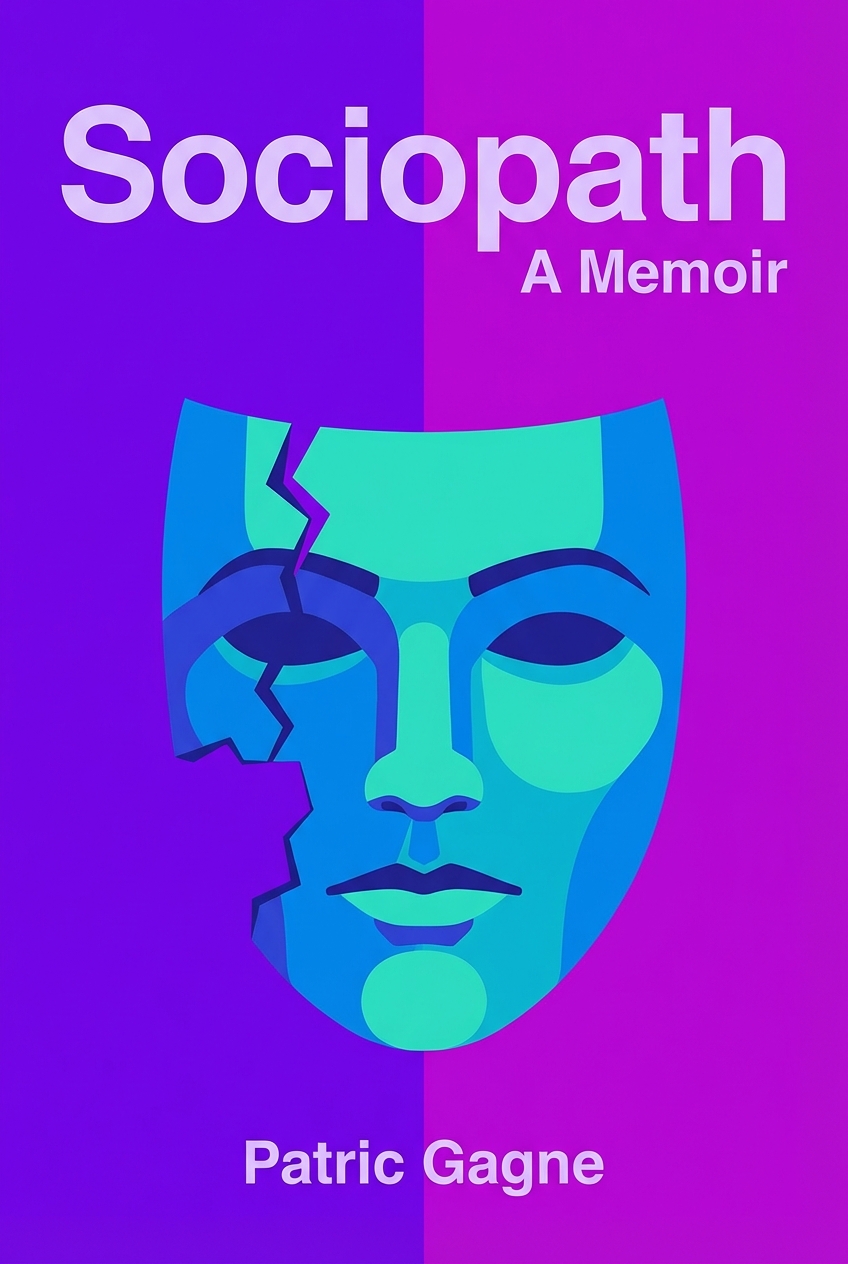
Sociopath
A Memoir
What's it about
Have you ever felt different, like a part of you was missing that everyone else seemed to have? This memoir takes you inside the mind of Patric Gagne, a woman who spent her life searching for an answer and found it in a shocking diagnosis: sociopathy. Forget the Hollywood stereotypes of soulless monsters. Gagne's journey reveals the hidden world of a high-functioning sociopath trying to understand emotions, build relationships, and find her place. You'll discover how she learned to navigate a world not built for her, offering a raw, surprisingly relatable look at what it truly means to live without feeling.
Meet the author
Patric Gagne is a writer, therapist, and diagnosed sociopath who spent years researching the condition, even earning a PhD, to understand her own internal world. Her journey to reclaim the term sociopath and find a path away from stigma toward self-understanding led to her groundbreaking and deeply personal memoir. Gagne now advocates for others who don't fit the conventional mold, offering a rare and humanizing look inside a misunderstood mind.
The Script
Think of a professional acting coach, watching two students run a scene. One actor is brilliant, hitting every mark with flawless technique. The other is clumsy, forgetting lines, missing cues, but their eyes are filled with genuine, raw emotion. The coach knows the second actor has something the first one lacks: a direct line to the feeling itself. Now, imagine a person who spends their entire life as that first actor—not on a stage, but in every conversation, every relationship, every quiet moment alone. They study the emotional cues of others like a script, memorizing the right facial expressions for joy, the correct vocal tones for sadness, the appropriate gestures for empathy. They can deliver a perfect performance of being a friend, a partner, a daughter. But when the scene is over and the applause fades, they feel nothing. The stage is empty. The connection was an illusion, a technical masterpiece devoid of any real feeling.
This gap between performing emotion and actually experiencing it is the central question of Patric Gagne’s life. From a young age, she knew she was different. She didn't feel the things other children seemed to feel—love, guilt, fear—and this absence terrified her. Instead of surrendering to the void, she began a decades-long quest to understand her own mind, a journey that led her through the confusing world of psychology and the stigma of a word she was afraid to claim: sociopath. Unwilling to accept the conventional diagnosis of an incurable monster, she set out to find a different path, one that might lead to connection. This book is the story of that search, a first-hand account from a trained psychologist who turned her analytical skills inward to solve the mystery of herself.
Module 1: The Internal World of Apathy and Pressure
We often think of sociopaths as cold, calculating villains. But Gagne invites us into a very different reality. It's a world defined by a profound lack of feeling. She calls this state "apathy." It's a deep, persistent nothingness.
This void creates an unbearable internal tension. Gagne describes it as a rising pressure, like mercury in a thermometer. The only way to release it was to do something she knew was wrong. This is the first key insight. Destructive behavior can be a compulsive reaction to emotional emptiness, not a desire to cause harm. As a child, she would steal small items, like a classmate’s barrette. She didn't want the barrette. She needed the act of taking it. The transgression was a jolt. It was a brief, powerful antidote to the crushing weight of feeling nothing. It made her feel, period.
This leads to a critical distinction. Sociopathic individuals may intellectually understand emotions but not feel them. When confronted by her mother about a stolen locket, Gagne was asked to imagine the owner's sadness. She understood the concept. She just couldn't feel it. Guilt, shame, and remorse were abstract ideas learned in church. They were words without emotional weight. This disconnect makes navigating the social world incredibly difficult. You’re playing a game where you know the rules, but you can’t feel the stakes.
And here's where it gets even more complex. Gagne suggests that early deviant acts can be a form of self-preservation. Before stealing, she would feel darker urges. Urges to slam her fingers in a door or hit another child. The "bad" behaviors, like theft or trespassing, became a safer outlet. They were a way to manage the pressure without escalating to violence. She was, in her own way, trying to tame a part of herself she didn't understand and couldn't control.
So what does this mean for us? It reframes our entire understanding. Instead of seeing a malicious actor, we see someone engaged in a desperate, lifelong struggle for self-regulation. Their actions are a dysfunctional strategy to feel human.