All BooksSelf-GrowthBusiness & CareerHealth & WellnessSociety & CultureMoney & FinanceRelationshipsScience & TechFiction
Download on the App Store

American Gods

13 minNeil Gaiman

What's it about

Ever wonder what happens to gods when their believers forget them? Get ready to discover a hidden America where ancient deities and modern idols are locked in a secret war for survival, and you’re about to be caught right in the middle of it. You’ll join ex-convict Shadow Moon on a strange and dangerous road trip across the country. Through his eyes, you'll learn how old myths clash with new technology, money, and media. Uncover the price of faith and the true power of belief in a world where gods walk among us, desperate to be remembered.

Meet the author

Neil Gaiman is the celebrated, award-winning author of The Sandman and Coraline, whose visionary storytelling has earned him a global following and numerous literary honors. His unique ability to weave ancient myths, forgotten folklore, and modern life into epic narratives was born from a childhood love of legends and libraries. This deep-seated fascination with the stories societies tell themselves directly inspired the rich, imaginative world of American Gods, where old deities clash with new idols in a battle for America's soul.
Listen Now
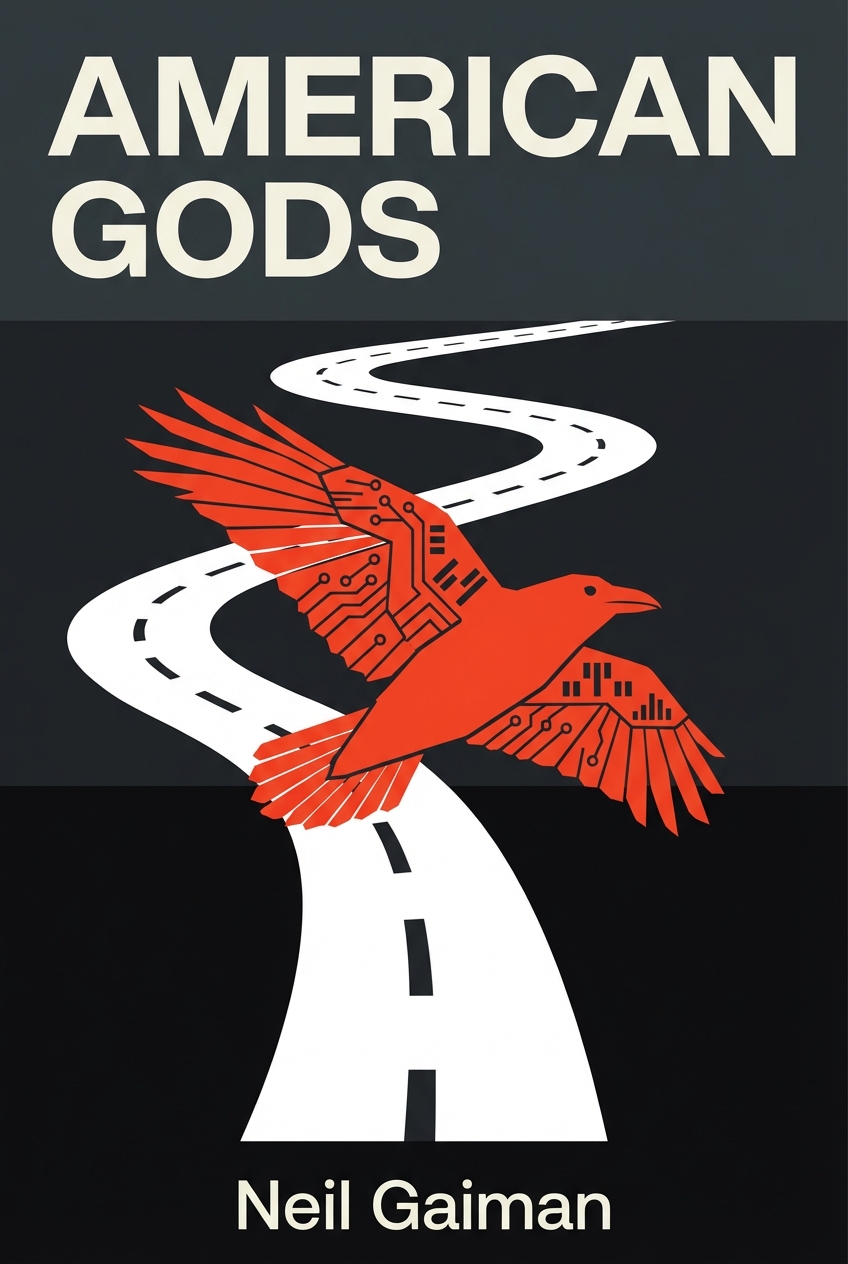
American Gods book cover

The Script

The local convenience store on a forgotten highway has its own pantheon. There’s the god of the lottery machine, dispensing fleeting hope in exchange for crumpled dollars. There's the minor deity of the buzzing fluorescent lights, a constant, indifferent hum against the quiet desperation of a late-night snack run. The slushie machine, with its eternally swirling, lurid colors, is a temple to artificial joy. We don’t think of them as gods, of course. They are just things, background noise in our modern lives. But they demand our attention, our money, our belief in their promises—the promise of a win, of a moment’s distraction, of a sugar rush to get us through the night. Every credit card swipe, every glance at a twenty-four-hour news channel, every new app we download is a small prayer to a new kind of deity, one that thrives on our focus.

What happens to the old gods when these new ones take over? Where do the deities of the harvest and the hearth, of thunder and of trickery, go when their altars are replaced by glowing screens and their believers’ faith is redirected toward progress and technology? This was the question that began to form in the mind of author Neil Gaiman during his own journey across America in the 1990s. As a British transplant observing the country's vast, strange, and commercialized landscapes, he saw a land filled with the ghosts of forgotten beliefs, brought over by waves of immigrants. Gaiman, already a celebrated writer of comics and fantasy like The Sandman, began to wonder what would happen if these old mythological figures were still walking around, scraping by in the margins of a country that had mostly forgotten them. American Gods became his answer, a sprawling road trip novel that imagines a secret war brewing between the old gods of myth and the new gods of modernity.

Module 1: The Old Gods in a New World

Our journey begins with Shadow Moon. He's a man fresh out of prison. He feels numb, adrift. His life has bottomed out. His wife is dead. His future is a blank page. This emptiness makes him the perfect hire for a mysterious con man named Mr. Wednesday. Wednesday is recruiting for a war. A war between the old gods and the new.

This introduces the book's core premise. Immigrants brought their gods to America, but these deities now struggle to survive. Gaiman shows us this through a cast of forgotten figures. We meet Czernobog, a Slavic god of darkness. He once received sacrifices. Now he works in a Chicago slaughterhouse, his glory faded to a grim memory. We see an Ifrit, a jinn from Middle Eastern tales. He was a being of fire and desert magic. Today, he drives a taxi in New York, miserable and forgotten. These gods are living, breathing characters, diminished but real. Their power is directly tied to human belief. As worship wanes, so does their strength.

From this foundation, Gaiman explores a critical insight. Belief is the currency that sustains gods; without it, they fade into obscurity or must resort to petty survival. Wednesday himself is a prime example. He is Odin, the All-Father of Norse mythology. He was once the king of gods. Now he’s a grifter. He runs small-time scams to fund his mission. He orchestrates a bank robbery with charm and misdirection. He seduces young women for a fleeting jolt of life. This is about reclaiming a fraction of the attention they once commanded. The worship they used to receive through sacrifice and prayer must now be taken through cons and deception.

But there's a problem. A new pantheon has risen in America. These are the New Gods. They are gods of technology, media, and finance. They are the internet, the television, the credit card. They are sleek, arrogant, and powerful. And here’s the thing. A conflict is brewing between the old gods of myth and the new gods of modernity. The New Gods see the old ones as obsolete. They are analog relics in a digital world. One of them, the Technical Boy, hunts down and brutally murders Bilquis, the ancient Queen of Sheba. He mocks her before erasing her. This act signals that the conflict is becoming a hot one. Wednesday is trying to unite the scattered, bickering old gods. He wants them to fight back before they are all deleted.

This sets the stage for the entire novel. Shadow is caught in the middle. He is a mortal man serving an ancient god in a war against the future. He doesn't know who to trust. He can't even be sure what is real.

Read More