All Books
Self-Growth
Business & Career
Health & Wellness
Society & Culture
Money & Finance
Relationships
Science & Tech
Fiction
Topics
Blog
Download on the App Store

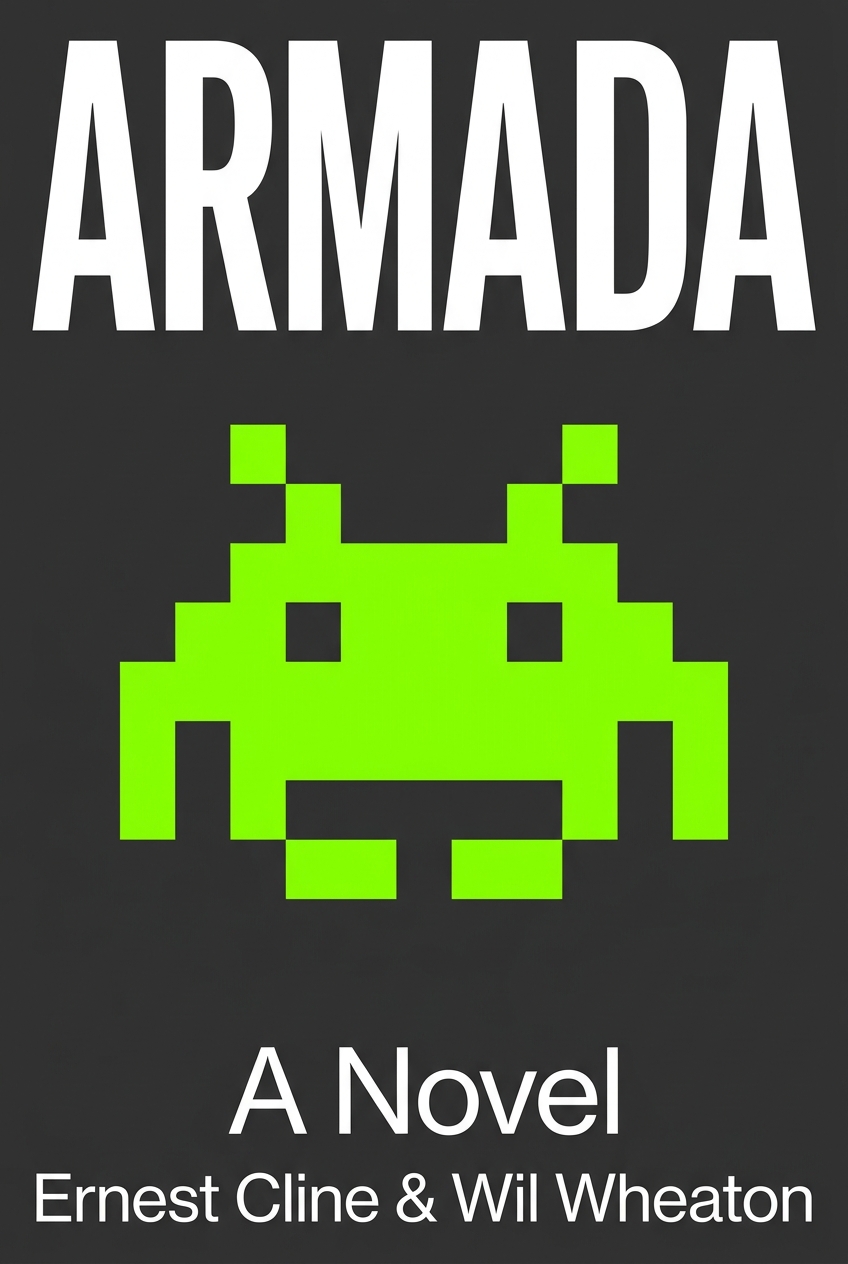
Armada

A Novel

12 minErnest Cline, Wil Wheaton

What's it about

Ever wonder if your video game skills could save the world? For high schooler Zack Lightman, that fantasy becomes a terrifying reality when a spaceship straight out of his favorite game, Armada, appears in the sky. It's not just a game anymore. You'll discover how Zack's years of virtual combat training are put to the ultimate test. Learn how a secret government organization has been using video games to prepare an unsuspecting generation for a real-life alien invasion, and join Zack as he fights to defend Earth.

Meet the author

Ernest Cline is the 1 New York Times bestselling author of Ready Player One, a global phenomenon that cemented his status as a master of pop-culture-infused science fiction. A lifelong gamer and self-proclaimed geek, Cline’s passion for classic video games, 80s movies, and sci-fi lore directly inspired Armada’s story. His unique ability to weave nostalgia and high-stakes adventure creates immersive worlds that feel both fantastical and deeply personal, born from a lifetime of loving the very culture he writes about.
Listen Now
Armada book cover

The Script

You're seventeen, sitting in a stuffy classroom, staring out the window. Your mind is replaying last night's session of your favorite video game. It's an epic space opera, a fight for humanity against overwhelming alien forces. You know the controls, the ship layouts, the enemy attack patterns better than you know the periodic table. You've logged thousands of hours, climbing the leaderboards, mastering a skill set that feels intensely important but has zero real-world value. Or so you think. Then, you see it. Through the classroom window, a ship materializes in the sky—a ship you recognize instantly. It is a drone fighter from the game. Your game. And in that moment, the barrier between your digital obsession and physical reality dissolves.

The frantic energy of that fantasy becoming real—the secret hope that all those hours spent saving a virtual world might actually mean something—is the very engine that drives the novel Armada. Author Ernest Cline, a self-described 'full-time geek,' spent his own youth immersed in the pop culture of the 1980s: the arcades, the blockbuster sci-fi films, and the console games that promised heroic adventures. He wrote Armada as a love letter to that specific daydream shared by a generation of gamers: the wish that being the best at a video game could one day make you the hero the world desperately needs. Narrator Wil Wheaton, himself an icon of geek culture from his time on Star Trek: The Next Generation, lends his voice to this story, perfectly capturing the blend of teenage angst and exhilarating wish fulfillment that defines Cline's work.

Module 1: The Conspiracy in Plain Sight

The story kicks off with Zack Lightman, a high school senior drowning in suburban boredom. His life is defined by two things: the legacy of his deceased father and his obsession with a massively multiplayer online game called Armada. One day, Zack sees a real-life spacecraft outside his classroom window. It's a Glaive fighter, an enemy ship straight from the game. This single event triggers the central conflict.

Zack’s first instinct is that he's losing his mind. This fear is rooted in his father, Xavier, who died in a supposed factory accident. Xavier left behind journals filled with elaborate conspiracy theories. The core of this theory is that the government has secretly used video games and sci-fi movies for decades as a training and recruitment tool. Xavier believed films like Star Wars and games like Space Invaders were psychological conditioning, preparing the world for an inevitable alien contact.

This leads to a powerful insight. Your passions and expertise, even those dismissed as hobbies, might be preparing you for challenges you can't yet see. Zack's years of gaming were a dedicated apprenticeship. His high rank in Armada was a qualification. The Earth Defense Alliance, or EDA, the secret organization his father wrote about, had been tracking him. His gaming rig was a flight simulator. His missions were training exercises. The story suggests that deep expertise in any field, whether it's coding, gaming, or financial modeling, builds neural pathways and pattern recognition skills that are transferable. When a crisis hits, it's the obsessives, the specialists, who have the muscle memory to act.

And here's the thing. Zack’s father had documented it all. He connected the dots between the U.S. Army's use of Atari's Battlezone for tank training and the urban legend of Polybius, a mythical arcade game rumored to be a government psychological experiment. Zack had dismissed it all as the ravings of a troubled mind. Now, with a real alien ship outside his window, he's forced to confront the possibility that his father was right. This forces us to re-evaluate what we dismiss as paranoia versus what might be pattern recognition. In a world saturated with information, the line between signal and noise is thin. Xavier’s "madness" was simply his ability to see a signal that everyone else missed.

Read More