All BooksSelf-GrowthBusiness & CareerHealth & WellnessSociety & CultureMoney & FinanceRelationshipsScience & TechFiction
Download on the App Store

Atlas Shrugged

13 minAyn Rand

What's it about

What if the world's most brilliant minds—the innovators, scientists, and entrepreneurs you admire—suddenly started to disappear? How would society function without its creators? This summary explores the profound impact when the engine of the world begins to stall, leaving you to question everything. Discover the core principles of Objectivism through a gripping narrative of mystery and industrial collapse. You'll learn why individual achievement and rational self-interest are not just virtues but essential for human progress. Uncover the philosophical secrets behind the strike of the mind and find out who is John Galt.

Meet the author

Ayn Rand was a towering twentieth-century novelist and philosopher whose works, including the monumental Atlas Shrugged, have sold tens of millions of copies worldwide. Born in St. Petersburg, Russia, she witnessed the Bolshevik Revolution firsthand, an experience that fueled her lifelong advocacy for individual freedom and capitalism. Fleeing to America in 1926, she dedicated her life to creating a new moral philosophy, Objectivism, which champions reason, individualism, and the pursuit of one's own happiness as the highest moral purpose.
Listen Now
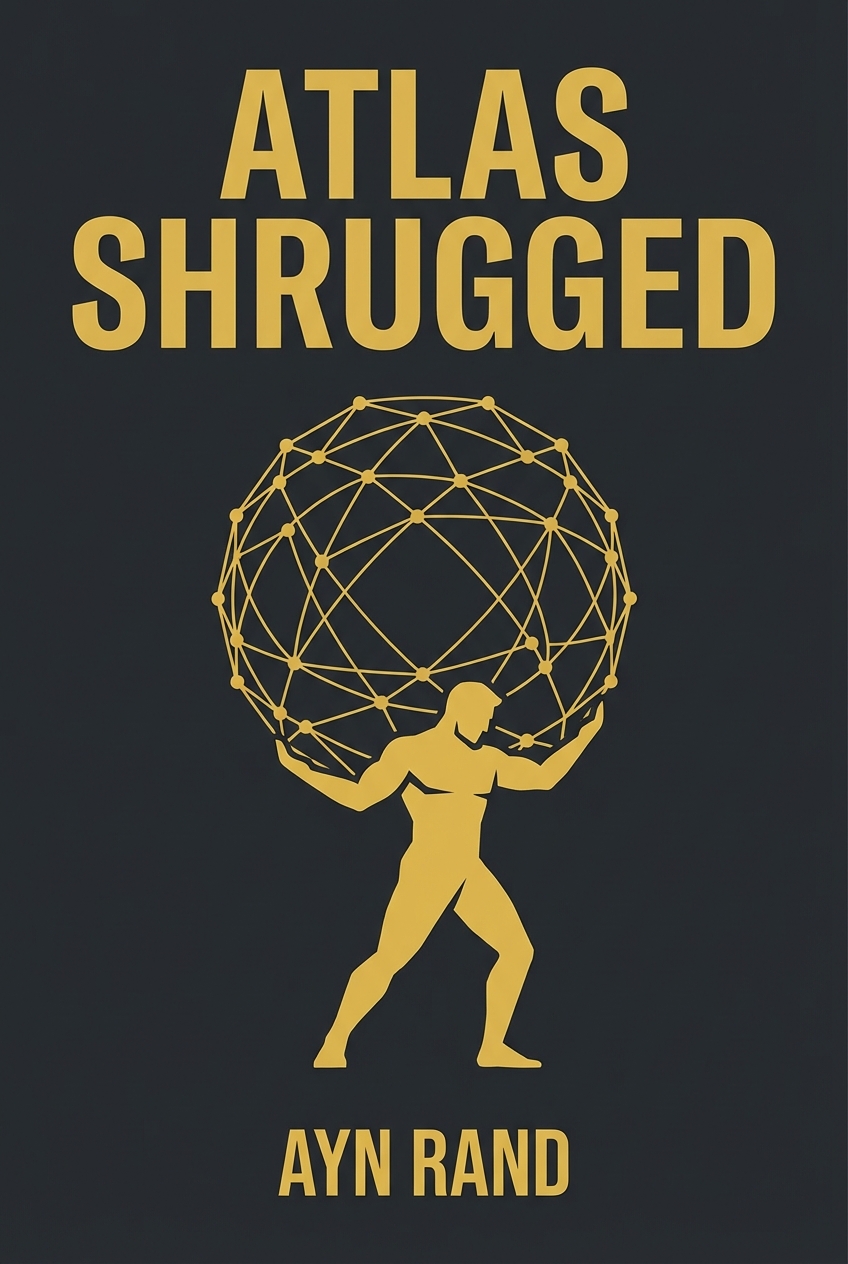
Atlas Shrugged book cover

The Script

What if the most compassionate act you could perform was to refuse to help? What if the drive to serve, to sacrifice, and to place the needs of others above your own was a slow-acting poison, draining the world of its energy, ambition, and light? We are taught to see society as a delicate ecosystem of mutual support, where the strong lift the weak. But consider an alternative: that this system, when taken to its extreme, creates a moral inversion. It begins to reward need over achievement, penalizes competence for its own success, and systematically dismantles the very engines of progress it claims to protect. In this inverted world, the most productive members of society aren't celebrated; they are treated as public utilities, expected to endlessly produce for a world that resents their existence. The result is a slow, grinding halt.

The question of what happens when the world's creators simply walk away is the central mystery that drove a Russian-American novelist, Ayn Rand, to write her magnum opus. Having witnessed firsthand the devastating consequences of a collectivist state that crushed individual achievement, she became obsessed with dramatizing the role of the mind in human existence. She wanted to create a world that would make her readers feel the moral grandeur of productive achievement and the vital importance of reason. "Atlas Shrugged" was the culmination of this mission, a story crafted over more than a decade to serve as a defense of what she saw as the most persecuted minority in history: the rational, creative individual.

Module 1: The Engine of the World Falters

The world of Atlas Shrugged is in a state of managed decline. Infrastructure is crumbling. Businesses are failing. Competence is a liability. The story opens on a society where success is viewed with suspicion. And into this decay, Rand introduces two kinds of people. The first are the producers. People like Dagny Taggart, a brilliant railroad executive, and Hank Rearden, a self-made steel magnate who invents a revolutionary new metal. They are driven by an internal fire. A need to build, to innovate, to achieve. They operate on a simple, powerful principle: your mind is your only tool of survival.

Dagny sees her railroad, Taggart Transcontinental, decaying under the inept leadership of her brother, James. He prefers political maneuvering to sound engineering. He makes decisions based on public opinion, not on facts. Dagny, in contrast, trusts her own judgment. She fights to rebuild a critical rail line using Rearden's new metal, even when the entire establishment calls it dangerous and unproven. She knows that progress requires rational thought and decisive action. She embodies the creator’s mindset. You don't ask for permission to be excellent. You just are.

But here’s the problem. The producers are surrounded by a second group: the looters. These are the bureaucrats, the cronies, and the intellectuals who produce nothing but demand everything. They operate on a different principle. A toxic one. They believe need creates a moral claim. James Taggart, for instance, argues for policies that hobble successful companies to prop up failing ones. He calls it "fairness." Orren Boyle, a competitor to Rearden, gets by on government loans and political favors. He argues that all businesses should share their burdens, a convenient excuse for his own company's failures. This creates a system where the reward for success is punishment. The reward for failure is a bailout.

This leads to a chilling cultural shift. The question "Who is John Galt?" becomes a common slang phrase. It's a verbal shrug. A cynical expression of hopelessness used whenever something goes wrong. When a train is inexplicably delayed, the crew mutters, "Who is John Galt?" When a brilliant employee quits without reason, he answers the question of where he’s going with, "Who is John Galt?" The phrase signifies a world where problems are unsolvable and responsibility is a fool’s game. It’s the sound of a society giving up.

And it doesn't stop there. The looters actively work to dismantle the very idea of individual achievement. They weaponize guilt to control the productive. Hank Rearden’s family is a masterclass in this. He spends a decade creating Rearden Metal, a monumental achievement. He makes a bracelet from the first pour for his wife, Lillian. It’s a symbol of his life’s work. How does she react? With mockery. She calls it a "chain" and wears it to social events to humiliate him. His mother calls him selfish for creating something for his own pride. His brother Philip, who lives off Rearden’s charity, condemns his work as greedy. They constantly feed him the message that his ambition is a moral flaw. That his success is something to be ashamed of. And for a long time, Rearden accepts this unearned guilt. He feels like an outcast for the very virtues that make his success possible. This is the sanction of the victim. Evil is powerless until the good allows it to be.

Read More