All BooksSelf-GrowthBusiness & CareerHealth & WellnessSociety & CultureMoney & FinanceRelationshipsScience & TechFiction
Download on the App Store

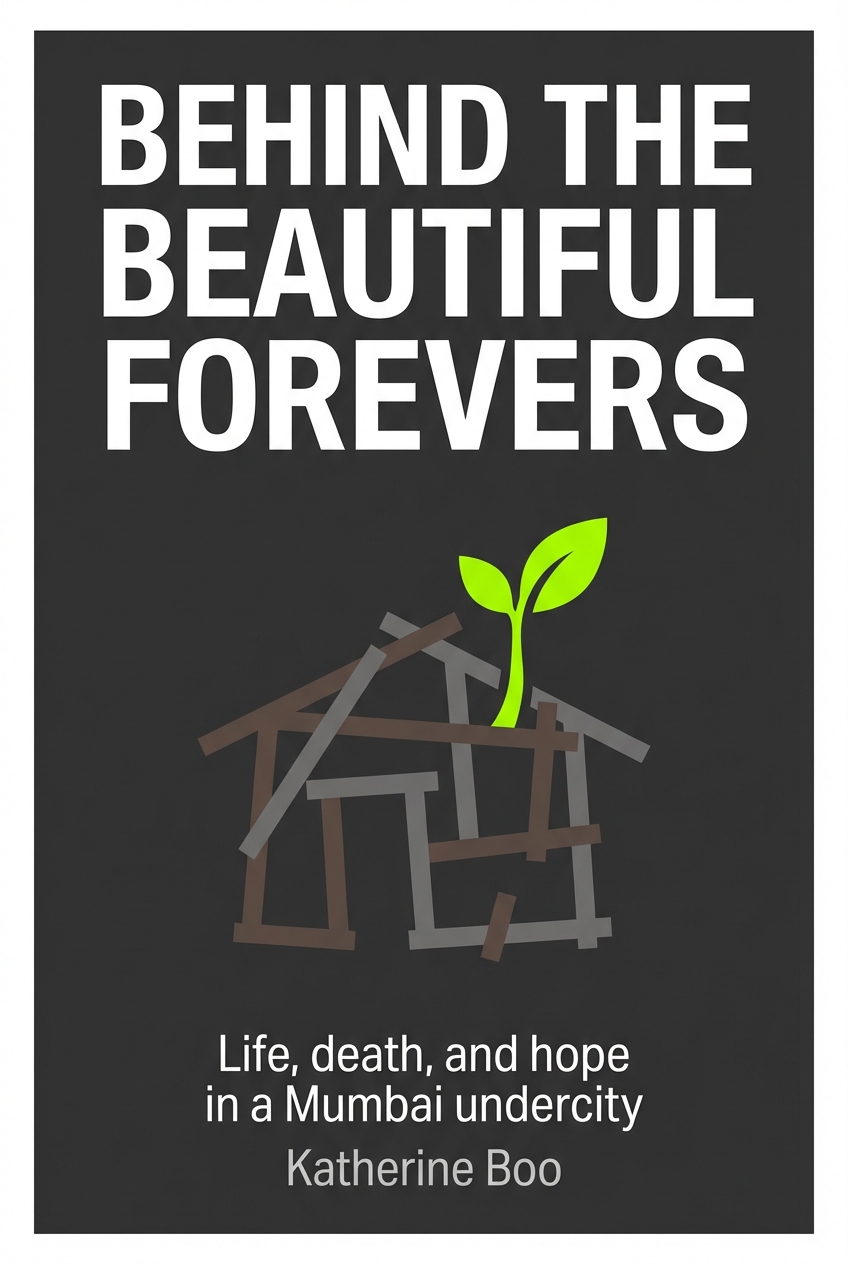
Behind the Beautiful Forevers

Life, death, and hope in a Mumbai undercity

11 minKatherine Boo

What's it about

Ever wondered what life is really like for those living in extreme poverty? This is your chance to go beyond the headlines and statistics. Discover the raw, unfiltered story of a Mumbai slum and the resilient people fighting for a better future amidst unimaginable hardship. You'll follow the lives of Abdul, a teenage garbage trader, and Manju, a young woman aspiring to be the slum's first female college graduate. Through their intertwined fates, you'll uncover the complex web of corruption, ambition, and hope that defines their world and challenges our perceptions of global poverty.

Meet the author

Katherine Boo is a Pulitzer Prize-winning investigative journalist and staff writer at The New Yorker, renowned for her reporting on poverty and social inequality. For over three years, she immersed herself in the Annawadi slum of Mumbai, living alongside its residents to document their lives with unparalleled intimacy and rigor. This deep, firsthand experience allowed her to capture the complex realities of life, death, and hope in a globalizing city, giving voice to those who are too often unheard.
Listen Now
Behind the Beautiful Forevers book cover

The Script

In the shadow of a luxury hotel, a slum teems with life. A family of trash-sorters dreams of a solid floor. A one-legged woman schemes to become the neighborhood's most powerful figure. A brilliant young boy, sick with tuberculosis, memorizes English words, hoping they will be his ticket out. From a distance, their world looks like a single, undifferentiated mass of poverty. But up close, it resolves into a universe of individual ambition, fierce love, and devastating betrayals. It's a place where a tiny shift in fortune—finding a slightly better class of garbage, a neighbor's sudden illness, a false accusation—can rewrite a family's destiny in a single afternoon. The line between hope and ruin is a constantly shifting tide of circumstance, where every choice is a high-stakes gamble and the rules of the game are always changing.

To capture this reality, you can't just visit. You have to live it. Katherine Boo, a Pulitzer Prize-winning journalist known for her immersive reporting on the lives of the poor, spent more than three years in Annawadi, the Mumbai slum at the heart of this story. She became a part of the landscape, meticulously documenting the intricate web of relationships, the hidden economies, and the brutal logic that governed their lives. She learned that the stories of the people in the slum were complex, often contradictory narratives of human beings striving for dignity and a small piece of the beautiful forever, even when the odds were stacked impossibly against them. This book is the result of that deep, patient observation.

Module 1: The Precarious Ladder of the Trash Economy

Life in Annawadi revolves around a single, brutal economic engine: garbage. The city’s waste is the slum’s raw material. This creates a fragile ecosystem where survival depends on a person’s place in the recycling food chain.

The book introduces us to Abdul, a teenage garbage trader. He is a notch above the scavengers who pick through the city’s refuse. His skill lies in sorting trash into dozens of categories of plastic, metal, and paper. His work is grueling. It turns his snot black. But it’s a business. And for a brief moment, it allows his family to climb just above subsistence. This illustrates a core reality of the slum. Economic mobility is real, but it is fragile and intensely competitive.

Abdul’s family earns enough to dream of buying a small plot of land outside the slum. But their success is precarious. It depends on global commodity prices, like the demand for scrap metal driven by construction for the Beijing Olympics. When the 2008 financial crisis hits, the price of plastic bottles and newspaper plummets. A business that was once a lifeline becomes a liability overnight. This shows how global economic forces directly and immediately impact the most vulnerable.

For those lower on the ladder, like the young scavenger Sunil, life is even more tenuous. He competes with thousands of others for vendible scraps. He faces threats from rival scavengers and organized gangs. His daily earnings are often less than a dollar. Survival in the informal economy requires constant, ingenious adaptation. Sunil learns to find new, overlooked sources of trash. He scales walls and risks injury to access garbage thrown from airport taxis. He becomes a master of his small, dangerous territory. His story shows that entrepreneurship is a daily necessity in the slums of Mumbai.

But here’s the thing. This entire economy is built on a foundation of illegality. Annawadi itself is an illegal settlement on airport land. This means that at any moment, the police can use this fact to extort money. Or the airport authority can decide to demolish their homes. In a system where your very existence is criminalized, every success makes you a target. The more money Abdul’s family makes, the more they are shaken down by corrupt police officers. Their small progress brings visibility, and visibility brings risk.

Read More