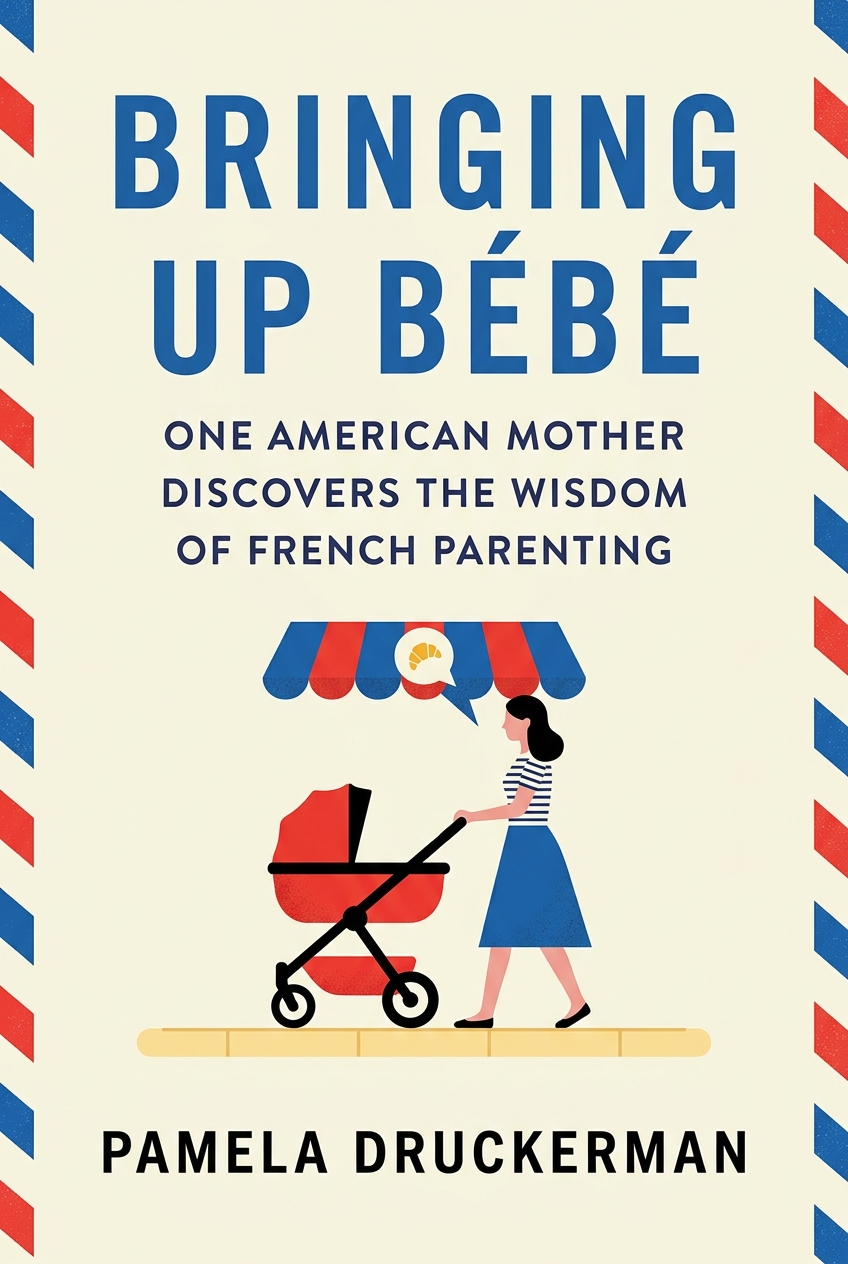
Bringing Up Bébé
One American Mother Discovers the Wisdom of French Parenting
What's it about
Ever wonder how French parents raise happy, well-behaved children without all the stress? Imagine your kids sleeping through the night, eating what's served, and playing contentedly while you sip your coffee. This isn't a fantasy—it's the French way, and you can learn its secrets. Discover the wisdom of French parenting and transform your family life. You'll learn simple, powerful techniques like "Le Pause" to teach patience and self-soothing, and why saying a firm "no" is one of the kindest things you can do. Get ready to reclaim your sanity and enjoy parenting more.
Meet the author
Pamela Druckerman is a bestselling author and contributing opinion writer for The New York Times whose work on cultural differences has been featured globally. Living in Paris as an American journalist, she was struck by the calm, well-behaved nature of French children and the relaxed confidence of their parents. This firsthand observation from an outsider's perspective led her to investigate and decode the secrets of French parenting, culminating in the groundbreaking insights shared in Bringing Up Bébé.
The Script
The first time you see it, it feels like a magic trick. A family sits down at a bustling outdoor café. The parents are mid-conversation, sipping their coffees, completely relaxed. Their two young children, maybe three and five years old, are sitting quietly, not demanding a screen or throwing food. They wait patiently, nibbling on a small biscuit, until their own plates arrive. There are no negotiations, no meltdowns, no frantic parental interventions. The scene is so calm, so bafflingly civilized, it seems to defy the laws of toddler physics. You might chalk it up to a fluke—a uniquely well-behaved family on an exceptionally good day. But then you see it again, and again, on the playground, in the grocery store, at dinner parties. You start to wonder if you’ve stumbled into an alternate reality, one where childhood isn't synonymous with chaos.
This exact sense of bewilderment is what captivated Pamela Druckerman, an American journalist living in Paris. After giving birth to her daughter, she noticed she was the only one in her circle of French friends who felt constantly frazzled and on the verge of collapse. Her friends seemed to have reclaimed their adult lives, their figures, and their sanity with an ease she found both infuriating and fascinating. A seasoned reporter for The Wall Street Journal, Druckerman decided to turn her journalistic skills toward her own life. She began investigating this cultural divide as a curious outsider, embedding herself in the world of French families to decode their unspoken rules and discover the secrets behind their seemingly effortless approach to raising happy, well-behaved children.
Module 1: The Foundation — The Pause and The Frame
French parenting is a mindset built on two core ideas. First, the French believe even infants are rational human beings. Second, they believe children need clear, firm boundaries to feel secure. This leads to a calmer, more balanced family life from day one.
The journey begins with sleep. Many French parents report their babies sleep through the night by two or three months old. This is the result of a simple, powerful technique. Practice "The Pause" before rushing to a crying baby. When a newborn fusses at night, French parents don’t immediately pick them up. They wait a few minutes. They observe. Is the baby truly in distress, or just stirring between sleep cycles? Babies often make noise as they transition. Rushing in can accidentally wake them up, teaching them to depend on you to fall back asleep. The Pause gives the baby a chance to self-soothe. It teaches them to connect their own sleep cycles. This small act of patience is a profound lesson in self-reliance.
This philosophy of teaching self-reliance extends to all parts of life. It’s built around a concept called the cadre, which means "the frame." Establish a firm, simple frame of non-negotiable rules, but offer tremendous freedom inside it. Think of it as a sturdy fence around a huge, open field. The fence is absolute. It’s for safety and core values. Maybe the rules are: We don't hit. We eat meals at the table. We go to bed at 8 PM. These rules are few, clear, and consistently enforced with a calm "non."
But inside that frame, the child has enormous freedom. They can choose their own games. They can be bored. They can explore their world without an adult narrating their every move. This structure provides security. It teaches children that they are not the all-powerful center of the universe. And here’s the thing. That realization liberates them. They aren't constantly testing boundaries, because the boundaries are clear. Instead, they can focus on the business of being a kid.