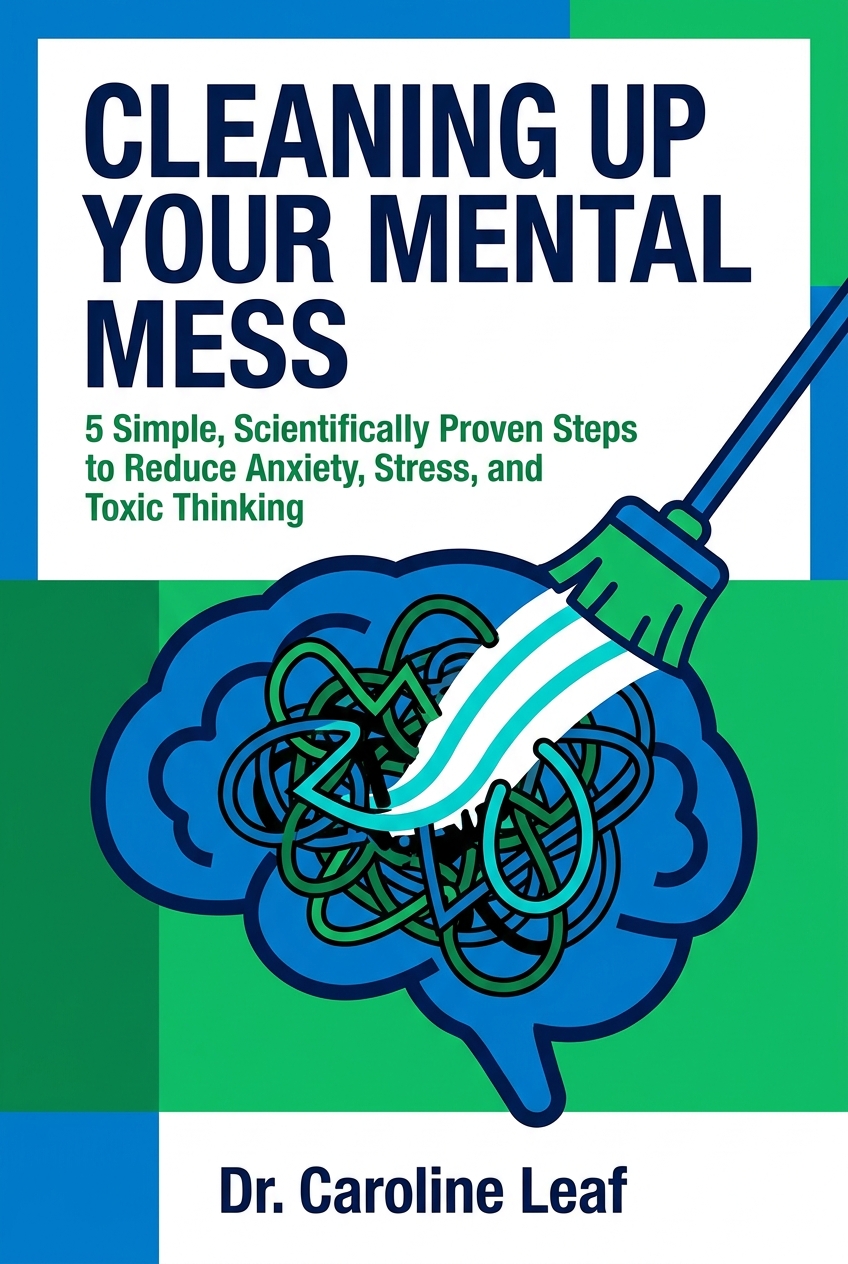
Cleaning Up Your Mental Mess
5 Simple, Scientifically Proven Steps to Reduce Anxiety, Stress, and Toxic Thinking
What's it about
Tired of feeling overwhelmed by anxiety, stress, and negative thoughts? Discover a scientifically proven 5-step plan to take back control of your mind. In just 15 minutes a day, you can learn to identify and eliminate the root of your mental mess for good. Dr. Caroline Leaf's revolutionary Neurocycle method isn't about just managing symptoms; it's about rewiring your brain. You'll learn to turn toxic thinking into healthy new thought patterns, building a resilient mind that's calmer, happier, and more focused. Start cleaning up your mental mess today.
Meet the author
Dr. Caroline Leaf is a communication pathologist and cognitive neuroscientist with over 30 years of experience researching the mind-brain connection and mental health. Her pioneering work in neuroplasticity began in the 1980s, where she studied how the mind can change the brain, long before it was a popular concept. This deep, lifelong dedication to understanding how we can control our thoughts and detox our brains forms the scientific foundation for the powerful, practical steps she shares in her work.
Opens the App Store to download Voxbrief

The Script
Every 24 hours, the average person thinks between 60,000 and 80,000 thoughts. While the exact number is debated, the sheer volume is staggering. What's more concerning is the nature of this internal traffic. Research from the National Science Foundation found that for the average person, a full 80% of these thoughts are negative, and a staggering 95% are repetitive, looping day after day. This is a relentless internal broadcast of worry, self-criticism, and rehashing past events. We're told to 'think positive,' but this data suggests our minds operate on a powerful, negative default. It's like trying to whisper affirmations in a room where a negative broadcast is playing on thousands of radios simultaneously. This constant, unmanaged stream of toxic thinking is a quantifiable cognitive pattern with profound consequences for our health, relationships, and capacity for joy.
This is the very phenomenon that drove Dr. Caroline Leaf's life's work. As a communication pathologist and cognitive neuroscientist, she spent years observing patients who were trapped by these cycles of toxic thought—from traumatic brain injuries to learning disabilities and emotional trauma. She saw firsthand how conventional wisdom often failed to provide a practical, systematic way to dismantle these ingrained negative patterns. Realizing that simply telling people to stop worrying was ineffective, she dedicated over three decades to developing and clinically testing a deliberate, five-step process. This method is about actively managing and reconceptualizing thoughts, giving people a concrete way to harness the brain's neuroplasticity and truly clean up the mental mess that this internal data reveals.
Module 1: Your Mind Is Not Your Brain
Let’s start with the book's most foundational idea. It’s a game-changer. Your mind and your brain are two different things. Dr. Leaf is adamant about this distinction. The brain is the physical organ. It’s the hardware. The mind, however, is your thinking, feeling, and choosing. It’s the energy that runs on the hardware. And here's the critical part: your mind changes your brain. Not the other way around. This concept, known as directed neuroplasticity, means you are the one directing the wiring.
This challenges the neuroreductionist view common today. That’s the idea that you are your brain. It reduces all your hopes, fears, and anxieties to mere chemical reactions. Dr. Leaf argues this model is flawed. It leads to labeling normal human responses to adversity, like depression or anxiety, as brain diseases. But think about it. If you're living with constant stress or have experienced trauma, isn't it a normal response to feel anxious? The author suggests these feelings are warning signals. They are messengers from your mind telling you something needs to be addressed.
So what happens next? This is where Dr. Leaf introduces the concept of "mind-in-action." This is the dynamic process of how you uniquely think, feel, and choose in any given moment. Every time you engage in mind-in-action, you are physically altering your brain. You are building new neural pathways. This is happening all the time, whether you are aware of it or not. The book's core argument is that by becoming intentional with this process, you can build a healthier, more resilient brain.
And here's the thing. This process is a double-edged sword. Dr. Leaf calls it the "plastic paradox." It's just as easy to build toxic thought patterns as it is to build healthy ones. Rumination, worry, and self-criticism actively build negative, chaotic networks in your brain. This has real, physical consequences. Her research shows these toxic thoughts create real, measurable, negative changes in your brain's structure and your body's chemistry. Unmanaged toxic thinking creates a toxic stress response that harms physical health. This is a significant effect. The book cites research suggesting that up to 90% of illnesses, including heart disease and cancer, are linked to toxic stress. Your mental mess becomes a physical mess. The first step to cleaning it up is recognizing that you are the one in the driver's seat.