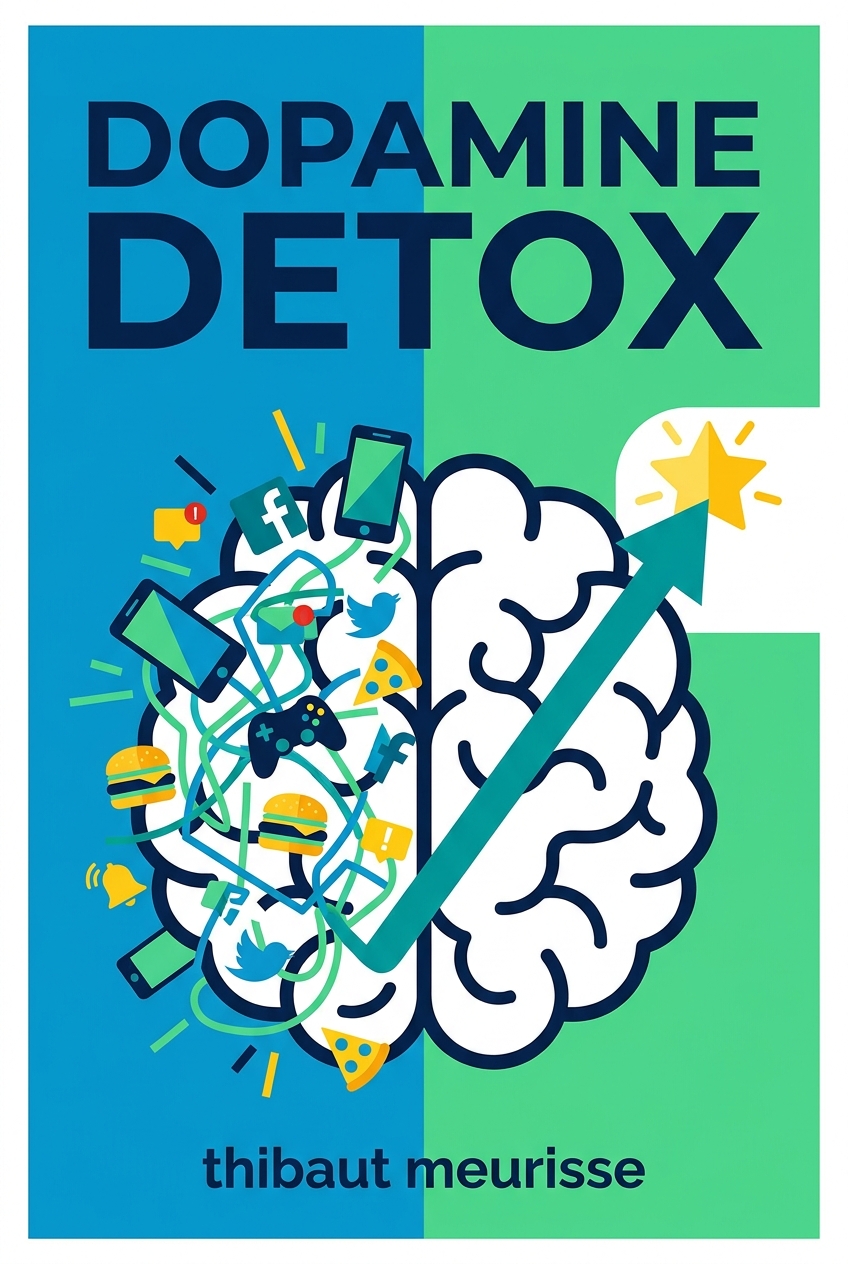
Dopamine Detox
A Short Guide to Remove Distractions and Get Your Brain to Do Hard Things (Productivity Series Book 1)
What's it about
Struggling to focus in a world full of distractions? Discover how to reset your brain's reward system, break free from the cycle of cheap dopamine hits, and finally reclaim your ability to concentrate on what truly matters. This guide gives you the power to get things done. You'll learn a simple, step-by-step strategy to perform a "dopamine detox," starving your brain of constant stimulation from social media, junk food, and endless entertainment. Uncover the science behind why you procrastinate and learn how to rewire your habits to find genuine satisfaction in achieving your goals.
Meet the author
Thibaut Meurisse is a bestselling author and founder of whatispersonaldevelopment.org, a blog that has helped millions of readers conquer procrastination and unlock their full potential. After leaving his home country of France to study in Japan, he became fascinated with the power of self-discipline and conscious action. His work distills complex psychological concepts into simple, actionable strategies, empowering people worldwide to master their minds and build more meaningful lives, one deliberate choice at a time.
The Script
We treat our minds like a cluttered attic, convinced that a massive, one-time cleanup is the only path to clarity. We schedule a 'mental health day,' vow to start meditating for an hour, or embark on a radical digital detox, only to find ourselves back in the same chaotic headspace a week later. The problem is the flawed assumption that our internal world can be renovated like a house. We're attacking a delicate ecosystem with a sledgehammer, when what it truly needs is a gentle, consistent recalibration. The constant impulse to 'do more' to fix our focus is the very thing that breaks it. We need a smarter, more sustainable way to stop the noise.
This cycle of failed overhauls is precisely what led Thibaut Meurisse to examine the mechanics of distraction. As an author and coach focused on practical self-development, he observed a universal pattern: people were failing from a flawed strategy. They were trying to win a war against distraction through sheer force, an approach doomed to fail. Recognizing that the small, constant hits of easy pleasure were the real culprits, he synthesized his findings into a simple, counter-intuitive framework. He wrote "Dopamine Detox" to present a practical system for reclaiming focus by making small, strategic withdrawals from the modern world's relentless stimulation.
Module 1: The Dopamine Hijack
Let's get one thing straight about dopamine. The book clarifies that dopamine is the molecule of anticipation, not satisfaction. It's the neurochemical that drives you to pursue a reward. It fuels your motivation to act. Think of it as the engine for survival and reproduction. It pushes you to seek food, find a partner, or achieve a goal. The problem is, getting the reward often feels hollow. The chase is more exciting than the prize.
This is where modern life gets tricky. Technology and marketing are engineered to hijack your dopamine system for profit. Social media notifications, personalized shopping algorithms, and endless video feeds are sophisticated tools designed to create a craving. That little red dot on your app? It’s a trigger. It promises a potential reward. A new message, a like, a comment. So you click. This creates a self-reinforcing loop. The more you check, the more you need to check. Your focus is the product being sold.
So what happens next? This constant stimulation creates a huge problem. Overstimulation makes meaningful work feel dull and unappealing. Your brain gets used to a high level of stimulation from social media, news, and entertainment. When it's time to do something that requires deep focus, like writing code or drafting a strategy document, your brain resists. That task feels boring by comparison. It doesn't offer the same quick, easy dopamine hit. This creates a "stimulation gap." You procrastinate, seeking out distractions to close that gap. You tell yourself you'll just check your email for five minutes. An hour later, you're lost in a whirlpool of distraction, and your important work is still untouched.
And here's the thing. This cycle erodes your ability to think long-term. A constant need for quick rewards destroys your capacity for long-term thinking. Success in any meaningful field, from building a company to mastering a skill, requires patience. It requires delaying gratification. Jeff Bezos famously reinvested Amazon's profits for years, sacrificing short-term gains for a long-term vision. But a brain trained on instant feedback struggles with this. It expects results now. When they don't arrive, it seeks another, faster reward. This is how big goals die. They are starved of the consistent, focused attention they need to grow.