All Books
Self-Growth
Business & Career
Health & Wellness
Society & Culture
Money & Finance
Relationships
Science & Tech
Fiction
Topics
Blog
Download on the App Store

Eastern Body, Western Mind

Psychology and the Chakra System As a Path to the Self

14 minAnodea Judith

What's it about

Struggling to connect your spiritual goals with your everyday life? Discover how to bridge the gap between ancient wisdom and modern psychology. This guide offers a powerful framework to heal past traumas, unlock your full potential, and find true alignment in a complex world. Learn to diagnose imbalances in your energy centers, known as chakras, and apply practical psychological techniques to restore your flow. You'll explore how childhood development shapes each chakra and gain transformative tools to reclaim your personal power, from the ground up.

Meet the author

Anodea Judith, Ph.D., is a groundbreaking author, therapist, and spiritual teacher widely considered one of the world's foremost experts on the chakra system. With a master's degree in clinical psychology and a doctorate in mind-body health, she masterfully bridges the gap between Western therapeutic practices and Eastern spiritual wisdom. Her decades of work are dedicated to helping individuals unlock personal healing and evolutionary consciousness, making her a trusted guide for countless seekers on the path to self-discovery and integration.
Listen Now

Opens the App Store to download Voxbrief

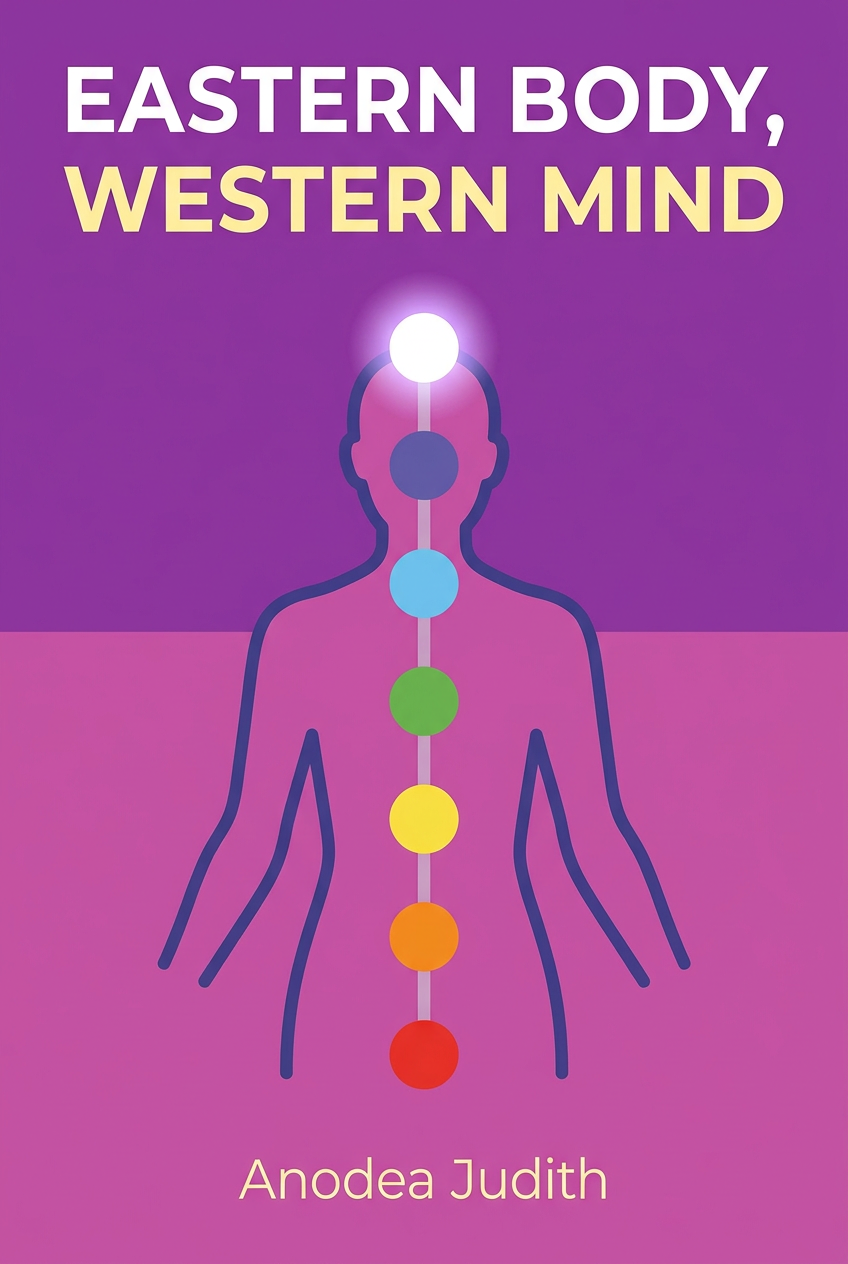
Eastern Body, Western Mind book cover

The Script

We treat the mind and body as separate, warring kingdoms. The mind is the tireless CEO, issuing commands and analyzing data, while the body is the unruly factory floor, prone to breakdowns and mysterious ailments. We send our bodies to the gym and our minds to therapy, running two different maintenance schedules on what we assume are two different machines. This fundamental split is the source of a silent, personal cold war. We try to think our way out of anxiety while our shoulders are clenched in a permanent shrug. We try to meditate for peace while our gut is tangled in knots. The problem is that we've severed the communication line between the two systems, creating a conspicuous blank space on our internal map right where the neck should be.

This gap between psychological theory and physical experience became the central puzzle for Anodea Judith. As a therapist and yoga practitioner, she saw clients whose talk therapy stalled because their trauma was held physically, and yoga students whose spiritual progress was blocked by unresolved psychological patterns. The Western models of human development she studied were brilliant but disembodied, while the Eastern chakra system offered a profound energetic architecture that Western psychology largely ignored. Judith realized these were two halves of a single, coherent story. "Eastern Body, Western Mind" is the result of her lifelong work to fuse them, creating a unified framework that charts our journey from infancy to adulthood through the energetic centers of the body, finally giving a voice to the wisdom our physical selves have been trying to share all along.

Module 1: The Chakra System as a Developmental Blueprint

The book introduces the chakra system as a universal framework for human development. Think of it as a seven-stage blueprint for building a complete human being. Each stage corresponds to a specific energy center, or chakra, along the spine. These chakras open sequentially during childhood. Each one governs a core psychological task.

This leads to a profound insight. Your earliest life experiences are encoded in your energy system. The first chakra, at the base of thespine, is our foundation. It develops from the womb to about one year of age. Its core issue is survival. Its fundamental right is the right to be here. If an infant's needs for safety, food, and touch are met, this chakra develops a healthy foundation of trust. But if there is neglect, abuse, or even just a chaotic environment, this foundation is damaged. The result is a lifelong struggle with anxiety, insecurity, and a feeling of not belonging.

So what happens next? The book explains that these early wounds create chronic patterns. Imbalances in your chakras manifest as either excess or deficiency. An excess in the first chakra might look like hoarding, obesity, or a rigid resistance to change. You are over-grounded, stuck in material reality. In contrast, a deficiency looks like disconnection from your body. You might be underweight, anxious, "spacey," and have trouble with focus or finances. This is the "Schizoid" or Creative character structure. Consciousness has fled the body for the perceived safety of the mind. The author uses the case of Mary, a client with anorexia, to illustrate this. Mary felt her body was a separate, painful object. Her struggle was a profound rejection of her own right to exist, a direct symptom of a damaged first chakra.

But here's the thing. This isn't just an individual problem. Cultural conditioning creates widespread chakra imbalances. Judith argues that our entire Western culture suffers from a first-chakra deficiency. We live in our heads. We treat our bodies like machines to be controlled. We are alienated from the natural world. This mind-body split is a cultural epidemic, and healing it requires consciously reconnecting with our physical selves. The first step toward wholeness is literally coming back down to Earth.

Module 2: The Flow of Energy and the Architecture of Self

Building on that idea, the book presents our internal world as a dynamic system of energy. Two primary currents flow through the chakras. First is the upward current of liberation. This is the drive to grow, expand, and connect with higher consciousness. Second is the downward current of manifestation. This is the force that brings ideas, vision, and spirit down into physical reality. A healthy person has a balanced flow in both directions. You can dream big, and you can also execute.

This brings us to a critical concept. Unresolved trauma creates blocks that crystallize into character armor. These blocks are physical. They are chronic patterns of muscular tension that Wilhelm Reich called "character armor." These patterns reflect our deepest defenses. For example, the second chakra, located in the lower abdomen, governs emotion, sexuality, and pleasure. Its developmental stage is from six months to two years old. This is when we form our emotional identity. If a child grows up in a home where feelings are punished or pleasure is shamed, they learn to restrict the flow of energy in this area. The demon of this chakra is guilt. It freezes movement and polarizes our world into right and wrong, stifling the fluid nature of emotion.

This then leads to specific character structures. Chronic imbalances define your default way of being in the world. Someone with a deficient second chakra might be rigid, emotionally numb, and afraid of change. This is the "Oral" or Lover character structure, born from early deprivation. They are often needy and dependent. Conversely, someone with an excessive second chakra is ruled by their emotions. They may have poor boundaries and addictive tendencies. Their energy is chaotic and uncontained.

Now, let's turn to the third chakra. Located at the solar plexus, this is the center of power, will, and transformation. Its element is fire. It develops between 18 months and four years, the "terrible twos," when we first assert our autonomy. Its demon is shame. If a child's budding will is constantly shamed or controlled by authoritarian parents, their personal power is crushed. This can create the "Endurer" character structure. This person is compliant on the outside but full of held-in rage on the inside. They feel stuck, powerless, and endure difficult situations without acting. They have a deficient third chakra. The flip side is excess. The "Challenger-Defender" uses power to control others, masking deep insecurity. This is the classic "power-over" dynamic that defines so much of our culture. Judith argues that true power is the internal fire of self-determination.

Read More