All Books
Self-Growth
Business & Career
Health & Wellness
Society & Culture
Money & Finance
Relationships
Science & Tech
Fiction
Topics
Blog
Download on the App Store

Famous Gunfighters of the Western Frontier

Wyatt Earp, Doc Holliday, Luke Short and Others

15 minW. B. (Bat) Masterson

What's it about

Ever wonder what the real Wild West was like, beyond the Hollywood myths? Get the untold story of legendary lawmen and outlaws, written by a man who lived it. This is your chance to hear the truth about Wyatt Earp, Doc Holliday, and others, straight from the source. You'll discover Bat Masterson's firsthand accounts of the era's most famous shootouts and rivalries. Learn the real character of these men, the code they lived by, and the gritty details of survival on the frontier. Uncover the authentic history that shaped the legends you thought you knew.

Meet the author

As a legendary lawman, buffalo hunter, and gambler who stood shoulder-to-shoulder with the very men he profiles, Bat Masterson offers a firsthand account of the Wild West. His experiences in Dodge City and Tombstone provided him with unparalleled, personal knowledge of the era's most famous gunfighters. After trading his Colt for a pen, Masterson became a celebrated New York sports journalist, using his keen eye for character to capture the true stories of his former friends and foes.
Listen Now

Opens the App Store to download Voxbrief

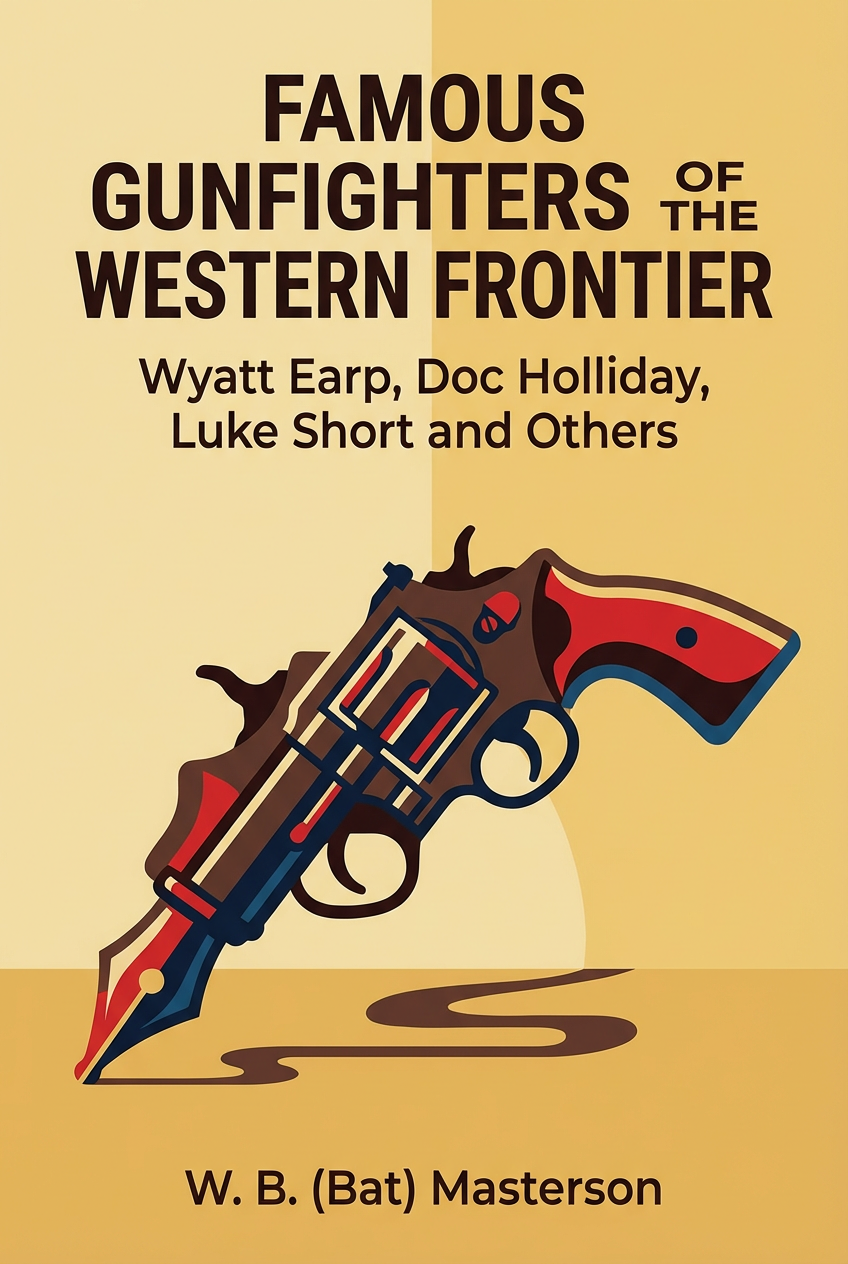
Famous Gunfighters of the Western Frontier book cover

The Script

The air in the Long Branch Saloon in Dodge City was thick with the smell of cheap whiskey, sweat, and the metallic tang of fear. A man could get killed over a misplaced card, a stray glance, or simply for being in the wrong chair at the wrong time. In this world, a man's life was measured in the split second it took to draw and fire a Colt .45. Reputation was currency, and it was earned with a steady hand and cold nerve. A story told over a campfire might make a man famous, but it was the quiet, deadly moments in dusty streets and crowded saloons that made him a legend. The difference between the two was often just a puff of gunsmoke.

Yet, as the years passed, the legends began to curdle. Dime novels and sensational newspaper articles turned real men into caricatures, twisting acts of grim survival into heroic fantasies. One man who had lived through those split-second moments, who had stood face-to-face with the likes of Wyatt Earp and Doc Holliday, grew tired of the myths. He saw the truth of his friends and foes being buried under a mountain of lies. W. B. Masterson, a man who had been a buffalo hunter, army scout, and sheriff of Dodge City, decided to set the record straight. He picked up a pen to preserve the complicated, brutal, and human reality of the men he actually knew, separating the gunfighters from the gunslinging ghosts of fiction.

Module 1: The Gunfighter's Triad—Courage, Skill, and Deliberation

Masterson opens with a core argument. Surviving a gunfight was about a combination of three distinct qualities. He calls this the essential triad. You need courage. You need proficiency with your weapon. But most importantly, you need deliberation. If you lack any one of these, you are destined to fail.

The first part of the triad is obvious. Courage is the non-negotiable entry fee for any conflict. You must be willing to stand your ground when threatened. Without it, you’ll never even draw your weapon. But Masterson is quick to point out that courage alone is a fatal liability. He gives the example of Levie Richardson, a buffalo hunter in Dodge City. Richardson was known for his bravery. He publicly vowed to kill a gambler named Frank Loving. He found Loving, drew his pistol, and fired five rapid shots. He missed every single one. Loving, who had remained calm, then took his time. He fired one deliberate shot and killed Richardson. Richardson had courage, but it wasn't enough.

This leads to the second element. Skill with a firearm is essential, but practice-range accuracy doesn't translate to real-world success. Masterson knew many men who were brilliant target shooters. One was Charlie Harrison. Masterson considered him one of the fastest, most accurate shots he had ever seen. Harrison got into a dispute with a gambler named Jim Levy. He drew and fired five shots so fast they sounded like one long burst. Yet, every single bullet missed. Levy, who was much slower, calmly returned fire with a single, well-aimed shot. Harrison fell dead. His elite skill failed him under pressure.

So what was the missing piece? This brings us to the most critical element of the triad. Deliberation is the master quality that multiplies the value of courage and skill. Deliberation is the ability to remain cool, think clearly, and act with intention while under extreme duress. It’s about forcing your mind to work when your body is screaming with adrenaline. It’s the discipline to use your sights when someone is shooting at you. Johnny Sherman, another renowned shot, tried to kill a man in a hotel. He was so frantic, so "in a hurry," that he emptied his pistol without hitting his target. He forgot to aim. He had courage and skill, but no deliberation. He failed. In contrast, Frank Loving and Jim Levy both survived because they took a fraction of a second longer. They were deliberate. They made their one shot count.

Module 2: The Currency of Reputation

We've established the internal skills needed to survive. Now, let's explore the external factor that governed life and death on the frontier: reputation. In a world with fragile legal systems, your personal brand was everything. It was your credit score, your resume, and your security system all rolled into one.

Masterson shows that a strong reputation is built through demonstrated resolve. Take the case of Luke Short. After arriving in the tough mining town of Leadville, he was confronted by a "bad man" over a gambling bet. The man reached for his gun. Short was faster. He drew and shot the man, wounding him. He didn't kill him. He just proved he was not to be trifled with. Instantly, Short gained "standing." Saloon owners hired him for protection. His reputation was forged by what he did in a critical moment.

From this foundation, we see how reputation becomes a strategic asset. You must actively manage and defend your reputation, as it is your primary shield against conflict. In Dodge City, a rival saloon owner, who also happened to be the mayor, tried to put Short out of business. He used his political power to pass an ordinance targeting Short's saloon. Short’s response was a demonstration of power. He first stood off the town with a shotgun. Then, he left and gathered allies, including the formidable Wyatt Earp. They assembled a "strong force of desperate men." News of this private army traveled fast. The mayor immediately sued for peace. Short's reputation, backed by a credible threat, allowed him to dictate the terms of the settlement. He forced the mayor to fire the police officers who had harassed him.

But flip the coin. A reputation for violence could also be a magnet for trouble. Masterson himself illustrates this. After his time as a sheriff in Dodge City, where he was forced to kill several men, he was offered a high-paying job as a U.S. Marshal. He turned it down. He knew his "record would prove a never-failing bait" for young, ambitious men looking to make a name for themselves. He knew his reputation would force him into endless fights. He made a strategic choice to move to a different environment—New York City—where his past was less of a liability. This highlights a crucial insight: you must adapt your reputation to your environment or change your environment to fit your reputation. A fearsome brand that keeps you safe on the frontier can get you killed in a more "civilized" setting.

Read More