Feed
(A Dystopian Novel About Mind Control, Rebellion, and Technology - Perfect for Young Adults)
What's it about
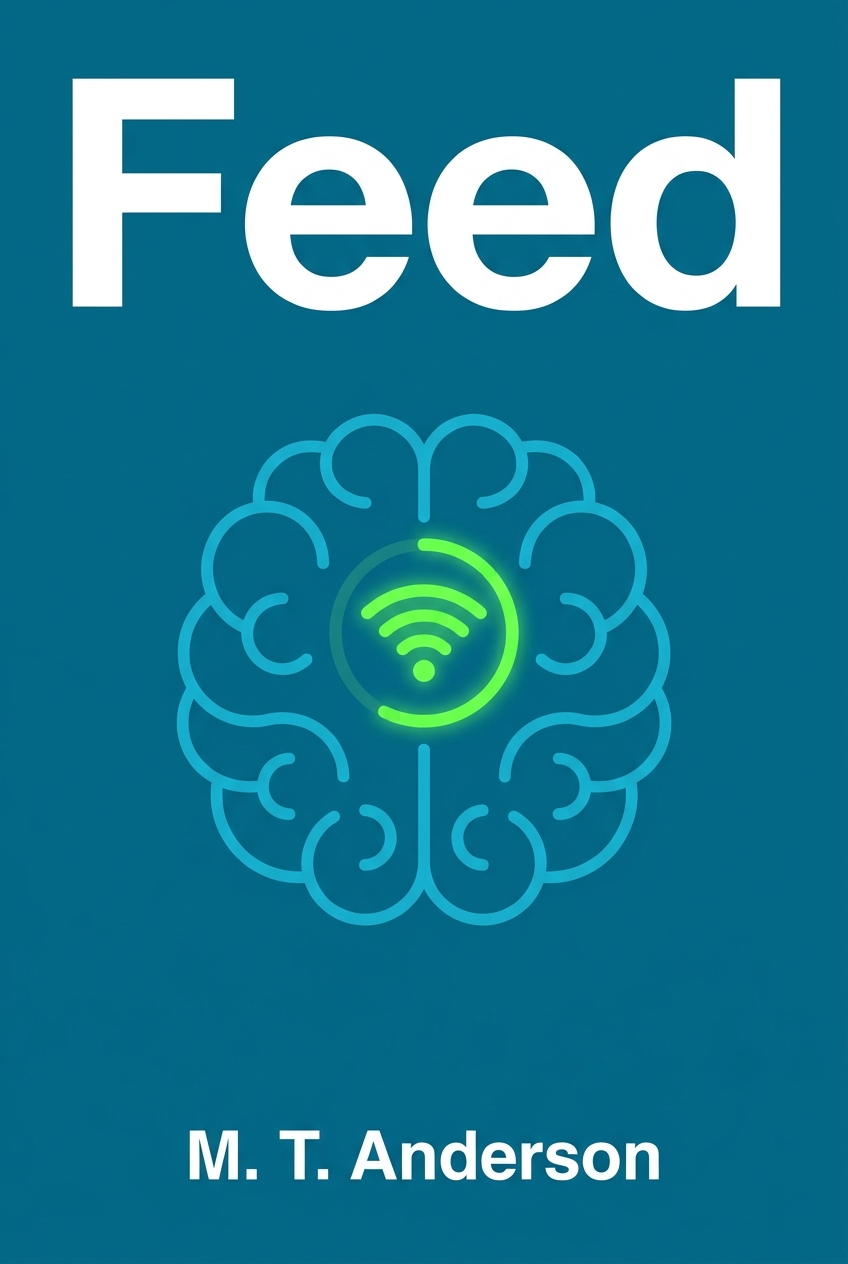
Are you constantly glued to your screen, scrolling through endless feeds? What if that connection was hardwired directly into your brain, controlling your thoughts and desires? Discover a terrifyingly possible future where corporate greed and consumerism have taken over our very minds. This isn't just science fiction; it's a warning. You'll follow Titus and Violet on a journey of rebellion against the "feed," a brain implant that dictates everything. Learn how they fight to reclaim their identities in a world saturated by technology, and question how much of your own life is shaped by the digital noise around you.
Meet the author
National Book Award winner M. T. Anderson is a leading voice in young adult literature, celebrated for his sharp, thought-provoking explorations of technology and society. His background in English and American literature from Cambridge and Syracuse Universities provides the critical lens for his work. Anderson masterfully translates complex societal critiques into compelling narratives, challenging readers to question the digital worlds they inhabit and the futures they are building, a theme powerfully realized in his groundbreaking novel, Feed.
What's it about
Are you constantly glued to your screen, scrolling through endless feeds? What if that connection was hardwired directly into your brain, controlling your thoughts and desires? Discover a terrifyingly possible future where corporate greed and consumerism have taken over our very minds. This isn't just science fiction; it's a warning. You'll follow Titus and Violet on a journey of rebellion against the "feed," a brain implant that dictates everything. Learn how they fight to reclaim their identities in a world saturated by technology, and question how much of your own life is shaped by the digital noise around you.
Meet the author
National Book Award winner M. T. Anderson is a leading voice in young adult literature, celebrated for his sharp, thought-provoking explorations of technology and society. His background in English and American literature from Cambridge and Syracuse Universities provides the critical lens for his work. Anderson masterfully translates complex societal critiques into compelling narratives, challenging readers to question the digital worlds they inhabit and the futures they are building, a theme powerfully realized in his groundbreaking novel, Feed.
The Script
You've reached the end of the free preview.