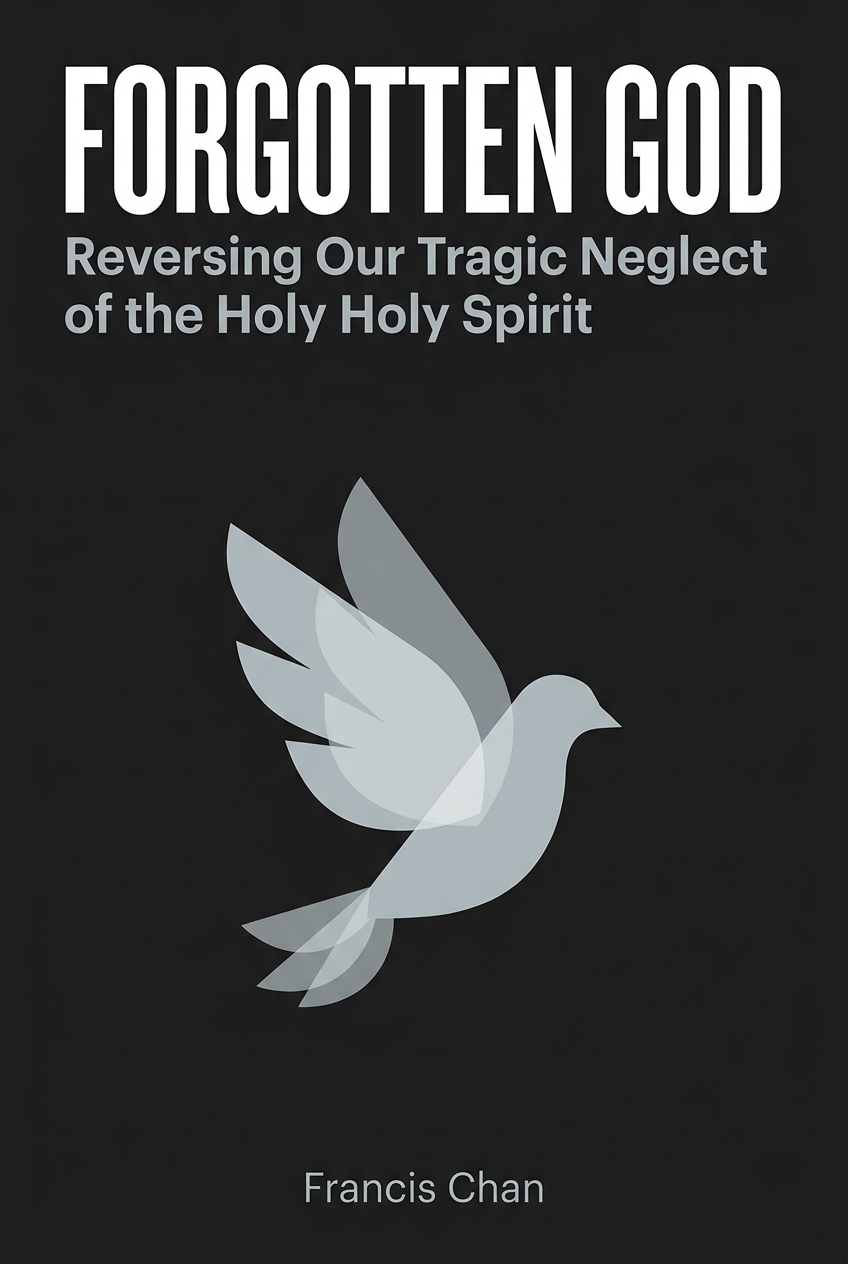
Forgotten God
Reversing Our Tragic Neglect of the Holy Spirit
What's it about
What if you're missing out on the most powerful, life-changing force in the universe? Francis Chan challenges the modern church’s safe and predictable relationship with God, arguing that we have tragically sidelined the Holy Spirit. This summary will reignite your desire for a truly supernatural faith. Discover why a Spirit-filled life isn't just for a select few but is the intended reality for every believer. You'll learn how to move beyond merely knowing about the Holy Spirit to truly experiencing His presence and power, transforming your quiet faith into an active, world-changing adventure.
Meet the author
Francis Chan is the bestselling author of Crazy Love and the founding pastor of Cornerstone Community Church, a thriving congregation he led for sixteen years in Simi Valley, California. Feeling a call to pursue a more radical form of Christian living, he left his established ministry to follow God's leading into new, often uncomfortable, forms of service. This journey of stripping away religious convention to seek the raw, transformative power of the Holy Spirit directly inspired the urgent message within Forgotten God.
Opens the App Store to download Voxbrief

The Script
Think about the most impressive team you can imagine—a championship sports team, a world-class orchestra, a special operations unit. They function as a single entity, each member anticipating the others' moves, their individual talents amplified by a shared purpose. Now, what happens if one of the key players, a true superstar, is consistently left on the bench? The team might still win a few games. The orchestra might still play a recognizable tune. But they will never achieve their full potential. They operate with a self-imposed handicap, a shadow of what they could be. This is a fundamental misunderstanding of the team's very nature. For many Christians, this is exactly how they approach their faith. They know the Father and the Son, but the third, equally powerful member of the Trinity—the Holy Spirit—remains a distant, abstract concept, a superstar left on the sidelines.
This very dynamic is what compelled Francis Chan to write Forgotten God. After founding and leading a thriving megachurch, Cornerstone Community Church in Simi Valley, California, Chan began to feel a deep sense of unease. He looked at the church he had built, a place full of sincere and active believers, and saw a glaring disconnect between the power described in the Bible and the reality he was living. He realized that he, and the church at large, had grown comfortable with a faith that could be explained entirely by human effort, good programs, and charismatic leadership. There was little room left for the unpredictable, powerful, and personal work of the Holy Spirit. This book was born from that holy discontent—a pastor's honest and urgent plea to rediscover the one Person of the Trinity he felt he had, for too long, forgotten.
Module 1: The Great Neglect and Its Consequences
We begin with a tough reality check. Chan argues that for many of us, the Holy Spirit is the "forgotten God." We believe in Him intellectually. We can recite the creed. But if we are honest, many cannot point to a single moment in the last year where they tangibly experienced His presence or power.
The first core insight is stark. The modern church often operates on human talent, not divine power. Think about how we measure success. Is it by attendance numbers? The quality of the music? The eloquence of the speaker? Chan suggests these metrics have led us to create churches full of self-focused consumers, not self-sacrificing servants. He asks us to conduct a thought experiment. Imagine someone who has only ever read the Bible. If they walked into a typical Sunday service, would they recognize the vibrant, supernatural community described in the book of Acts? Or would they be shocked by the apparent absence of the Holy Spirit's manifest presence? The gap is often profound.
This leads to a critical point about personal integrity. A claimed relationship with the Spirit must produce observable change. Chan uses a powerful analogy. If you told your friends you had a supernatural encounter that made you an amazing basketball player, what would they expect? They'd expect to see you play better. If you still couldn't make a layup, they would rightly question your story. In the same way, when we claim the Holy Spirit lives in us but our lives show no difference—no more love, joy, peace, or patience than our non-believing friends—our credibility is undermined. People begin to question either our integrity or God's power. It forces us to ask: Is the Spirit truly at work in me?
And here's the thing. This is about trajectory. Chan points to Joni Eareckson Tada, a woman who has been a quadriplegic for decades. Despite immense physical suffering, her life radiates a supernatural joy, peace, and love that defies her circumstances. Her constant service and worship are a powerful testament to the Spirit's work. Her life is a living demonstration of the fruit of the Spirit, making her, in Chan's eyes, one of the most Spirit-filled people he knows. Her example proves that the Spirit's power is most visible in our surrender.
So why do we settle for less? What holds us back? That brings us to our next module.