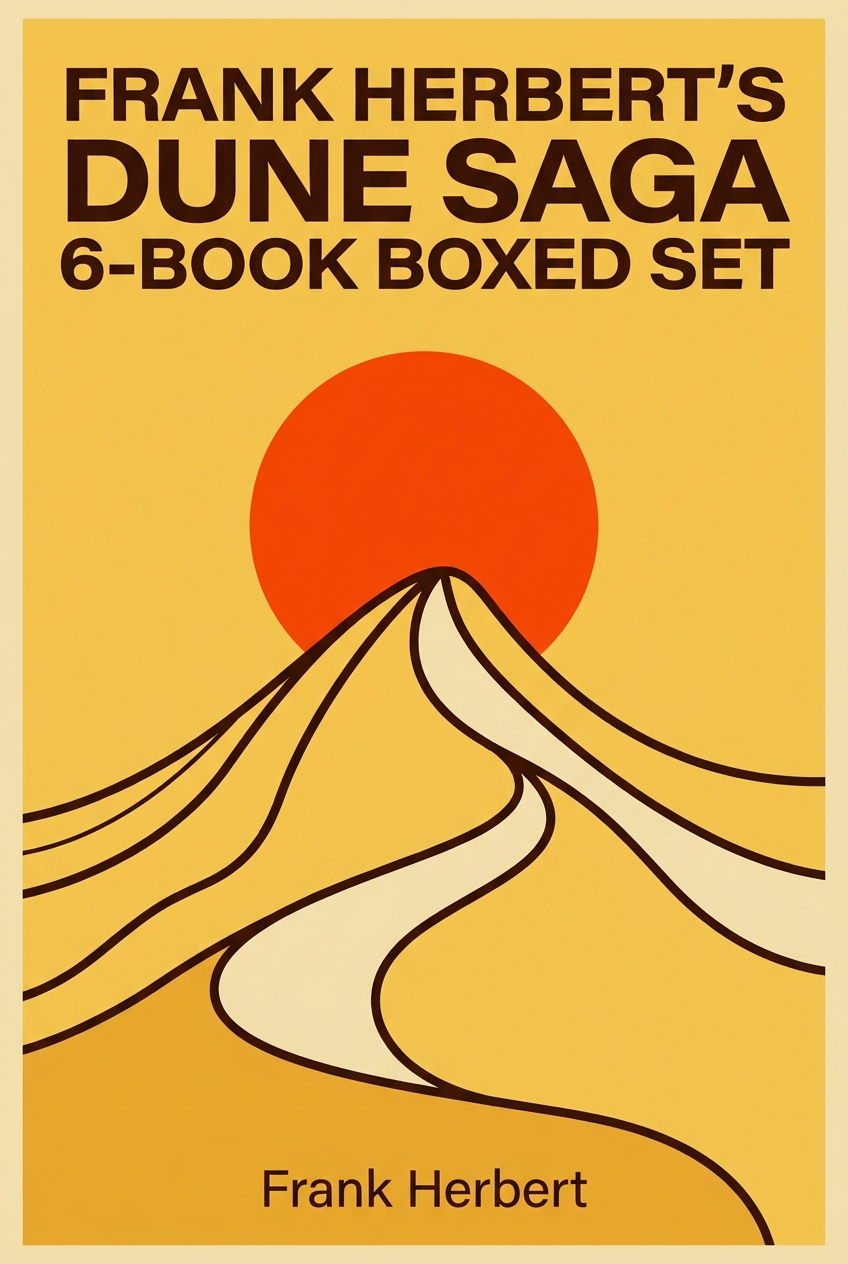
Frank Herbert's Dune Saga 6-Book Boxed Set
Dune, Dune Messiah, Children of Dune, God Emperor of Dune, Heretics of Dune, andChapterhouse: Dune
What's it about
Ever wondered how to build a legacy that spans galaxies and millennia? Frank Herbert's Dune Saga isn't just a story; it's a six-part masterclass in power, prophecy, and survival. Get ready to discover the secrets behind manipulating galactic empires and shaping the course of human destiny. You’ll follow the Atreides dynasty as they navigate treacherous political landscapes, control the universe’s most valuable resource, and grapple with the burdens of godhood. Uncover the intricate strategies for political maneuvering, ecological warfare, and long-term planning that define this epic science fiction masterpiece from beginning to end.
Meet the author
Frank Herbert was an acclaimed American author whose visionary novel, Dune, won the inaugural Nebula Award and the Hugo Award, establishing him as a master of science fiction. His deep interest in ecology, human potential, and the intersection of religion and politics fueled his creation of the intricate and enduring Dune universe. A journalist and photographer by trade, Herbert's diverse background and meticulous research gave his sprawling epic a unique and prophetic depth that continues to captivate readers worldwide.
What's it about
Ever wondered how to build a legacy that spans galaxies and millennia? Frank Herbert's Dune Saga isn't just a story; it's a six-part masterclass in power, prophecy, and survival. Get ready to discover the secrets behind manipulating galactic empires and shaping the course of human destiny. You’ll follow the Atreides dynasty as they navigate treacherous political landscapes, control the universe’s most valuable resource, and grapple with the burdens of godhood. Uncover the intricate strategies for political maneuvering, ecological warfare, and long-term planning that define this epic science fiction masterpiece from beginning to end.
Meet the author
Frank Herbert was an acclaimed American author whose visionary novel, Dune, won the inaugural Nebula Award and the Hugo Award, establishing him as a master of science fiction. His deep interest in ecology, human potential, and the intersection of religion and politics fueled his creation of the intricate and enduring Dune universe. A journalist and photographer by trade, Herbert's diverse background and meticulous research gave his sprawling epic a unique and prophetic depth that continues to captivate readers worldwide.
The Script
You've reached the end of the free preview.