All BooksSelf-GrowthBusiness & CareerHealth & WellnessSociety & CultureMoney & FinanceRelationshipsScience & TechFiction
Download on the App Store

Get Good with Money

Ten Simple Steps to Becoming Financially Whole

16 minTiffany the Budgetnista Aliche

What's it about

Tired of living paycheck to paycheck and feeling like you’ll never get ahead? Discover how to build a rock-solid financial foundation, no matter where you're starting from. This guide offers a clear, 10-step plan to take control of your money and achieve your biggest goals. You'll learn Tiffany the Budgetnista Aliche's proven system for financial wholeness. This isn't about restrictive budgeting; it's about mastering your money mindset, automating your savings, paying off debt smartly, and investing for your future. Get ready to finally make your money work for you.

Meet the author

Tiffany Aliche is an award-winning personal finance educator and the driving force behind "The Budgetnista Law," which has made financial education mandatory in New Jersey middle schools. After losing her job as a preschool teacher during the 2008 recession and struggling with her own finances, she created a global movement to help millions of women achieve financial wholeness. Her journey from financial ruin to empowerment fuels the practical, life-changing advice found in her bestselling book, making her America's favorite financial educator.
Listen Now
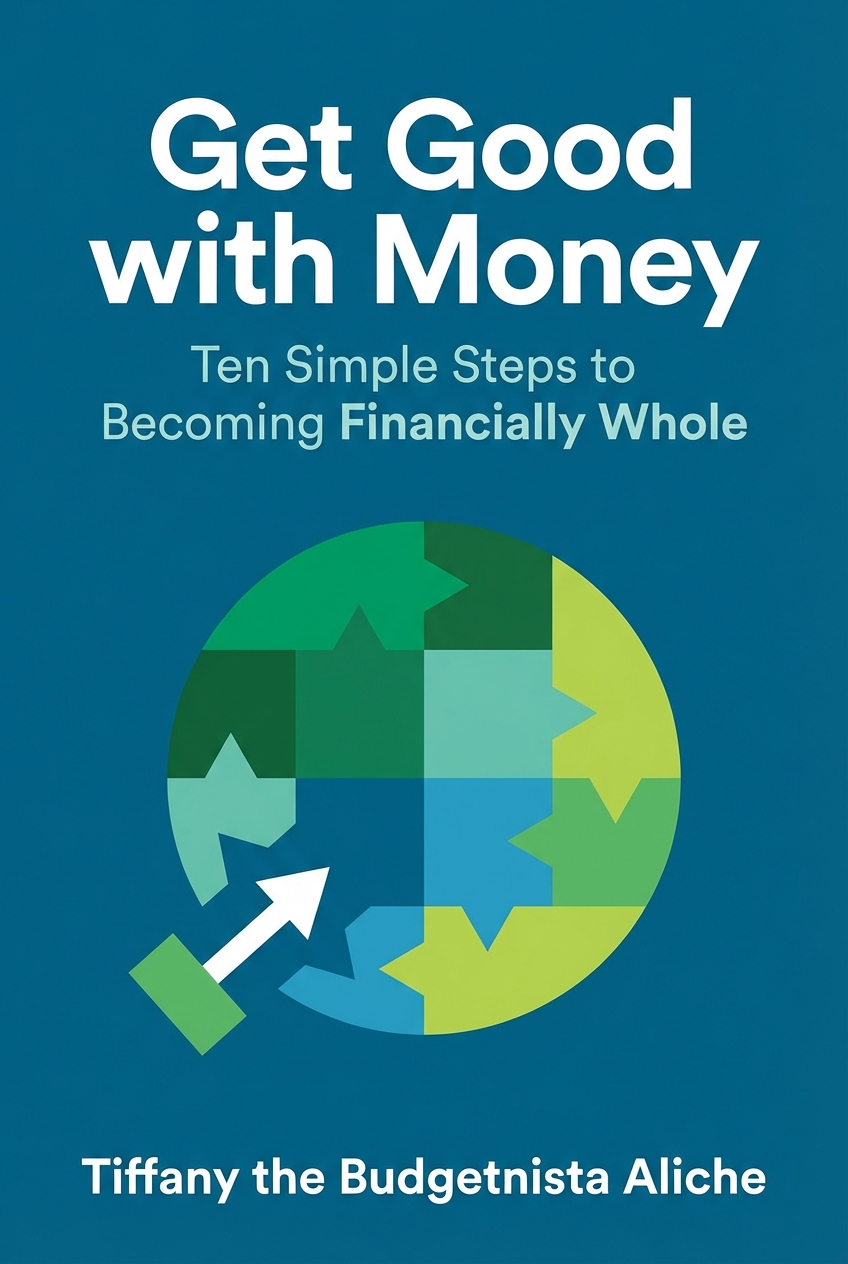
Get Good with Money book cover

The Script

Tiffany Aliche’s first big financial lesson didn’t come from a textbook or a lecture hall. It came from a con artist. Fresh out of college and proud of her new teaching job and perfect credit score, she trusted a charismatic 'friend' who promised to help her invest. Instead, he systematically emptied her accounts, maxed out her credit cards, and vanished, leaving her with a negative bank balance and a crushing $35,000 debt. The shame was suffocating. She couldn’t bring herself to tell her parents, who had worked so hard to give her every opportunity. So, she lived a double life, projecting success on the outside while secretly eating ramen noodles and dodging calls from debt collectors. She felt trapped, like she was drowning in a mess of her own making, with no idea how to even begin to find the surface.

That humiliating rock-bottom experience became the unlikely foundation for a financial revolution. Forced to confront her situation, Aliche began the slow, painful process of teaching herself how to get her life back. She started with the absolute basics, creating a system for surviving. She moved back home, automated her savings, and meticulously rebuilt her financial standing, one small, deliberate step at a time. This personal journey of recovery was about creating a sense of safety and control where there had been only chaos. Realizing that the shame and confusion she felt were not unique, she began sharing her hard-won lessons with other women. As a former preschool teacher, she had a unique gift for breaking down complex, intimidating topics into simple, actionable steps. This passion project, born from her own crisis, grew into an entire movement, a community dedicated to achieving what she calls 'financial wholeness.' Her book, 'Get Good with Money,' is the culmination of that journey, a ten-step system designed to help anyone build a secure financial house, starting right where they are.

Module 1: The Foundation of Financial Wholeness

The core idea of the book is a shift in perspective. Forget chasing "financial freedom." The real goal is "financial wholeness." This is a state where all ten fundamental areas of your financial life work together, creating security and stability regardless of your income. The author herself felt more secure earning $39,000 a year as a teacher than she did earning over $39,000 a month as a business owner. Why? Because as a teacher, her finances were whole. She had a budget, a savings plan, and good credit. As a high-earning entrepreneur, she had cash but no system. This reveals a critical insight: Financial security comes from a coordinated system, not just a high income.

So, what is this system? Aliche breaks it down into ten sequential steps. But before you can even start, you have to master your mindset. This brings us to the first pillar of wholeness. You must become a "paper towel person" with your finances. When you spill juice, do you stare at the mess and criticize yourself? Or do you grab a paper towel and clean it up? Aliche learned from her mother to focus on the solution. The same applies to money mistakes. Dwelling on a bad investment or a period of overspending is useless. Acknowledge it, then immediately shift your focus to fixing it.

Building on that, you need to develop your own financial voice. Your money habits are often inherited. They are echoes of your parents' beliefs or reactions to societal pressure. To take control, you must distinguish their voice from your own. The author suggests personifying money as a demanding toddler. When it screams for an expensive purchase you don't need, you, as the adult in charge, can firmly say "no." This simple mental flip reinforces a key principle. You are the boss of your money, not the other way around.

Finally, this journey is meant to be a joyful and proactive march. Aliche insists that you find ways to practice gratitude and seek joy, even when things are tough. When she hit her financial bottom, she sarcastically listed things she was grateful for, like her "raggedy suitcase" and 50 email contacts. That small mindset shift led her to email those contacts for work, landing a contract that started her recovery. This underscores the power of perspective. A positive and proactive mindset is the engine for financial recovery and growth. By mastering these mental frameworks, you lay the groundwork for the practical steps that follow.

Read More