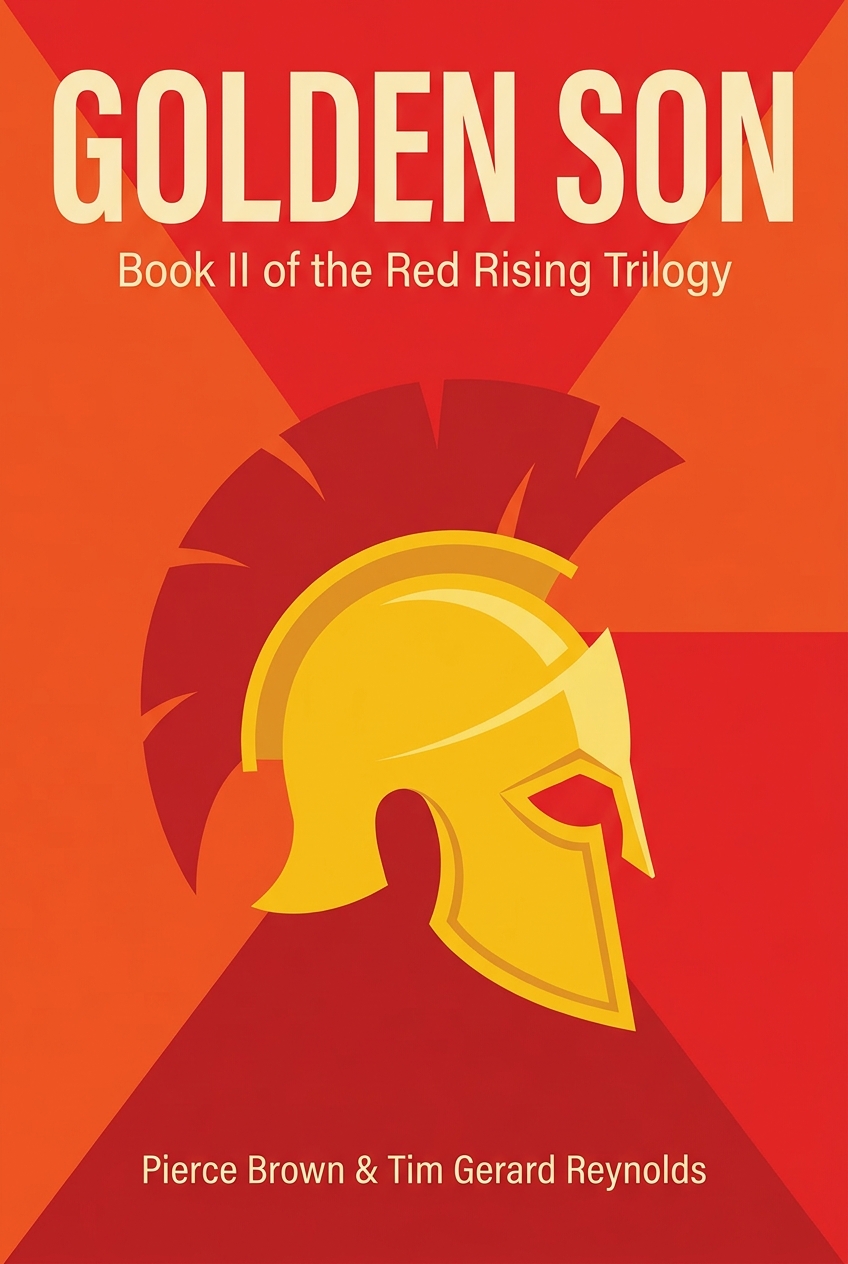
Golden Son
Book II of the Red Rising Trilogy
What's it about
Ever wondered how to dismantle a system of oppression from the inside? Discover how to rise from the bottom, infiltrate the ruling class, and strategically shatter the chains of a brutal hierarchy by becoming the very thing you were meant to destroy. You'll learn the art of political maneuvering and ruthless warfare as you follow one man's perilous journey. See how he forges fragile alliances with his sworn enemies, navigates deadly betrayals, and masters the cruel games of the elite to ignite a revolution that will burn an empire to the ground.
Meet the author
Pierce Brown is the 1 New York Times bestselling author of the Red Rising Saga, an epic science-fiction series that has sold millions of copies worldwide. Inspired by classical history and a desire to write a story his mother would enjoy, Brown crafted a sprawling, politically charged universe from his garage. His background in political science and economics, combined with his work as a page for the NBC Senate, gave him a unique perspective on the dynamics of power, rebellion, and society that fuel this acclaimed series.
The Script
The silence after a great victory can be more deafening than the battle itself. The cheering fades, the banners are furled, and the victor stands alone amidst the wreckage of the old order, holding a crown that feels impossibly heavy. He has won the game, shattered the system, and climbed to the apex. But the summit is a lonely, windswept place. The allies who fought beside him now look at him with a new, cautious distance. The enemies he defeated are not gone; they are merely regrouping in the shadows, their hatred sharpened by humiliation. The promises made in the heat of rebellion now come due, and the reality of ruling is a far messier, more compromised affair than the clean, righteous fury of revolution.
This is the treacherous ground Darrow walks at the start of Golden Son. He is no longer the underdog fighting from the mines of Mars; he is a rising star in the very society he swore to destroy, a golden prince playing a game where the stakes have escalated from personal survival to the fate of worlds. He is surrounded by friends who are now rivals, mentors who are now manipulators, and a love that is now a liability. The rage that fueled him is no longer enough. To win the war, he must become a leader, a politician, and a symbol—a transformation that may cost him the very humanity he is fighting to reclaim. His greatest enemy is the gilded cage of his own triumph.
Pierce Brown thrusts his hero into this crucible to explore the brutal aftermath of success. After the explosive, contained rebellion of Red Rising, Brown was fascinated by the question of what happens next. What does a revolutionary do when he starts winning and must build something new from the ashes of what he has torn down? As a young writer who had experienced his own share of early career struggles before his debut's breakout success, Brown understood the disorienting shift from being an outsider fighting for a chance to an insider navigating newfound pressures and expectations. He crafted Golden Son to be a larger, more complex and politically charged epic, expanding the scope from a single school to the entire solar system to test his hero as a warrior and as a leader forced to make impossible choices in a galaxy sliding toward civil war.
Module 1: The Brutal Calculus of Power and Loyalty
The first thing you learn in Golden Son is that power is a transaction. And in the cutthroat world of the Gold elite, loyalty is the most volatile currency of all. The ruling class operates on a simple, brutal principle: your value is determined by your immediate utility to those above you.
ArchGovernor Nero au Augustus, Darrow’s patron, makes this painfully clear. He initially protects Darrow, declaring, "For you belong to me... and I protect what is mine." This is about ownership. Darrow is an asset, a "gambit" in a political game. When Darrow loses a crucial war game, his value plummets. Augustus discards him, stating his rivalry with another house has become "burdensome to my interests, both economically and politically." The lesson is stark. In this world, loyalty lasts only as long as you are useful. The moment you become a liability, you are cut loose.
This leads to the second insight. In a system built on utility, true alliances are forged in the fires of shared risk. Darrow’s most reliable allies are the Howlers, his band of misfits from the brutal Gold training ground called the Institute. They follow him because of shared history and proven trust. Sevro, the leader of the Howlers, makes this explicit. His allegiance is to Darrow, the man he fought alongside. This kind of loyalty, born from mutual respect and shared struggle, proves far more resilient than any politically motivated pact.
And what about those who don't fit into this framework of utility or camaraderie? This brings us to a darker truth. Rivals who cannot be controlled or co-opted must be psychologically dismantled or physically eliminated. The book is a masterclass in social and political warfare. Darrow’s enemies want to humiliate him. After his fall from grace, the rival Bellona family ambushes him, beats him, shaves his head, and urinates on him. The message is clear: "a pauper can never be a prince." This is a strategic act of degradation designed to shatter his reputation and social standing.
So here's what that means for anyone navigating a competitive environment. Formal structures of power are fragile. Your perceived value can shift overnight. The most durable alliances are those built on mutual respect and proven trust, often with peers who have been in the trenches with you. And finally, be aware that the most dangerous attacks are the whispers, the rumors, and the calculated humiliations designed to undermine your credibility from within.