All BooksSelf-GrowthBusiness & CareerHealth & WellnessSociety & CultureMoney & FinanceRelationshipsScience & TechFiction
Download on the App Store

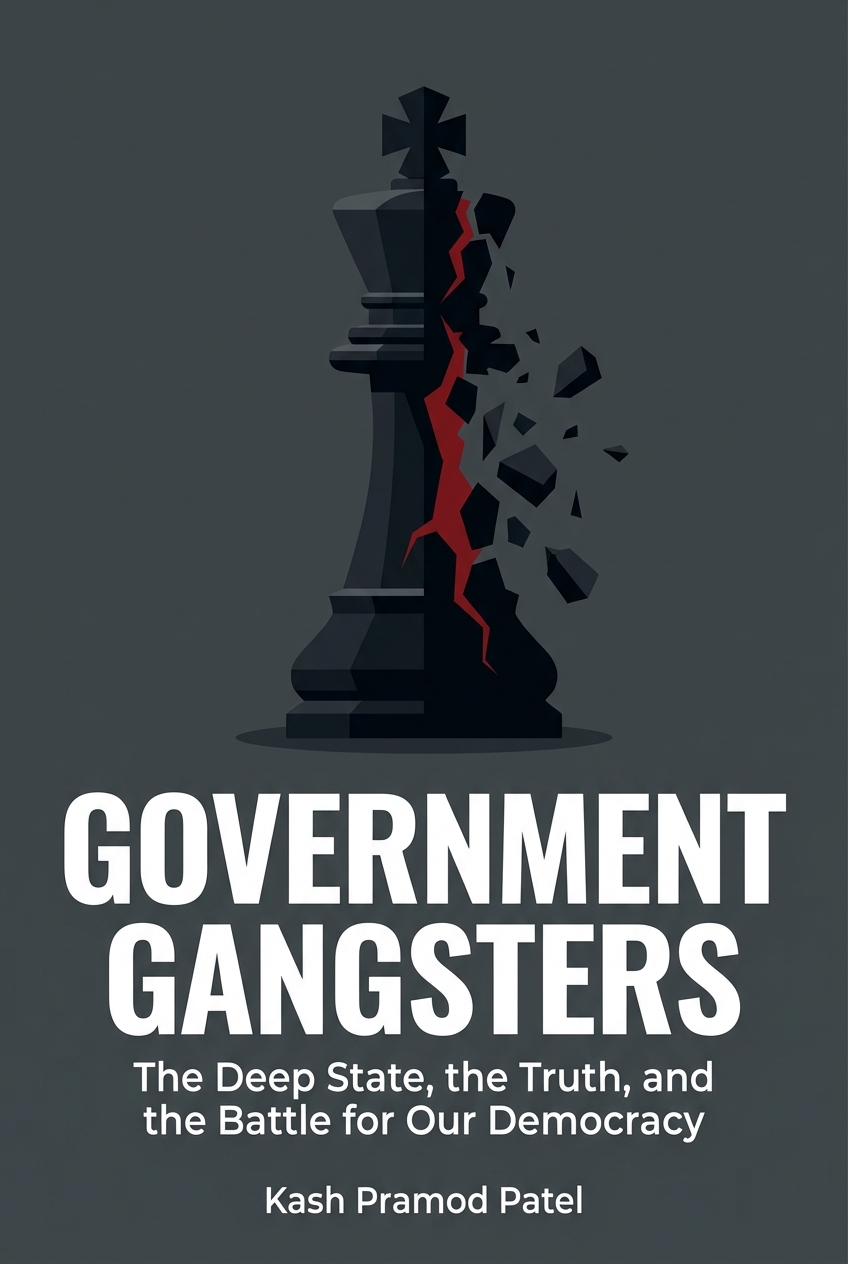
Government Gangsters

The Deep State, the Truth, and the Battle for Our Democracy

16 minKash Pramod Patel

What's it about

Ever wonder if the headlines are telling you the whole story? Uncover the hidden forces shaping American politics and learn to spot the truth behind the spin. This summary cracks open the "Deep State" to reveal how unelected officials can influence everything from elections to national security. You'll get a firsthand look from a top-level insider at the secret tactics used by these "government gangsters" to manipulate the system. Discover the key players, the shadow networks, and the playbook they use, equipping you with the knowledge to protect our democracy.

Meet the author

Kash Patel is a former top national security official who served as chief of staff to the Secretary of Defense and a senior aide on the National Security Council. His unparalleled access within the highest levels of government provided him a unique frontline view of the inner workings of Washington. This firsthand experience investigating corruption and confronting bureaucratic resistance directly informs his mission to expose the truth and empower citizens to defend American democracy.
Listen Now
Government Gangsters book cover

The Script

We tend to believe that our public institutions are built on a foundation of rules, where wrongdoing is a rare glitch—a deviation from the norm. We assume that when things go wrong, it's because of a few bad actors who have managed to slip through the cracks of an otherwise sound system. This belief provides a sense of order and predictability. It lets us think that accountability is the default setting, that mechanisms are in place to self-correct, and that the sheer visibility of public life is a disinfectant against corruption. But what if the inverse is true? What if the system itself isn't just accidentally flawed, but is sometimes intentionally weaponized by those inside it? What if the very rules designed to ensure fairness can be twisted into tools for political warfare, and the institutions we trust for protection become the instruments of attack?

This isn't a theoretical question for Kash Pramod Patel. During his tenure as a senior official within the national security apparatus and the Department of Defense, he witnessed firsthand how established procedures were manipulated for political ends. He saw how dedicated public servants were targeted for their effectiveness. Patel realized that the stories being told to the public were often a carefully constructed narrative that obscured a much darker reality. He wrote "Government Gangsters" to dismantle that narrative, using his direct experiences to expose how the architecture of power can be repurposed from a shield that protects the public into a sword wielded against political adversaries.

Module 1: The Deep State Playbook—Manufacturing a Crisis

The central argument of the book is that a network of unelected officials, media figures, and political operatives actively conspires to control political outcomes. Patel claims this isn't a theory but a tangible force he witnessed firsthand.

It starts with a simple premise. When this network, which he calls the "Deep State," wants to neutralize a political threat, it manufactures a crisis by fabricating a compelling but false narrative. This is the foundational move. Patel uses the "Russia Gate" scandal as his primary case study. He alleges that political opponents of Donald Trump, working with insiders at the Federal Bureau of Investigation, or FBI, and the Department of Justice, or DoJ, created the story that Trump was a Russian agent. The key instrument for this was the Steele Dossier, a collection of memos funded by the Hillary Clinton campaign and the Democratic National Committee.

Patel argues the dossier was filled with outlandish and easily disprovable claims. Its purpose was to be a pretext. And here's where the playbook gets more sophisticated. The network uses circular reporting to create the illusion of independent corroboration. Patel describes a process where Christopher Steele, the dossier's author, would leak his own unverified claims to friendly media outlets. The FBI would then cite those same media reports in its secret applications to the Foreign Intelligence Surveillance Court, known as the FISA court. They used these reports as "evidence" to justify surveilling a presidential campaign, creating a self-reinforcing loop of disinformation.

From this foundation, the next step is to use process crimes to neutralize targets when no actual crime exists. Patel points to the case of General Michael Flynn, Trump's first National Security Advisor. The FBI investigation found no evidence of criminal conspiracy with Russia. So, they pivoted. Patel claims the FBI set a "perjury trap" by interviewing Flynn under questionable circumstances, hoping to catch him in a minor misstatement. Flynn eventually pleaded guilty to making false statements, a process crime that allowed the network to claim a victory and damage an opponent, even when the original accusation was baseless.

So what happens when these tactics are exposed? The final move in this part of the playbook is to weaponize the classification system to hide evidence of misconduct. Patel alleges that when his congressional investigation started uncovering these actions, incriminating documents were suddenly marked "classified." This prevented their public release and allowed the officials involved to hide behind the shield of national security. He claims that declassification became a battleground to expose what he calls corruption.

Read More