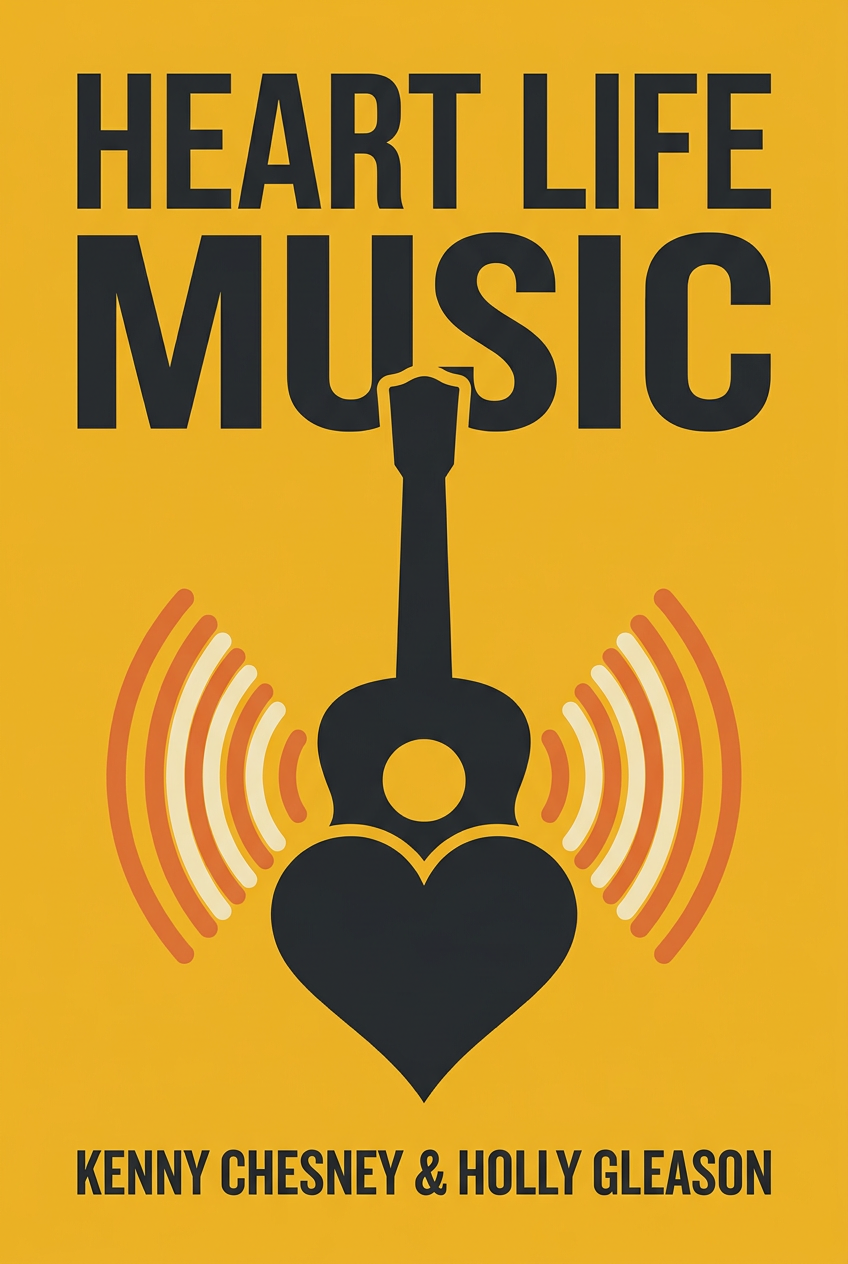
Heart Life Music
A New York Times Bestselling Memoir from the Beloved Country Music Star
What's it about
Ever wonder what it takes to not just become a music superstar, but to stay one for decades? Kenny Chesney pulls back the curtain on his incredible journey, sharing the relentless drive and raw passion that fueled his rise from humble beginnings to stadium-filling icon. Discover the secrets behind his chart-topping hits and the mindset that helped him navigate the pressures of fame without losing himself. You’ll learn the life lessons from the road, the power of connecting with an audience, and the unwavering dedication required to build a lasting legacy in the heart of country music.
Meet the author
Holly Gleason is an award-winning music critic and journalist who has spent decades chronicling the lives of country music's biggest stars for publications like The New York Times and Rolling Stone. Her deep, trusting relationships within Nashville, especially her long-standing friendship with Kenny Chesney, provided unparalleled access to his life beyond the spotlight. This unique position allowed her to co-author a memoir that captures the authentic heart and soul of the man behind the music.
Opens the App Store to download Voxbrief

The Script
There are two ways to tell a concert story. The first is the setlist: a neat, chronological accounting of songs played, start to finish. It’s the official record, the what-happened, the kind of thing you can look up online the next day. It’s clean, factual, and completely misses the point. The second story is harder to tell. It’s the feeling of the bass hitting your sternum, the collective roar when the lights finally go down, the sea of faces singing a chorus back to the stage—a chorus that means something different to every single person, yet unites them in that moment. This story is a feeling. It’s the taste of salt and beer in the air, the sunburn on your shoulders, the shared, unspoken understanding that you’re all part of something bigger than just a show.
This second story—the one made of feeling, memory, and connection—is the one Kenny Chesney has been trying to capture for decades. For him, a life in music was about the moments between the notes, the faces in the crowd, the places that shaped the songs, and the songs that shaped the lives of the people who heard them. He realized that the real story was a shared history written across thousands of tour dates and millions of fans. To finally tell that story, he teamed up with veteran music journalist Holly Gleason, someone who had chronicled his journey from the very beginning. Together, they gathered the photographs, the memories, and the lyrics to bottle that feeling of a perfect summer night and the heartbeat of a community built one song at a time.
Module 1: The Foundation of Authentic Drive
Before the stadium tours and hit records, there was a kid in a small town. A place with fewer than 1,000 people. This is where the core engine of ambition was built. It was fueled by curiosity and community.
The first principle is that foundational drive is born from wonder, not a rigid plan. Chesney describes lying in the grass in Luttrell, Tennessee. He would stare at the stars. He’d wonder what existed beyond his small world. This was about the simple act of questioning what was possible. For professionals caught in sprint planning and quarterly roadmaps, this is a powerful reminder. True, sustainable motivation often comes from a place of open curiosity. It's the "what if" that precedes the "how-to."
Next, the book shows that your earliest communities embed your core values. Chesney was raised in a family that leaned on church, school, and sports. Music was the thread connecting it all. He recalls his family attending a major country concert on Thanksgiving night. They sat in cheap seats behind the stage. But seeing the inner workings fascinated him. It was the process that captured his attention. This early exposure to music was an organic part of life. It teaches us that our deepest passions aren't always the ones we formally study. They are the ones woven into our daily lives and relationships.
Finally, Chesney makes a crucial point. Authentic experiences, not polished productions, create the most powerful imprints. The concerts of his youth had minimal production. A few lights, a band, and an artist. Yet the emotional connection was urgent and real. This is a direct challenge to the high-production world we live in. We often believe more features, more polish, and more hype will create more impact. But this book argues for the opposite. The most resonant moments are often the most raw. The ones that prioritize genuine connection over manufactured spectacle. Think about your own work. Where can you strip away the layers to get to the authentic core?
Module 2: The Apprenticeship of Hustle and Humility
Now, let's move into the transition from dreamer to doer. This module is about the unglamorous, essential grind. It’s where passion meets reality. It's the part of the journey that often gets edited out of success stories.
A core insight here is that true mastery comes from immersion in the trenches, not the classroom. After college, Chesney moved to Nashville. His first real education was at a rundown bar called the Turf Club. He learned to set up a sound system. He learned to read a room. He learned to perform for four straight hours. He calls it his "master's degree in how to be a performer." This is a powerful lesson for anyone trying to break into a new field. Your most valuable education will come from doing the real, often messy, work. It’s about getting reps in an environment where the stakes are low but the learning is high.
And here's the thing. Rejection is fuel for refinement. Chesney faced plenty of it. He wrote a song for a girl in his class. She avoided him afterward. He met with legendary Nashville producers. They politely told him he wasn't ready. He saw these moments as data points. He used the feedback to get better. This reframes rejection from a personal failure to a necessary part of the iteration process. Every "no" is just feedback for the next version.
From this foundation, we see that mentorship is often about finding advocates who see your potential before you do. A man named Clay Bradley at BMI, a music rights organization, became a key advocate. He saw the spark in a song called "The Tin Man." But he didn't rush. He held Chesney back from meetings, telling him, "You only make one first impression." When the time was right, he made a call to a major publisher. He said, "He's one of us." That simple endorsement opened the door. In any industry, finding a sponsor who will vouch for you is critical. It’s about who believes in you enough to put their own reputation on the line. This is a different level of support than simple mentorship.
Module 3: Building the Infrastructure for Scale
So far, we've focused on individual drive and early struggles. But to scale, you need a team and a system. This module is about the transition from solo act to organized enterprise. It’s about building the professional infrastructure to support a growing vision.
The first step is that you must find a visionary partner who rewrites the rules. For Chesney, this was manager Dale Morris. Morris was known for managing the band Alabama. He didn't operate by the industry playbook. When arenas wouldn't pay country acts fairly, he took Alabama "to the fields." He set up his own stages and tripled their revenue. When he met Chesney, he offered a handshake and a simple question: "How hard are you willing to work?" This teaches us a vital lesson. The right partner is someone who can invent a new game.
Building on that idea, the book shows that grassroots momentum is built one personal connection at a time. Chesney’s first record deal was with a small label. They had no established country division. So they hit the road. They personally visited radio stations. Chesney would get on the phone with programmers, talking about music and family. At an early fan festival, he signed autographs for over an hour and a half. These small, direct interactions created a groundswell of support. It's a reminder that in a world of scalable marketing, genuine, one-to-one connection is still the most powerful tool for building a loyal following.
But flip the coin. Scaling also requires making tough, strategic changes. As his sound evolved, Chesney realized some of his original band members weren't the right fit for the new, rock-influenced direction. He had to make changes. He also sought out new producers, Buddy Cannon and Norro Wilson. This partnership gave him access to "top-shelf" songs. These decisions are painful. They involve people who were with you from the beginning. But growth sometimes requires you to choose the future of the music over the comfort of the past. It’s a hard truth for any founder or leader.