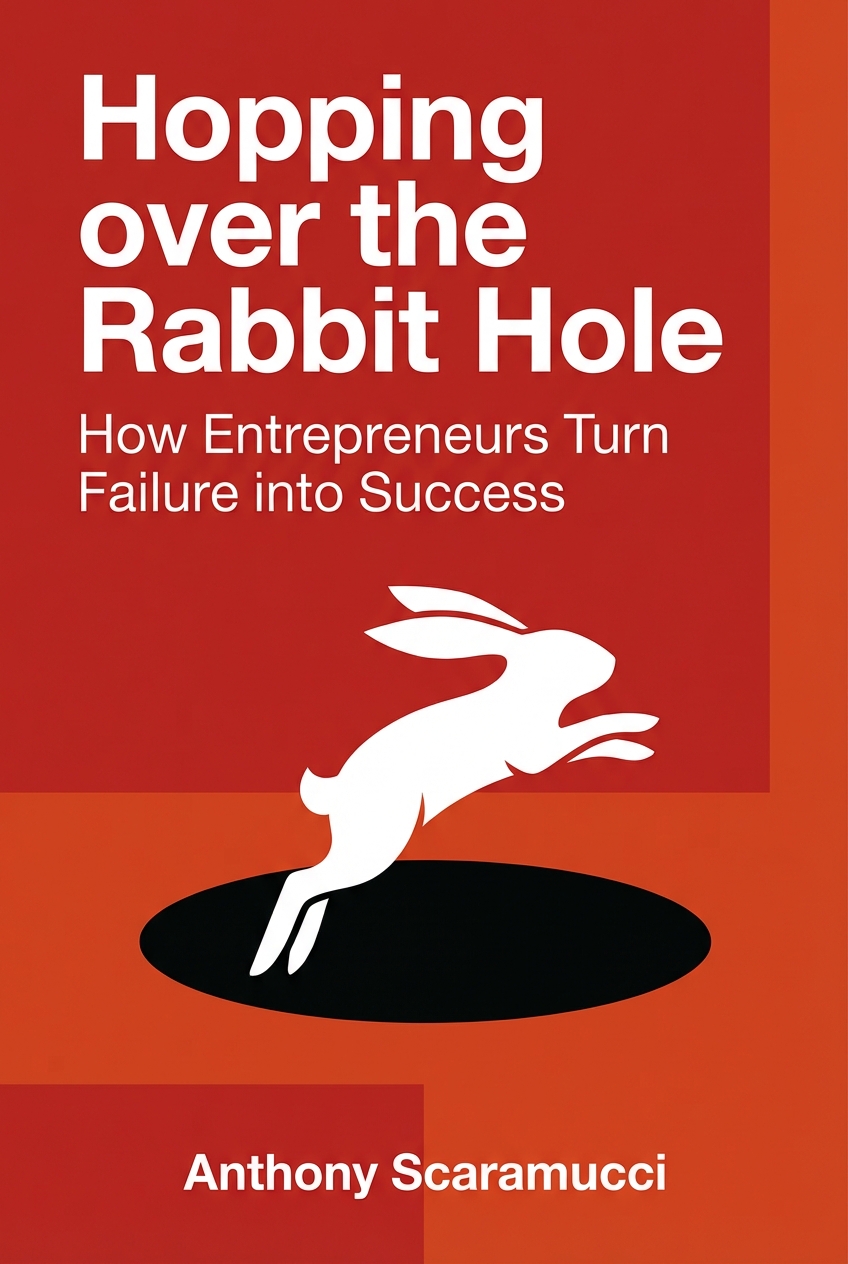
Hopping over the Rabbit Hole
How Entrepreneurs Turn Failure into Success
What's it about
Ever wonder how some entrepreneurs bounce back from crushing failure, stronger than ever? Discover the mindset and strategies that turn devastating setbacks into your greatest launching pad. This isn't just about survival; it's about learning to thrive on the other side of disaster. Drawing from his own dramatic fall and rise, Anthony Scaramucci reveals how to embrace risk, reject rejection, and reframe your perspective on failure. You'll learn the art of the comeback, how to build an unsinkable network, and why your next big mistake might be the best thing that ever happens to you.
Meet the author
Anthony Scaramucci is the founder of global investment firm SkyBridge Capital, which manages billions in assets and hosts the premier SALT Conference for leading entrepreneurs. His own journey, marked by both spectacular successes and public setbacks, provided the raw material for his insights on resilience. Scaramucci's firsthand experience navigating the volatile worlds of finance and politics taught him that failure is not an endpoint, but a crucial stepping stone toward achieving breakthrough success, a lesson he shares with aspiring leaders.
The Script
In the cutthroat world of Hollywood, a new script can feel like the next sure thing. It has the right structure, a killer concept, and the perfect role for a star. Yet, for every blockbuster that gets made, thousands of seemingly perfect scripts languish, victims of a sudden change in market appetite, a key executive's departure, or a financing deal that evaporates overnight. This is the brutal, often invisible, reality of the creative industries: success is about surviving the thousand tiny deaths that happen between the initial spark and the final product. The ability to absorb these blows, pivot without losing momentum, and maintain belief when the project is on life support is the real, unglamorous skill behind any lasting career in a high-stakes field.
That same pattern of surviving serial near-failures defines the world of high-stakes entrepreneurship. Anthony Scaramucci learned this in the trenches of Wall Street and through the public launch, sale, and repurchase of his own company, SkyBridge Capital. He saw brilliant colleagues and promising ventures get swallowed by unforeseen market shifts or a single miscalculation. He wrote "Hopping over the Rabbit Hole" to codify the hard-won lessons of resilience that separate those who merely have a good idea from those who actually build something that lasts. It’s an unflinching look at the psychological fortitude required to navigate the volatile space between ambition and reality, written by someone who has fallen—and climbed back out—more than once.
Module 1: The Gladiator's Mindset — Embracing Failure and Fear
Most people run from failure. Entrepreneurs run toward it. The book frames this as the "Gladiator" mindset. You willingly step into an arena where the odds are stacked against you. Why? Because you understand a fundamental truth. Failure is a data point for growth.
Scaramucci's own story is a testament to this. In 2008, his firm SkyBridge was hemorrhaging money. The financial world was imploding. His partners wanted to retreat. Instead, he did something that seemed insane. He launched a massive, expensive conference in Las Vegas called the SALT Conference. It was a contrarian bet. It projected confidence when everyone else was projecting fear. That single decision, born from the ashes of a crisis, reinvented his company. It shows that in moments of extreme distress, calculated risks often beat defensive retreats.
This requires a specific psychology. The author suggests eighty percent of success is psychology. Only twenty percent is mechanics. You have to conquer your own fear and anxiety. He shares a story about getting fired from Goldman Sachs early in his career. He was angry. He felt betrayed. He could have wallowed in self-pity, a trap he calls one of the biggest mistakes anyone can make. But he didn't. Instead, he took ownership. He admitted he lacked the technical skills for the job. This brutal self-awareness was the first step toward finding a role that truly fit his strengths.
So how do you build this mindset? You must stop using the word "ought." Phrases like "Things ought to have been different" are toxic. They signal entitlement and victimhood. They keep you stuck in a past you can't change. The alternative is to accept reality as it is. Take ownership of your situation. That is the only starting point for building a better future. When you face a setback, don't ask what went wrong. Ask what you can learn. Then, get back in the arena.