How Highly Effective People Speak
How High Performers Use Psychology to Influence With Ease (Eloquence for Excellence)
What's it about
Ever wonder how some people command attention the moment they speak, effortlessly persuading and influencing others? What if you could learn their secrets to sound more confident, build instant rapport, and make your ideas impossible to ignore? This book summary breaks down the science behind elite communication. You'll discover the psychological triggers high performers use to win trust, frame their arguments, and navigate any conversation with ease. Learn specific vocal techniques, body language hacks, and storytelling structures that turn simple speech into a powerful tool for success, whether you're leading a team, negotiating a deal, or simply making a lasting impression.
Meet the author
Peter Andrei is a communication coach and corporate trainer who has helped thousands of professionals at Fortune 500 companies like Google, Microsoft, and Netflix master persuasive speaking. His expertise is born from a lifelong fascination with psychology and a personal journey to overcome social anxiety, which led him to deconstruct the communication patterns of the world's most influential leaders. His methods combine proven psychological principles with practical, real-world techniques to help anyone speak with confidence and influence.
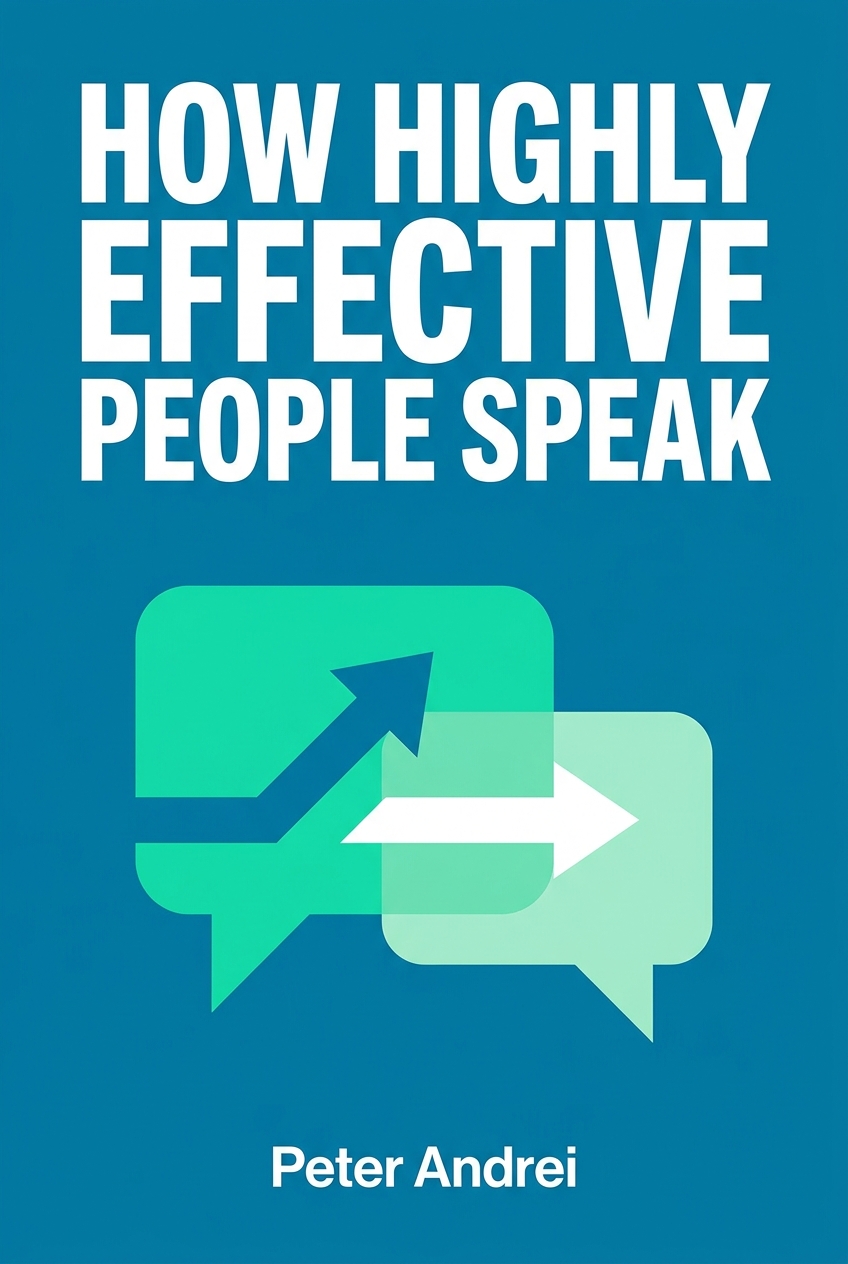
What's it about
Ever wonder how some people command attention the moment they speak, effortlessly persuading and influencing others? What if you could learn their secrets to sound more confident, build instant rapport, and make your ideas impossible to ignore? This book summary breaks down the science behind elite communication. You'll discover the psychological triggers high performers use to win trust, frame their arguments, and navigate any conversation with ease. Learn specific vocal techniques, body language hacks, and storytelling structures that turn simple speech into a powerful tool for success, whether you're leading a team, negotiating a deal, or simply making a lasting impression.
Meet the author
Peter Andrei is a communication coach and corporate trainer who has helped thousands of professionals at Fortune 500 companies like Google, Microsoft, and Netflix master persuasive speaking. His expertise is born from a lifelong fascination with psychology and a personal journey to overcome social anxiety, which led him to deconstruct the communication patterns of the world's most influential leaders. His methods combine proven psychological principles with practical, real-world techniques to help anyone speak with confidence and influence.
The Script
You've reached the end of the free preview.