All Books
Self-Growth
Business & Career
Health & Wellness
Society & Culture
Money & Finance
Relationships
Science & Tech
Fiction
Topics
Blog
Download on the App Store

Hunger

The Complete Trilogy

15 minJeremy Robinson, Jeffrey Kafer

What's it about

Could you survive the end of the world? When a terrifying plague turns humanity into ravenous, single-minded monsters, one man's desperate search for his family becomes a brutal fight for survival. This is your chance to experience the complete, uncut story of the apocalypse. Follow Kai, a former park ranger, as he navigates a collapsed society, battling not only the infected but also the darkness within humanity itself. You'll learn what it takes to endure, make impossible choices, and find hope when all seems lost in this gripping, action-packed trilogy.

Meet the author

Jeremy Robinson is a New York Times and 1 Audible bestselling author known for his pulse-pounding thrillers that have sold more than five million copies worldwide. Teaming up with Jeffrey Kafer, a USA Today bestselling author and a celebrated narrator with over a thousand audiobooks to his name, they bring a unique fusion of storytelling mastery and auditory expertise. Their collaboration on the Hunger trilogy combines Robinson's knack for high-stakes action with Kafer's deep understanding of pacing and character voice, creating an unforgettable survival horror experience.
Listen Now
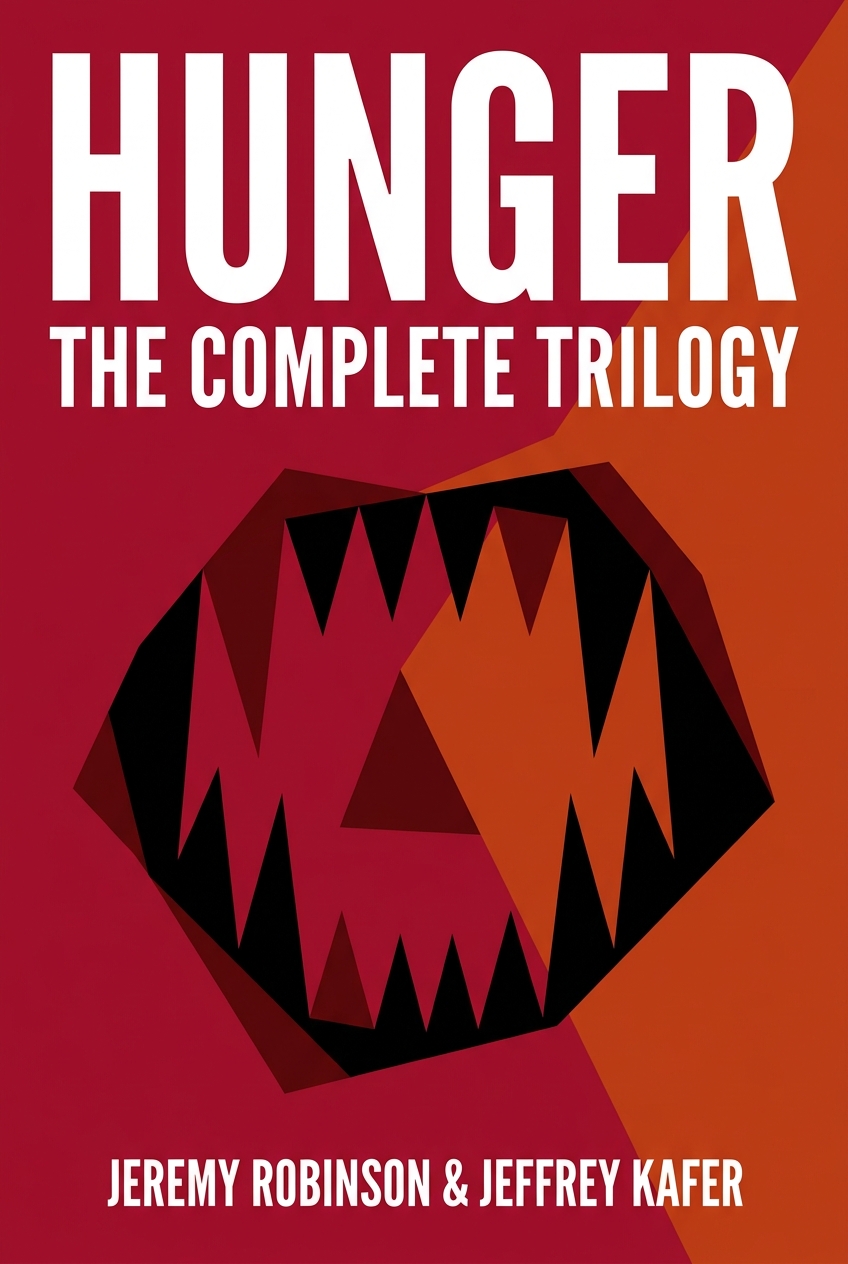
Hunger book cover

The Script

The hunter has been chasing his prey for a week, deep in the Alaskan wilderness. He’s cold, he’s tired, and his supplies are dwindling. But he’s close. He can feel it. He rounds a granite outcrop and freezes. There, across a small clearing, is the elk he’s been tracking. It’s a magnificent animal, but something is terribly wrong. It’s not eating. It’s not resting. It’s just… standing there. Staring. Its head is cocked at an unnatural angle, its eyes glassy and unfocused. As the hunter raises his rifle, a low, guttural growl echoes from the elk’s throat—a sound no elk should ever make. A fine, black dust, like iron filings, seems to drift from its nostrils with every ragged breath. The hunter lowers his weapon, a primal dread colder than the Alaskan air creeping up his spine. This is an encounter with something ancient and alien, a sickness that has turned the very fabric of the wild inside out.

This chilling scene, where nature itself becomes the monster, is the creative territory of Jeremy Robinson. Known for his high-octane blend of action, science fiction, and horror, Robinson has a knack for taking a simple, terrifying premise and pushing it to its absolute limit. Teaming up with narrator and co-author Jeffrey Kafer, who brings a visceral, immediate voice to the suspense, they crafted Hunger. The book was born from the question of what happens when the most fundamental drive—the need to eat—is hijacked by something malevolent and inexplicable. They wanted to explore a plague that transforms every living thing into a vessel for a ravenous, single-minded entity, creating a global apocalypse story that feels both epic in scale and deeply personal in its terror.

Module 1: The Architecture of Oppression

The world of Panem is a meticulously designed system of control. The Capitol’s power is upheld by a psychological and economic architecture designed to keep the districts divided and weak.

First, the system weaponizes poverty to control behavior. The tesserae system is a perfect example. Poor families in District 12 face a terrible choice. They can allow their children to risk starvation, or they can add their names to the Reaping pool extra times in exchange for a meager supply of grain and oil. This is coercion. A sixteen-year-old like Haymitch ends up with twenty slips of paper in the Reaping bowl. A wealthier town kid has only a few. This creates a permanent, structural disadvantage. The very act of feeding your family makes you more likely to be sent to your death.

From there, social stratification is deliberately engineered to prevent unity. The book draws a sharp line between the impoverished coal miners of the Seam and the slightly better-off merchants in town. This is a strategic divide. Town merchants sometimes refuse to accept scrip, the company-store currency paid to miners, forcing Seam families into a separate, more desperate economy. This fosters resentment. Gale theorizes the Capitol designed it this way. It plants hatred between the starving workers and those with a little more, ensuring they never see each other as allies against their common oppressor.

And here's the thing. The Capitol maintains control through the relentless performance of power. The Reaping ceremony is pure political theater. It's a mandatory, televised event. The district is plastered with aggressive propaganda: "NO PEACE, NO BREAD!" and posters of President Snow as "PANEM'S #1 PEACEKEEPER." Residents are forced to dress up for the Reaping. Failure to show proper respect results in a public beating. The Capitol official, Drusilla Sickle, arrives in a ridiculous outfit, a "deranged daffodil" who is the face of evil. It’s all a spectacle, designed to remind the districts of their subjugation.

Ultimately, this entire system is built on the foundation of manufactured consent. The philosopher David Hume observed that the few govern the many because the many believe they should. The Capitol's propaganda, the Reaping, the social division—it all serves one purpose. It reinforces the opinion that the Capitol's rule is inevitable and absolute. The system works because, for the most part, the people of the districts believe they have no other choice.

So, how can you apply this? Look at the systems in your own organization. Are there unspoken rules that create division? Are there "choices" that are actually forms of coercion? Understanding the architecture of control, even on a small scale, is the first step to dismantling it.

We have now explored the architecture of oppression. Next, we will see how individuals navigate this brutal landscape.

Read More