All Books
Self-Growth
Business & Career
Health & Wellness
Society & Culture
Money & Finance
Relationships
Science & Tech
Fiction
Topics
Blog
Download on the App Store

I Don't Want to Talk About It

Overcoming the Secret Legacy of Male Depression

14 minTerrence Real

What's it about

Tired of feeling like you have to "man up" and hide what's really going on inside? This summary cracks the code on male depression, revealing why so many men suffer in silence and how the pressure to be strong can actually make things worse. You'll learn to spot the hidden signs of depression, like anger, addiction, and workaholism, and discover practical steps to break free from these destructive cycles. Uncover a new path toward authentic connection, emotional honesty, and a more fulfilling life, not just for you but for your loved ones too.

Meet the author

Terrence Real is an internationally recognized family therapist, bestselling author, and founder of the Relational Life Institute, renowned for his groundbreaking work on men's mental health. Drawing from over two decades of clinical experience and his own personal struggles with depression, Real developed a revolutionary new therapeutic model. His work moves beyond traditional therapy by directly addressing the hidden trauma and societal pressures that fuel covert male depression, offering men and their families a powerful path toward healing and authentic connection.
Listen Now

Opens the App Store to download Voxbrief

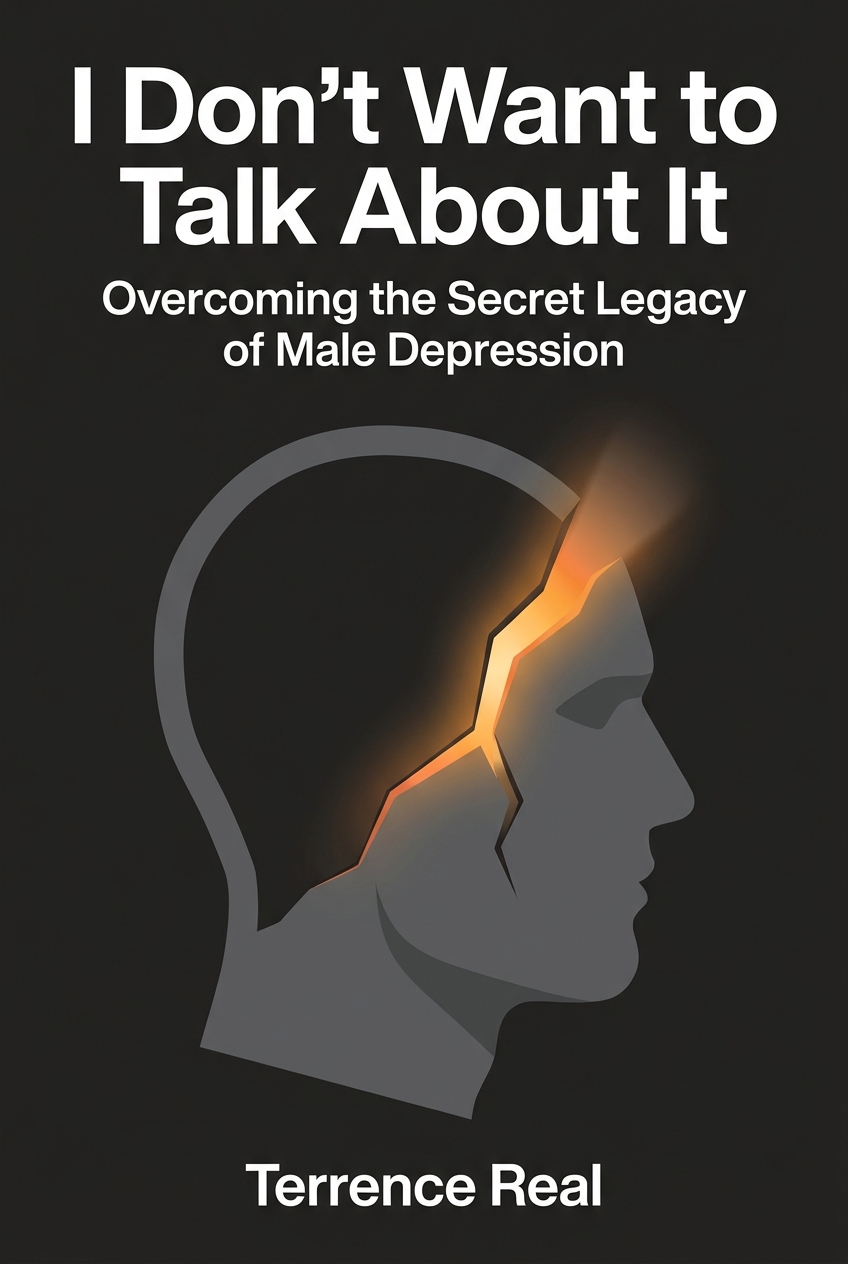
I Don't Want to Talk About It book cover

The Script

A man is driving home from work. It’s been a long day, full of small frustrations and a single, significant professional defeat. He feels a familiar pressure building behind his eyes, a tightness in his jaw. When he pulls into the driveway, his son runs out, ecstatic, holding a school project with a bright red “A” on it. The man forces a thin smile, says, “That’s great, buddy,” and walks past him into the house. He grabs a beer from the fridge, sits in his usual chair, and turns on the TV. His wife comes in and asks how his day was. “Fine,” he says, his eyes fixed on the screen. The air in the room becomes heavy, thick with everything he isn't saying. His son, deflated, has retreated to his room. His wife, sensing the invisible wall, leaves him alone. The man loves his family. But an unseen force is holding him captive, sealing off his heart from the very people he wants to connect with most, leaving him isolated in a fortress of his own silent pain.

This silent suffering is a ghost that has haunted men for generations. It's a ghost that psychotherapist Terrence Real knew intimately, not just from his clinical practice but from his own life. He saw it in his father and recognized its suffocating presence in himself. Real grew tired of the traditional therapeutic models that seemed to glance off the armor men wore, failing to reach the wounded person inside. He saw countless men acting out their pain through anger, addiction, and emotional withdrawal, all while insisting nothing was wrong. "I Don't Want to Talk About It" was born from Real's decades-long mission to give this hidden suffering a name—covert depression—and to forge a new path for men to break their silence and reconnect with their lives and their families.

Module 1: Unmasking Covert Depression

The first major idea is that male depression often hides in plain sight. It doesn't look like the overt sadness we see in diagnostic manuals. It's a covert condition. It's masked by behaviors that are mistaken for "just how men are." This hidden depression is a disorder of self-esteem, driven by a deep, internal sense of worthlessness.

So, how does it show up? One key insight is that covert depression manifests as a flight from shame into grandiosity. Men are socialized to feel ashamed of vulnerability. To avoid this shame, they develop a grandiose defense. They strive to feel "better than" to avoid feeling "less than." This is a desperate performance. Think of the myth of Narcissus. He was trapped by his reflection, dependent on an external image for his sense of worth. A man with covert depression is the same. He needs constant validation from his career, his status, or his achievements to feel okay.

This leads to a critical second insight. Many behaviors we consider "typically male" are actually symptoms of hidden depression. Workaholism becomes a way to regulate self-esteem through achievement. Substance abuse is a form of self-medication to numb inner pain. Even explosive anger can be a symptom. It transforms a feeling of helplessness into a temporary, intoxicating feeling of power. Take the case of David Ingles, a lawyer in the book. He's irritable, drinks too much, and shoves his son against a wall. His family sees these as separate problems. But Real identifies them as "depression equivalents." They are all driven by the same hidden despair.

Finally, this pattern is perpetuated by a silent agreement. Cultural stigma and family collusion keep male depression hidden. Men are shamed for showing emotional pain. They fear being seen as weak or "unmanly." So they don't talk. And their families often collude in this silence. They walk on eggshells. They avoid confronting the man's behavior for fear of shaming him or making things worse. This well-intentioned protection only deepens the man's isolation. It keeps the destructive cycle going. The problem is the system of silence built around him.

Read More