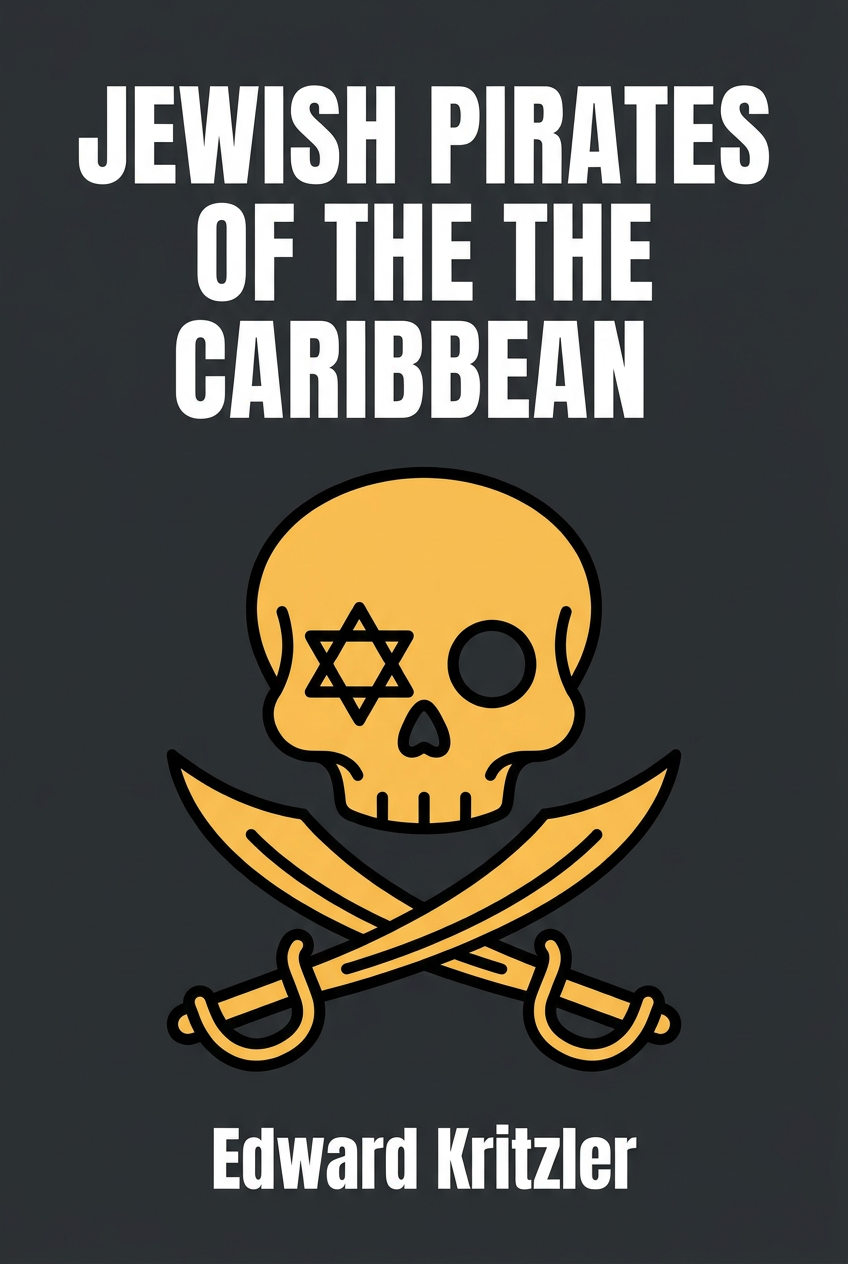
Jewish Pirates of the Caribbean
How a Generation of Swashbuckling Jews Carved Out an Empire in the New World in Their Quest for Treasure, Religious Freedom--and Revenge
What's it about
Ever wonder what a pirate's life could teach you about fighting back against oppression? Discover the incredible true story of Jewish refugees who became swashbuckling pirates in the Caribbean, turning their exile into an empire built on courage, cunning, and a thirst for justice. You'll learn how these unlikely buccaneers used their insider knowledge of trade and navigation to outsmart their enemies. Find out how they forged powerful alliances, captured treasure fleets, and fought for religious freedom, carving out a legacy of resilience and revenge against all odds.
Meet the author
Edward Kritzler was a historian and former New York Times correspondent who spent fifteen years living in Jamaica, meticulously researching the forgotten history of Sephardic Jews in the Caribbean. His unique on-the-ground scholarship, exploring local archives and forgotten synagogues, allowed him to uncover the incredible true story behind his groundbreaking book. Kritzler dedicated his later life to bringing this hidden chapter of swashbuckling resistance and religious freedom to light, transforming our understanding of the golden age of piracy.
Opens the App Store to download Voxbrief

The Script
Two men stand before a Spanish galleon, its hull heavy with plundered Aztec gold. The first, a young Spanish nobleman, sees the ship as a symbol of divine right. For him, the gold is a reward from God, a testament to his nation's righteous power and the spread of its one true faith across the New World. The ship is an extension of the cathedrals back home, its treasure a sacred offering. The second man, a merchant from Amsterdam whose family name was forcibly changed a generation ago, sees the exact same ship and sees a monster. He sees a floating fortress of the same Inquisition that burned his relatives in the public square, the same regime that stole his family's wealth and forced them into hiding. For him, the gold is stolen property, blood money financing his people's persecution. The ship is a target.
This hidden perspective—seeing the Spanish treasure fleet as a legitimate target for revenge—is the history that drove historian Edward Kritzler. While living in Jamaica, Kritzler became fascinated by the island's old Jewish cemetery, with its tombstones bearing not just the Star of David but also the skull and crossbones. He started digging into archives, piecing together a forgotten story from shipping logs, Inquisition records, and forgotten letters. He discovered a secret history of Sephardic Jews who, after being expelled from Spain and Portugal, used their knowledge of trade routes and languages to help build the pirate havens of the Caribbean. They were waging a private, multi-generational war against the Spanish empire that had tried to erase them.
Module 1: The Hidden Network
The story begins with a brutal choice in 1492. Spain expelled its entire Jewish population. Leave, convert to Catholicism, or die. Many fled. But thousands stayed, converting under duress. They became known as conversos, or New Christians.
Publicly, they were model Catholics. They attended mass. They baptized their children. But secretly, in their homes, they practiced Judaism. They were a people with a shared secret, bonded by persecution. So, a covert global network formed, built on shared heritage and a common enemy: Spain. This network was economic. These conversos used their connections to build a powerful international trade empire.
They were forbidden from settling in the New World. Spanish law required proof of "pure blood." But they found a loophole. They disguised themselves as Portuguese merchants. This identity didn't require the same ancestry checks. Under this cover, they flocked to the Americas. They became the first merchant class in the Spanish colonies. They pioneered the sugar, coffee, and tobacco industries. Inquisitorial reports from Peru complained that "everything goes through their hands." From diamonds to cumin seeds. The silver trade in Bolivia? "Almost exclusively in the hands of crypto Jews."
And here's the thing. Economic power became a tool for survival and resistance. They developed innovative financial tools. Things like letters of exchange. A merchant in pirate-infested waters didn't need to carry gold. He could carry a piece of paper. A draft on a Jewish banking house in Amsterdam or London. This made their capital portable. It made their wealth hard to seize.
This network also doubled as a sophisticated intelligence agency. A merchant in a Spanish port could send coded letters. He could share a ship's cargo, its route, and its departure time. This information was priceless to Spain's enemies. Jewish merchants in Portugal famously warned Queen Elizabeth I about the sailing of the Spanish Armada. This dual-purpose network, built for trade and intelligence, laid the groundwork for a shadow war. It was a war that would soon spill into the open waters of the Caribbean.
Module 2: The Pirate Alliance
The arrangement was fragile. The conversos grew rich. But their success made them targets. The Spanish Inquisition, hungry for wealth, began to hunt them down in the New World. Public executions, called the auto-da-fé, became common. Their property was confiscated. Their trade networks were seized by "Old Christians." The safe havens were no longer safe.
This persecution lit a fire. The goal shifted from quiet survival to active rebellion. Driven by persecution, Jewish communities allied with Spain's enemies to create a safe haven. They needed a home base. A place beyond the Inquisition's reach. They looked to Holland and England. These Protestant nations were locked in their own struggles with Catholic Spain. The enemy of my enemy is my friend.
So what happens next? A key figure emerges. His name was Samuel Palache. He was a rabbi, a diplomat, and a Barbary pirate. Operating from Amsterdam, he preached a militant form of Judaism. He argued that fighting Spain was a sacred duty. His influence inspired a generation of Dutch Jews. Their ultimate goal was to bring down the Spanish Empire.
This led to a powerful, if unlikely, partnership. Jewish merchants became the brains and financiers behind Caribbean piracy. The pirates, known as the Brethren of the Coast, were the muscle. Jewish merchants in ports like Amsterdam and later Jamaica would fund their expeditions. They provided the ships and supplies. More importantly, they provided the intelligence. Their network knew which Spanish galleons were laden with silver. They knew their routes. They knew their schedules.
This was strategic. After the English conquered Jamaica in 1655, the island's secret Jewish community made a proposal. They convinced the new English governor to invite the pirates to use Port Royal as a base. This was a brilliant move. It gave Jamaica a ready-made navy for defense. And it turned piracy into the island's main industry. Port Royal became the wealthiest, and most wicked, city in the New World. It was all built on Spanish silver, captured by pirates and funneled through Jewish merchants.