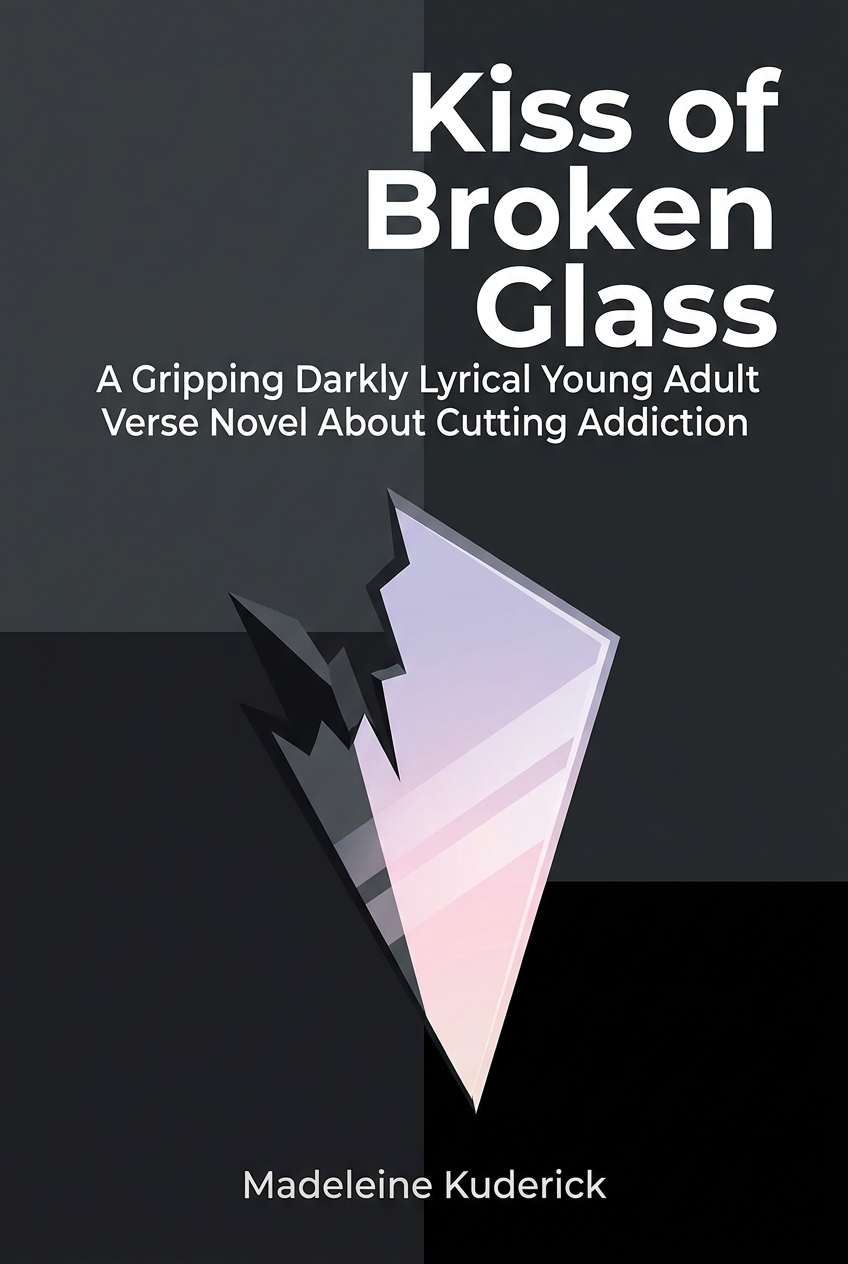
Kiss of Broken Glass
A Gripping Darkly Lyrical Young Adult Verse Novel About Cutting Addiction
What's it about
What if the only thing that makes you feel alive is also the thing that's destroying you? This gripping story plunges you into the mind of a teenager battling a secret addiction to self-harm, trapped in a psychiatric ward against her will and given just seventy-two hours to prove she can be "cured." Through raw, unflinching verse, you'll discover the intense inner world of a girl grappling with pain, family secrets, and the terrifying hope of recovery. You'll witness her navigate the fragile relationships with other patients and a therapist, uncovering the deep-seated reasons behind her addiction and whether true healing is even possible.
Meet the author
Madeleine Kuderick is an award-winning poet and young adult novelist whose debut, Kiss of Broken Glass, draws from her own teenage institutionalization for self-harm. She channels her personal experiences into a powerful, lyrical narrative, offering an authentic voice of struggle, survival, and hope. Kuderick writes to give a name to the emotions that are often too difficult to speak, providing a vital resource for readers navigating similar challenges and fostering a deeper sense of understanding and connection.
What's it about
What if the only thing that makes you feel alive is also the thing that's destroying you? This gripping story plunges you into the mind of a teenager battling a secret addiction to self-harm, trapped in a psychiatric ward against her will and given just seventy-two hours to prove she can be "cured." Through raw, unflinching verse, you'll discover the intense inner world of a girl grappling with pain, family secrets, and the terrifying hope of recovery. You'll witness her navigate the fragile relationships with other patients and a therapist, uncovering the deep-seated reasons behind her addiction and whether true healing is even possible.
Meet the author
Madeleine Kuderick is an award-winning poet and young adult novelist whose debut, Kiss of Broken Glass, draws from her own teenage institutionalization for self-harm. She channels her personal experiences into a powerful, lyrical narrative, offering an authentic voice of struggle, survival, and hope. Kuderick writes to give a name to the emotions that are often too difficult to speak, providing a vital resource for readers navigating similar challenges and fostering a deeper sense of understanding and connection.
The Script
You've reached the end of the free preview.