All Books
Self-Growth
Business & Career
Health & Wellness
Society & Culture
Money & Finance
Relationships
Science & Tech
Fiction
Topics
Blog
Download on the App Store

Legend

The Incredible Story of Green Beret Sergeant Roy Benavidez's Heroic Mission to Rescue a Special Forces Team Caught Behind Enemy Lines

13 minEric Blehm

What's it about

What does it take to push past your limits when lives are on the line? Uncover the true meaning of courage and resilience in the face of impossible odds. This is the story of one of the most heroic acts in modern military history. You'll learn the minute-by-minute details of Roy Benavidez's six-hour ordeal in the jungles of Vietnam. Discover the split-second decisions and unwavering determination that allowed him to rescue his comrades while sustaining dozens of life-threatening injuries, earning him the Medal of Honor.

Meet the author

Eric Blehm is a New York Times bestselling author and award-winning journalist specializing in meticulously researched accounts of military courage, sacrifice, and perseverance. A former action sports reporter, Blehm discovered a passion for telling the untold stories of America's elite warriors. His unique background allows him to embed with and earn the trust of the special operations community, bringing unparalleled authenticity and human depth to harrowing true stories like the one found in Legend.
Listen Now

Opens the App Store to download Voxbrief

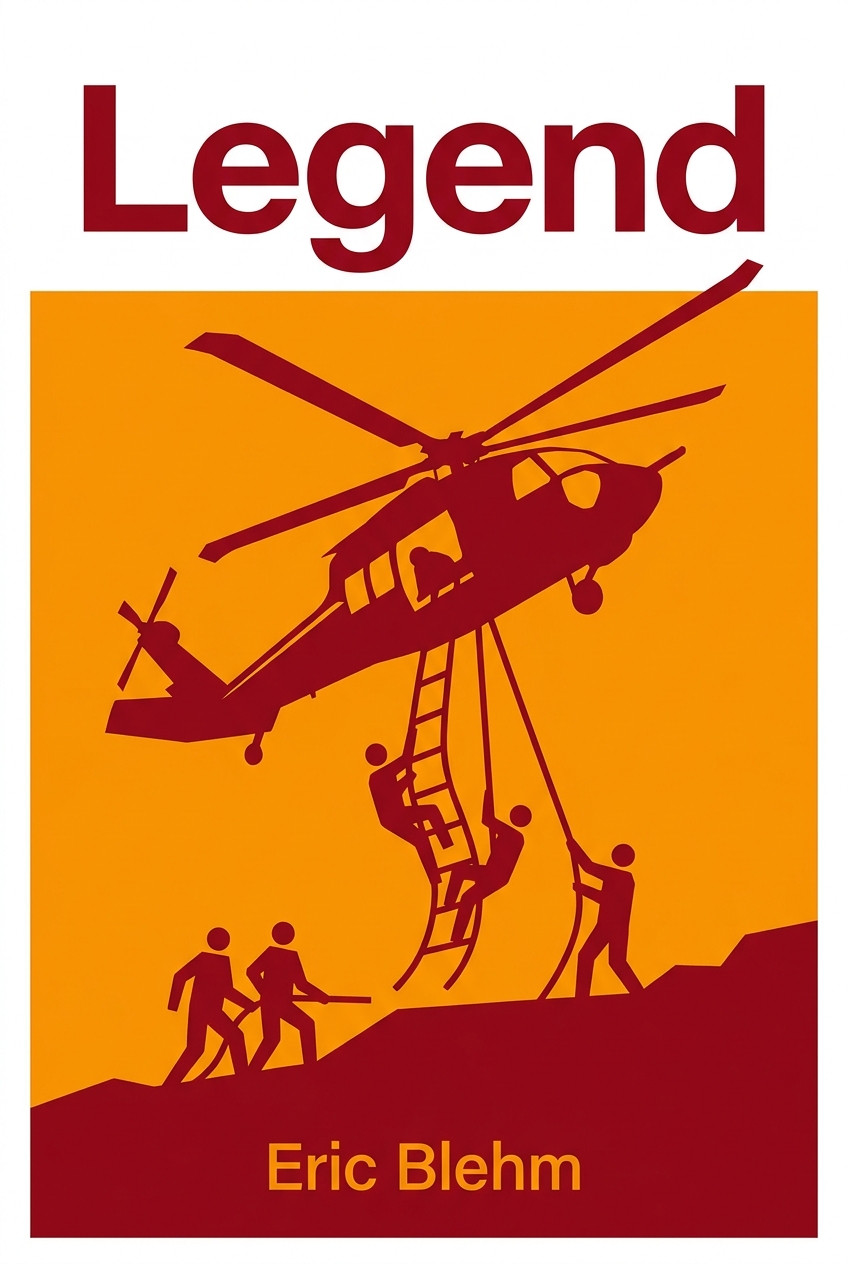
Legend book cover

The Script

The young man lay motionless in the jungle, his body a ruin of more than thirty separate wounds from bullets, bayonets, and shrapnel. His comrades, seeing the extent of the damage, zipped him into a body bag. Back at the base morgue, as the doctor prepared to sign the death certificate, he heard a faint sound. He stopped, leaned in close, and heard it again: a defiant whisper, an impossible prayer. The young man inside the bag was trying to spit in the doctor's face, a final, desperate act to prove he was still alive. This single moment, suspended between the official record of death and the stubborn reality of life, contains the seed of a story so incredible it strains belief.

That story belongs to Roy Benavidez, a Green Beret whose six hours of brutal combat in Vietnam became the stuff of military legend. But for decades, the full account—the raw, human details behind the Medal of Honor citation—remained scattered and incomplete. Eric Blehm, an author known for his meticulous deep dives into the lives of America’s quiet heroes, became obsessed with piecing it all together. After immersing himself in the world of Special Forces and gaining the trust of those who were there, Blehm spent years tracking down Benavidez's personal letters, declassified documents, and eyewitnesses who had never spoken publicly. He sought to understand the man who simply refused to die, giving a voice to the true cost of valor long after the guns fell silent.

Module 1: The Birth of Modern Horror

Richard Matheson didn't just write horror stories; he relocated horror. He dragged it out of gothic castles and into the quiet, sun-drenched suburbs. The core idea is that the most terrifying things are the dark, psychological pressures that build within our own.

One of the book's central arguments is that Matheson revolutionized horror by grounding it in psychological realism. Take his novel I Am Legend. The story is a meticulous, scientific examination of loneliness and despair. The protagonist, Robert Neville, is the last man on Earth. He isn't just fighting monsters; he's fighting his own sanity. This approach, treating the supernatural with the logic of a science experiment, became a cornerstone for an entire generation of writers, most notably Stephen King.

From this foundation, we see how Matheson's work consistently explores the fragility of the human mind under pressure. In the story "Prey," a man is terrorized in his own apartment by a tiny, razor-wielding Zuni fetish doll. The terror is the absurd, humiliating, and isolating nature of the fight. Who would believe him? This theme is expanded upon in the tribute story "He Who Kills" by F. Paul Wilson. The protagonist, Jeff, buys the doll as a quirky collectible, a conversation starter. He is an intellectual, a writer, a man whose ex-wife called his profession "not manly." His battle with the doll becomes a brutal, primal fight for survival. It forces him to shed his modern, intellectual identity and become a warrior. The insight here is profound: True horror strips away social facades and forces a confrontation with our most primal selves. Jeff's struggle isn't just with a monster; it's with his own perceived inadequacies. Winning is about enduring the unendurable.

And here's the thing, this psychological depth isn't limited to his horror. Even his science fiction is deeply personal. A story like The Shrinking Man is a perfect example. On the surface, it's a sci-fi adventure. But the real story is a devastating look at the erosion of identity. As Scott Carey shrinks, he loses his role as a husband, a father, and a man in society. His battle with a basement spider is an epic struggle, but the true war is internal. In the tribute story "The Shrinking Woman" by Claire Clark, we see this from the wife's perspective. Louise's diary reveals a marriage already strained, and Scott's condition only magnifies her resentment. She transforms from a caregiver to a repulsed observer, highlighting a chilling truth: Extreme trauma can erode empathy and transform loved ones into burdens or monsters. It's a brutal, honest look at the dark side of caregiving and the limits of compassion.

Read More