All BooksSelf-GrowthBusiness & CareerHealth & WellnessSociety & CultureMoney & FinanceRelationshipsScience & TechFiction
Download on the App Store

Life as We Knew It

14 minSusan Beth Pfeffer

What's it about

What if everything you took for granted—electricity, food, safety—vanished in a single night? Discover how one teenage girl's diary becomes a gripping testament to survival after a catastrophic event shifts the moon's orbit, plunging the world into a new, terrifying reality. Follow Miranda's day-by-day account as her family faces freezing temperatures, dwindling supplies, and the breakdown of society. You'll learn not just about surviving an apocalypse, but about the resilience of the human spirit, the sacrifices we make for loved ones, and the true meaning of hope when all seems lost.

Meet the author

Susan Beth Pfeffer is a prolific and award-winning author whose groundbreaking novel, Life as We Knew It, redefined the young adult dystopian genre for a new generation. With a career spanning decades and over eighty books, Pfeffer was inspired to write her iconic story after considering the real-world consequences of a cataclysmic event on everyday family life. Her ability to blend scientific speculation with intimate human drama has cemented her status as a master of speculative fiction.
Listen Now
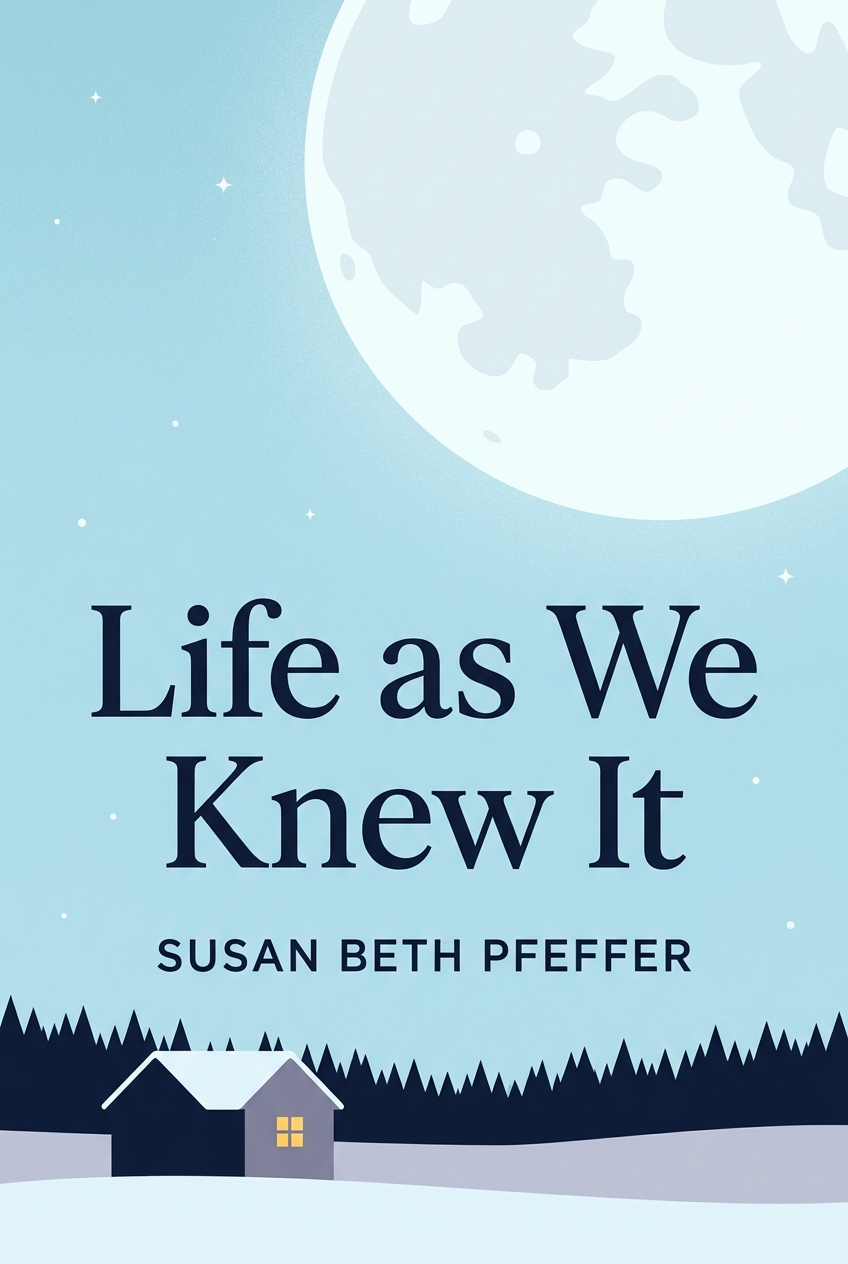
Life as We Knew It book cover

The Script

Think about the last time you bought groceries. You probably had a list, a budget, and a vague plan for the week's meals. Now, what if the cashier told you that this was the last time you could buy food, ever? The shelves behind her are already half-empty. The parking lot is a symphony of slamming doors and panicked shouts. Suddenly, your shopping cart isn't just holding ingredients for dinner; it's holding your family's entire future. Every choice is monumental. Do you grab the heavy cans of beans or the lighter, but less filling, boxes of pasta? Is there time for one more frantic pass down the aisle for batteries or bottled water? This sudden, terrifying shift from routine to survival, where the familiar world vanishes in an instant, is the precipice on which this story is built.

The world doesn’t end with a bang, but with the quiet, chilling realization that everything you depend on—electricity, running water, the food supply chain—is gone. That chilling thought is precisely what spurred author Susan Beth Pfeffer to write this book. She wanted to contemplate the catastrophic aftermath of a major disaster through the eyes of an ordinary teenager. Pfeffer, a long-established author for young readers, wanted to explore what happens when the mundane worries of high school are violently replaced by the elemental struggle for warmth, food, and hope. She used the simple, intimate format of a diary to capture the day-by-day erosion of normalcy and to ask a profound question: who do we become when everything we know is stripped away?

Module 1: The Shattering of Normalcy

The book opens with a life that feels deeply familiar. It's the world of a sixteen-year-old girl named Miranda. Her concerns are relatable. She worries about prom dates, friendships, and arguments with her mom over money. Her life is a collection of mundane routines. School, homework, and family dynamics in a comfortably divorced family. Then, a single event changes everything. An asteroid hits the moon. It doesn't destroy it. It just knocks it closer to Earth. This seemingly distant astronomical event becomes the trigger for a rapid, global collapse.

The first major insight is that modern civilization is a fragile ecosystem built on interconnected systems. The moment the moon’s orbit shifts, the consequences are immediate and cascading. Massive tsunamis wipe out coastlines. Earthquakes and volcanic eruptions follow. But the most immediate and personal collapse is technological. Cell phones go dead. The internet fails. Cable news cuts out. The family’s loss of CNN is described as the moment "Civilization had ended." This reliance on constant information and communication is the first system to break. It plunges them into an information vacuum, replaced by the terrifying static of a battery-powered radio.

This leads to the next critical point. In a crisis, the psychological shift from spectator to participant is brutal and swift. Initially, Miranda’s family and neighbors watch the asteroid approach like it’s a firework show. It’s a "big block party" with cookies and telescopes. They are detached observers of a cosmic spectacle. But when the moon is hit and visibly changes in the sky, the cheers turn to screams. The event is a direct, personal threat. The moon becomes "Our Moon," and its damage feels like a personal attack. This shift is profound. It’s the moment the abstract horror of the news becomes a lived reality in their own backyard.

So what happens next? As the infrastructure crumbles, people instinctively cling to familiar routines as psychological anchors. Miranda’s mother insists the kids must go to school the next day. She repeatedly tries to call family members, a ritual of connection that no longer works. The family devours a plate of cookies, seeking comfort in the most primal of acts. These are desperate attempts to maintain a sense of normalcy in a world that has become unrecognizable. The instinct is to impose the old rules onto a new, terrifying game. But the rules no longer apply.

Read More