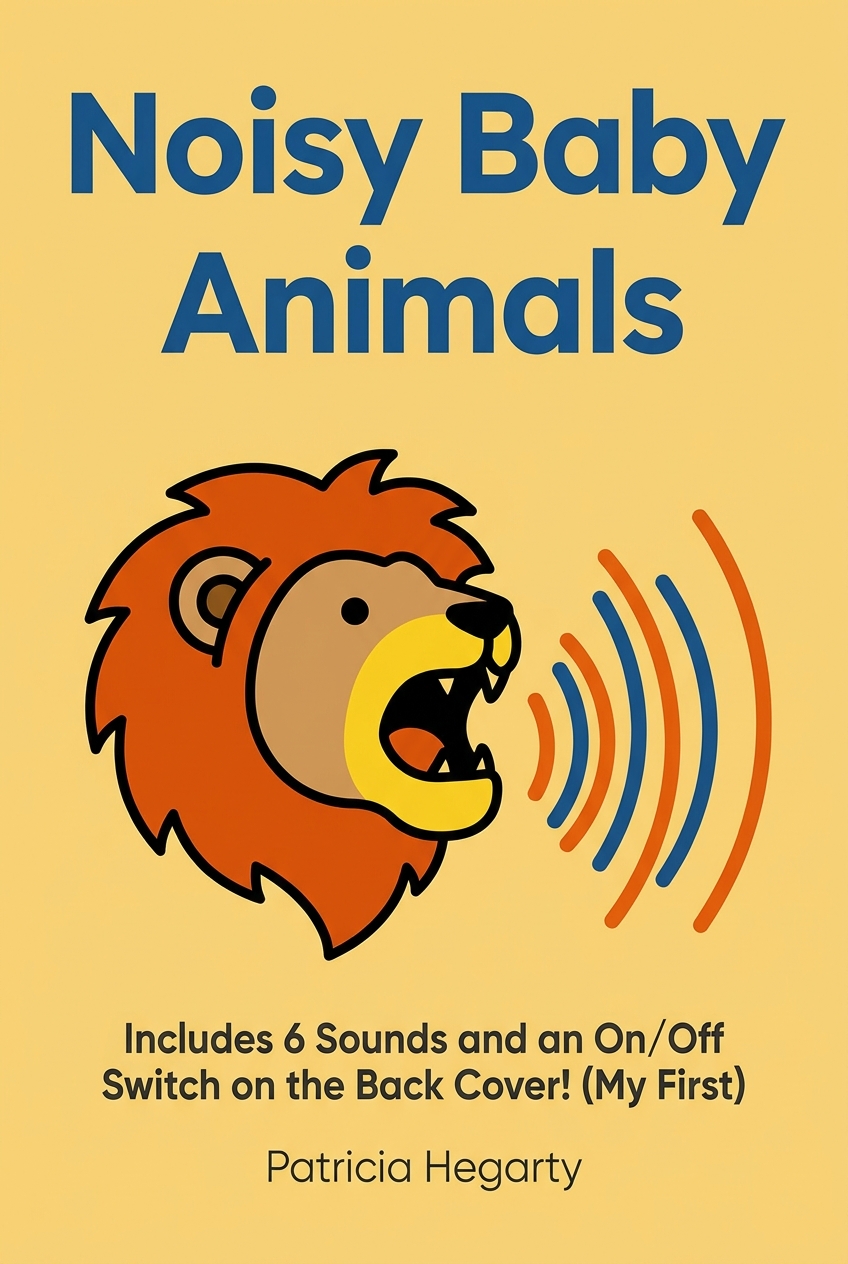
Noisy Baby Animals
Includes 6 Sounds and an On/Off Switch on the Back Cover! (My First)
What's it about
Ready to turn story time into an exciting safari for your little one? Discover a world where reading is an interactive adventure, filled with the delightful sounds of baby animals. This book is your key to sparking your child’s curiosity and making learning an absolute joy. You'll get to meet six adorable baby animals, from a chirping chick to a ribbiting frog. Each page comes to life with a corresponding sound button, helping your child connect pictures, words, and noises. It's the perfect way to build early language skills and create precious moments together.
Meet the author
With over three decades of experience in children's publishing, Patricia Hegarty is a renowned author and editor dedicated to creating engaging books for the very young. She has written hundreds of titles, from enchanting picture books to innovative novelty and sound books that spark curiosity. Her deep understanding of early childhood development allows her to craft stories and concepts that perfectly capture a child's imagination, fostering a lifelong love of reading from the earliest possible age.
The Script
A toddler sits on a plush rug, surrounded by a silent menagerie of stuffed animals. There’s a lion with a button-down shirt, a floppy-eared rabbit, and a bear wearing a vest. The child picks up the lion, holds it to their ear, and listens intently, waiting. When nothing happens, they give it a little shake. Still silence. They try the rabbit, then the bear. The room is quiet, the toys are soft and still, offering no reply. Then, the child looks up at their parent, a question in their eyes, and lets out a tiny, hopeful 'ROAR!' This is the moment a fundamental connection is made—with the world of sound itself. The child is inviting the silent world to speak back, to fill the quiet with the vibrant, chaotic, and joyful noise of life.
This exact moment of discovery and invitation is what author and editor Patricia Hegarty aimed to capture on the page. Having spent years in children's publishing, she noticed that while many books showed pictures of animals, few truly invited the youngest readers to join in the chorus. She wanted to create a book for participation—a tool for parents and children to bridge the gap between a silent toy and the loud, delightful sound it’s meant to make. Hegarty designed "Noisy Baby Animals" to be a shared experience, a first step into the world of language and play, sparked by the simple, irresistible urge to hear a 'moo,' a 'quack,' or a 'roar' fill the room.
Module 1: The Hands-On Imperative
The core of Dr. Pol's philosophy is startlingly simple. When faced with a problem, the answer is right in front of you. He argues that true diagnosis starts with direct, physical observation.
His first major lesson came in veterinary school. A cow was sick. Based on its pain and fever, the student Pol diagnosed "hardware disease," where an animal swallows a sharp object. But the professors, proud of their new X-ray machine, saw no metal. They dismissed his diagnosis. The cow died. An autopsy revealed the culprit. A six-inch, non-metallic broom bristle had pierced its stomach. The machine couldn't see it, but the animal's body told the whole story. This cemented his core principle: Trust the animal's physical signs over technology. Technology is a valuable tool for confirmation, a supplement to clinical judgment. You must look, listen, and touch.
This leads to his second insight. To truly understand an animal's condition, you must use all your senses. Dr. Pol doesn't just rely on sight. He smells for the sweet scent of ketosis on a cow’s breath. He even uses an old farmer's trick of tasting milk to detect the saltiness of mastitis, an udder infection. When a farmer reported a heifer killed by lightning, a quick examination told a different story. The cow's pale eyes and hide drained of blood revealed it was covered in lice and had bled out. The farmer’s assumption was wrong. The physical evidence was undeniable.
So what happens next? This hands-on approach requires a different kind of toolset. Dr. Pol champions practical, experience-based methods that are often low-tech but highly effective. Effective treatment relies on improvisation and common sense. When a calf breaks its leg, an X-ray might cost more than the animal is worth. So, he sets the bone by feel and sound, then creates a splint from bushel-basket staves and tape. It’s not pretty, but it works. When a dog needs an emergency blood transfusion, he doesn’t wait for a commercial blood bank. He brings in his own Great Dane, a trained and willing donor, and gets the job done immediately. This is about delivering the most effective care within the economic and situational realities of the client.