Psychopathology of Everyday Life
What's it about
Ever forgotten a name at the worst possible moment or said something you didn't mean? These aren't just random mistakes. Sigmund Freud reveals that these common slip-ups are actually secret messages from your unconscious mind, pointing to your hidden desires, fears, and repressed thoughts. This summary decodes Freud's revolutionary insights, showing you how to interpret the true meaning behind everyday errors like slips of the tongue, misreadings, and even losing objects. You'll learn to analyze these "parapraxes" to gain a deeper understanding of yourself and the people around you, uncovering the hidden psychological forces that shape your daily life.
Meet the author
As the Austrian neurologist who founded psychoanalysis, Sigmund Freud revolutionized humanity's understanding of the mind by introducing concepts like the unconscious, repression, and dream analysis. His clinical work with patients in late 19th-century Vienna revealed that seemingly trivial slips of the tongue, forgotten names, and other everyday errors were not random. Instead, they offered a profound window into our hidden thoughts and repressed desires, forming the very basis for his groundbreaking work, The Psychopathology of Everyday Life.
What's it about
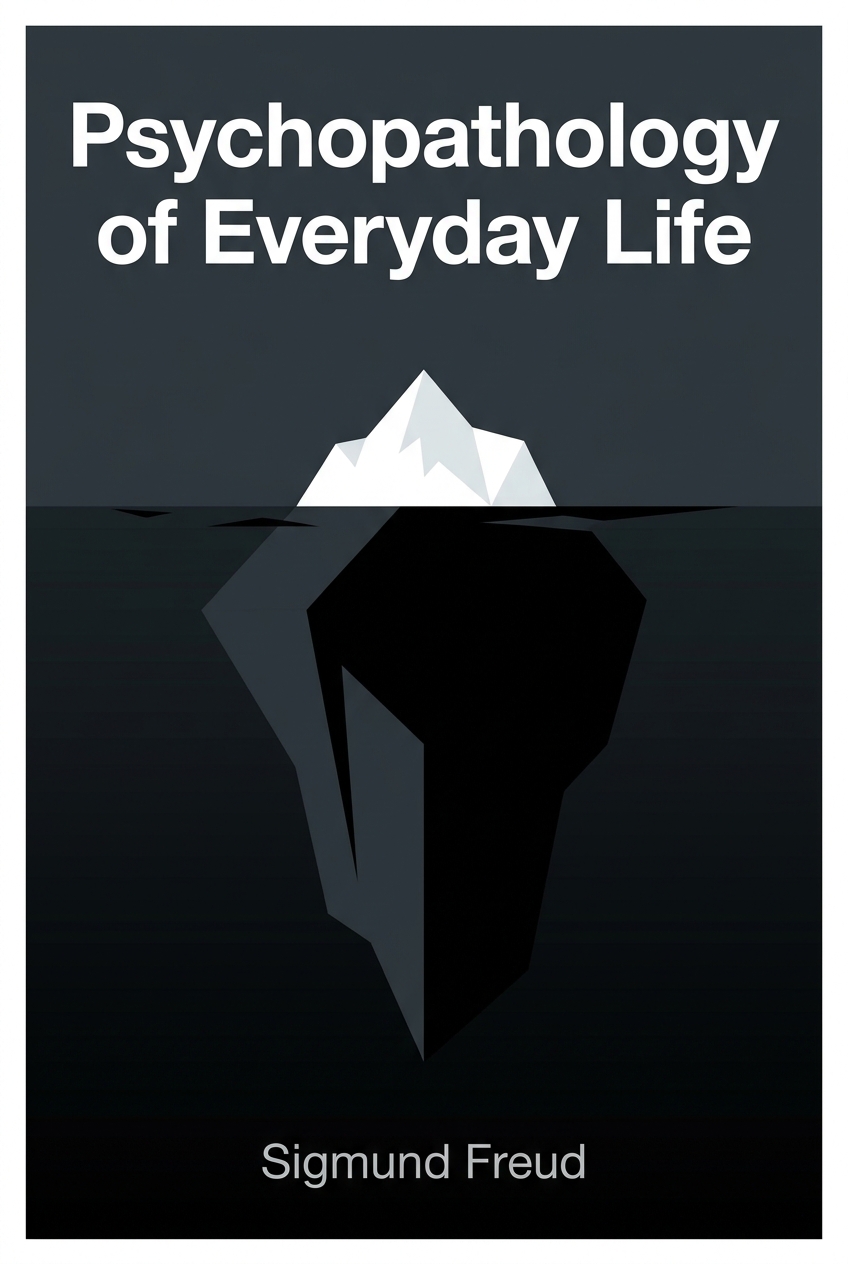
Ever forgotten a name at the worst possible moment or said something you didn't mean? These aren't just random mistakes. Sigmund Freud reveals that these common slip-ups are actually secret messages from your unconscious mind, pointing to your hidden desires, fears, and repressed thoughts. This summary decodes Freud's revolutionary insights, showing you how to interpret the true meaning behind everyday errors like slips of the tongue, misreadings, and even losing objects. You'll learn to analyze these "parapraxes" to gain a deeper understanding of yourself and the people around you, uncovering the hidden psychological forces that shape your daily life.
Meet the author
As the Austrian neurologist who founded psychoanalysis, Sigmund Freud revolutionized humanity's understanding of the mind by introducing concepts like the unconscious, repression, and dream analysis. His clinical work with patients in late 19th-century Vienna revealed that seemingly trivial slips of the tongue, forgotten names, and other everyday errors were not random. Instead, they offered a profound window into our hidden thoughts and repressed desires, forming the very basis for his groundbreaking work, The Psychopathology of Everyday Life.
The Script
You've reached the end of the free preview.