All BooksSelf-GrowthBusiness & CareerHealth & WellnessSociety & CultureMoney & FinanceRelationshipsScience & TechFiction
Download on the App Store

Storm of Steel

(Penguin Classics Deluxe Edition)

14 minErnst Junger

What's it about

Have you ever wondered what it's truly like to face the relentless chaos of trench warfare? Step into the boots of a German stormtrooper and witness the brutal, unfiltered reality of World War I, where survival depended on instinct and courage alone. This isn't a story of generals or grand strategies. You'll join Ernst Jünger on the front lines, experiencing the raw intensity of hand-to-hand combat and artillery barrages. Discover the chilling mindset required to endure the unimaginable and see the Great War through the eyes of a soldier who lived it.

Meet the author

Ernst Jünger was one of the most highly decorated German soldiers of World War I, earning the Pour le Mérite for his extraordinary bravery on the Western Front. He enlisted as a private at nineteen and survived being wounded more than a dozen times, experiences he meticulously recorded in his diaries. This firsthand account of trench warfare, written not as a lament but as a chillingly detached testament to a new kind of technological combat, forms the basis for his seminal work, Storm of Steel.
Listen Now
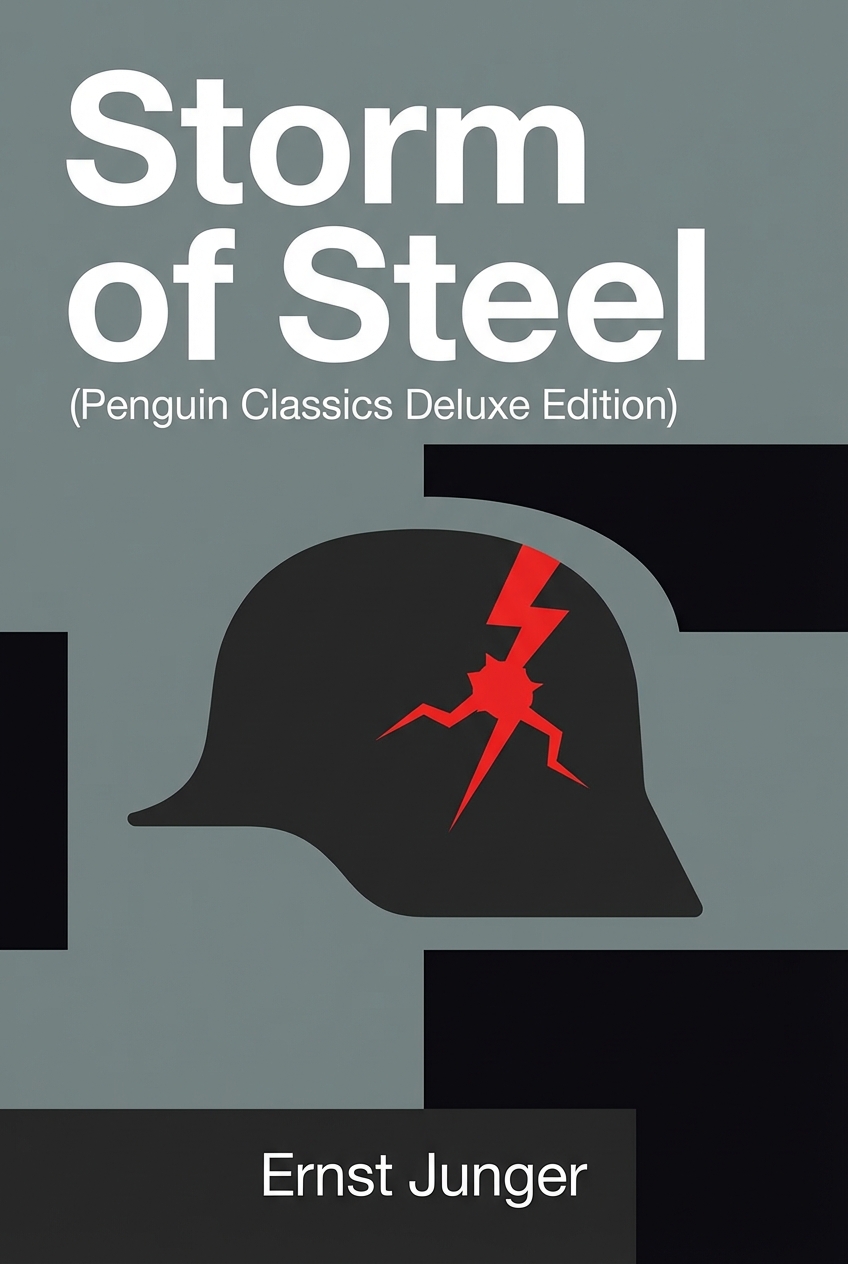
Storm of Steel book cover

The Script

In a town's annual reenactment of a historic battle, two participants stand out. One, a young enthusiast, has memorized every fact, every uniform detail, every documented maneuver. He plays his part with earnest precision, falling exactly where his historical counterpart was said to have fallen. The other is an old man, a veteran of a different, more recent war. He doesn't follow the script. Instead, he moves with a strange, quiet economy, his eyes scanning the tree line not for cues, but for threats. When the blank charges fire, he doesn't flinch dramatically; he almost seems to absorb the sound, his posture changing in a way that is subtle, barely perceptible, yet utterly chilling in its authenticity. The young man is performing history. The old man is re-inhabiting an experience. The crowd applauds the enthusiast's dramatic fall, but a few onlookers can't look away from the old man, who now stands alone, lost in a landscape only he can see. They sense that one has shown them a story, while the other has given them a glimpse of an unnerving, untranslatable truth about what it means to be inside the storm.

This chasm between the performance of war and the lived reality of it is precisely what drove a young German officer named Ernst Jünger to write. He wasn't interested in crafting a grand narrative of heroism or national sacrifice. He was a highly-decorated stormtrooper, a leader of trench raids on the Western Front, who had been wounded multiple times. He kept a diary as a visceral, moment-to-moment record of survival. After the war, surrounded by political myths and sanitized histories, he felt compelled to transform his raw, often brutal, diary entries into a book. His goal was to bear witness—to describe the war as he experienced it: a terrifying, exhilarating, and elemental force that stripped away everything but the immediate, primal reality of the 'storm of steel' itself.

Module 1: The Romantic Ideal Meets Industrial Reality

Many young men marched to war in 1914 with heads full of heroic ideals. They imagined noble charges and chivalrous duels. Jünger was no different. He and his comrades set out "in a rain of flowers, in a drunken atmosphere of blood and roses." They craved danger. They believed war was a "merry duelling party on flowered, blood-bedewed meadows." This romantic vision, however, did not survive first contact with the enemy. The enemy was the machine of modern warfare.

The first core insight is that warfare had become an impersonal, industrial process. The first shell that lands near Jünger's unit isn't a dramatic moment of combat. It's a sudden, anonymous event. It kills thirteen men. It maims others. The enemy is a "mysterious, treacherous being somewhere" over the horizon. There is no duel. There is only the cold, arbitrary math of artillery. This experience immediately shatters the romantic illusion. Jünger notes that "War had shown its claws, and stripped off its mask of cosiness." The glorious danger they sought was replaced by the grim realities of dirt, work, and sleepless nights.

This leads to a critical adaptation. Soldiers must normalize the grotesque to survive. The initial shock of seeing a "blood-spattered form with a strangely contorted leg" gives way to a hardened numbness. Jünger describes walking through trenches where the dead are an accepted part of the landscape. After a sentry is shot in the head, his comrades bandage him and carry him away. Then, someone "spreads a few shovelfuls of earth over the red puddle, and everyone goes back to whatever he was doing before." This is a necessary psychological armor. In an environment of constant, random death, emotional reaction becomes a liability. The mind adapts by treating horror as routine.

And here's the thing. This adaptation creates a bizarre new world. The battlefield develops its own grim ecosystem. The wasteland of no man's land is teeming with life. Swarms of rats grow fat on the dead. Wildflowers colonize the shell-torn earth. Stray cats from ruined villages adopt the soldiers. Two young French orphan boys, dressed in German field grey, even integrate fully into a military unit. They learn to drill and salute. They see the soldiers as their new family. This surreal blend of the natural and the macabre, the innocent and the brutal, shows how life, in any form, adapts to fill the void left by destruction. It’s a world turned upside down, operating by its own terrible logic.

Read More