All Books
Self-Growth
Business & Career
Health & Wellness
Society & Culture
Money & Finance
Relationships
Science & Tech
Fiction
Topics
Blog
Download on the App Store

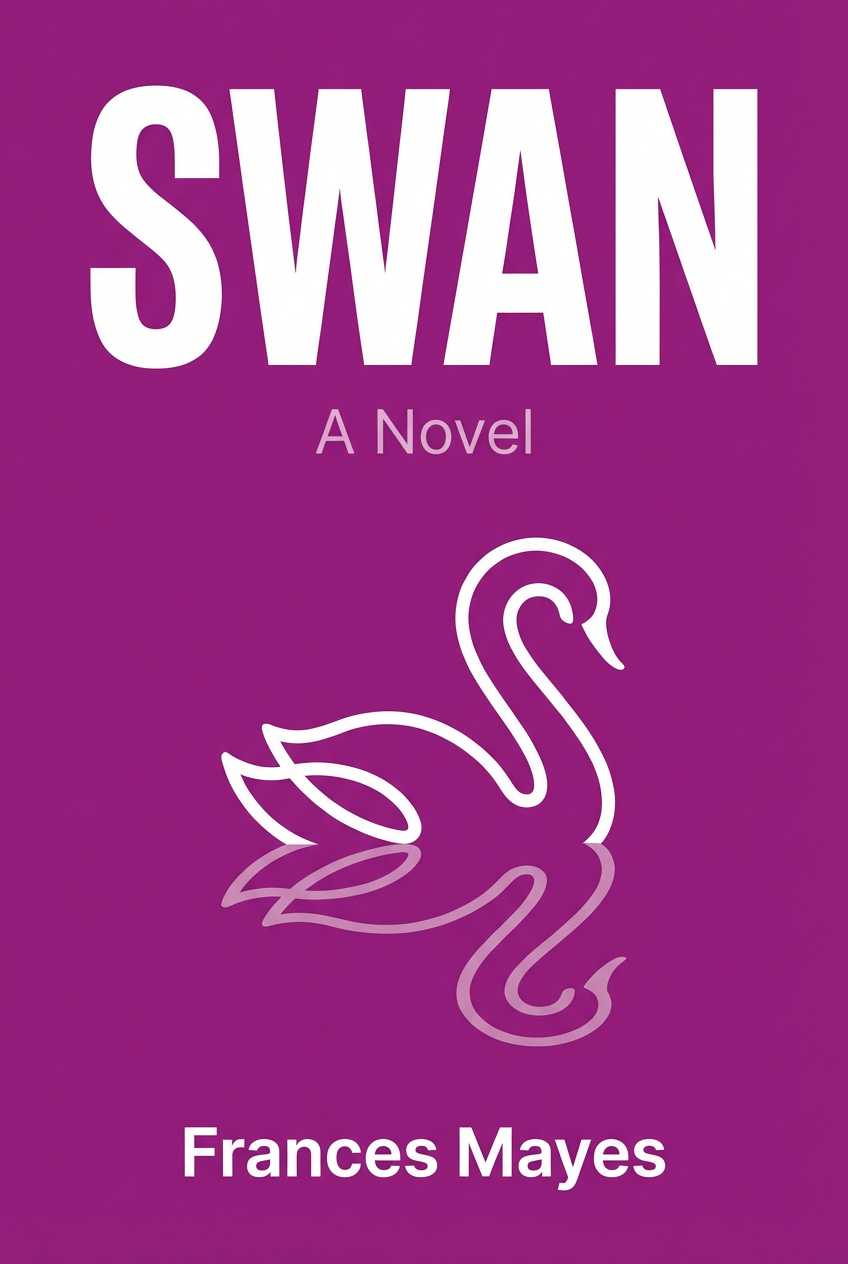
Swan

A Novel

12 minFrances Mayes

What's it about

Ever wondered if you could truly escape your past and start over? In the seemingly idyllic town of Swan, Georgia, a shocking, decades-old murder mystery resurfaces, forcing a family to confront the dark secrets they thought were buried forever. You'll follow Ginger, an archaeologist who returns home to Swan, as she unearths not just ancient artifacts but the painful truths behind her mother's suicide and a town's complicity. Discover how buried history can poison the present and how one woman's quest for answers can either heal a fractured family or tear it completely apart.

Meet the author

Frances Mayes is the international bestselling author of Under the Tuscan Sun, which remained on The New York Times bestseller list for over two and a half years. A poet, essayist, and novelist with a deep love for the American South, she draws upon her Georgia roots and her renowned talent for evoking a rich sense of place to create the world of Swan. Her intimate understanding of Southern culture and family secrets gives this novel its powerful and authentic voice.
Listen Now

Opens the App Store to download Voxbrief

Swan book cover

The Script

In a Georgia garden, two brothers stand before identical rows of newly planted fig saplings. One brother, methodical and precise, measures water, tests the soil's pH, and prunes with scientific rigor, determined to force a perfect harvest. The other, guided by a quiet, inherited intuition, simply listens to the land. He feels the day's humidity on his skin, watches the way the shadows fall, and offers water by a sense of thirst he can't quite explain. Years later, one set of trees is healthy but sterile, producing small, unremarkable fruit. The other, having weathered blight and drought through a kind of collaborative resilience with its tender, is heavy with sweet, dark figs, each one a condensed story of sun and struggle.

This profound difference between a life that is managed and a life that is deeply inhabited is the ground Frances Mayes has cultivated for decades. A celebrated poet and the author of the iconic memoir Under the Tuscan Sun, Mayes has long explored how places shape us. With Swan, she returned to her own roots in the American South to unearth a story that had haunted her for years. She wanted to write about the weight of a family's unspoken history and how a single, violent act can poison the soil for generations. Mayes was tending to a story that, like the second brother's figs, needed to grow from a place of intuition, memory, and a deep, almost sorrowful, love for the tangled landscape of the South.

Module 1: The Anatomy of a Southern Town

The story is set in Swan, Georgia. It’s a town that feels both timeless and on the brink of change. To understand the characters, we first have to understand the world that shaped them. Mayes presents Swan as a living, breathing entity with its own history and personality.

First, a community’s identity is forged by its physical and historical layers. Swan is situated on a rise between two rivers, a place first inhabited by Creek and Seminole peoples. Then came settlers who cleared the land. The town's design itself is a piece of history. Its unique elliptical layout was a deliberate choice by its founder, inspired by the elegant city of Bath in England. This tells you Swan was built with an aspiration for order and a connection to a grander past. Every street and building carries a piece of this layered story.

Next, economic shifts directly shape a town's population and resilience. Swan’s story is a classic American tale. It was a one-company town, built around the J. R. Mason cotton mill. When the mill boomed, the town grew to 11,000 people. When the mill closed, the population shrank to 7,000. That single economic event changed everything. But Swan adapted. The local economy diversified. Farmers shifted from cotton to pimentos and tobacco. New industries like poultry ranches and fertilizer plants emerged. This shows how a community’s character is constantly being remolded by the forces of economic survival.

Finally, cultural identity is preserved through names and traditions. The town itself was renamed "Swan" to honor the migratory whistling swans that once filled its swamps. This name is a deliberate link to a lost piece of the natural world. It’s a form of collective memory. Likewise, the town’s traditions, like the annual "Cottonmouth Countdown" festival, and its landmarks, like the Jeff Davis Museum, are active rituals that reinforce a specific version of history and communal identity. For anyone trying to understand or influence a community, recognizing these deep cultural anchors is critical. They are the invisible architecture of a place.

Module 2: The Weight of the Past

We've established the setting. Now let's turn to the people who inhabit it. In Swan, the past is an active force that haunts the present. The characters are all grappling with personal and familial trauma, and it shapes every decision they make.

The core event is a shocking discovery. The grave of Catherine Mason, who died by suicide nineteen years earlier, has been desecrated. Her body is exhumed and left lying beside her own grave. This grotesque act rips open old wounds for the entire Mason family and the town. It forces everyone to confront what they thought they had buried.

This brings us to a key insight: unresolved trauma shapes our present actions and sense of self. The main characters, Ginger and J.J. Mason, are Catherine’s children. They were young when their mother died. J.J. actively avoids thinking about the suicide. He lives a solitary life in a cabin by the river, a place his mother loved. His isolation is a direct response to this unresolved grief. Ginger, on the other hand, fled to Italy. Her escape is a different kind of avoidance. She couldn't go through with her own wedding, haunted by dreams of her deceased mother. The weight of small-town scrutiny in Swan was too much. The narrative makes it clear: these characters are living out the consequences of a past they never fully processed.

From this foundation, we see that individuals find meaning and control through work and routine. In the face of chaos, people cling to what they can manage. After the horrifying discovery at the cemetery, one character, Eleanor Whitefield, insists on hosting her weekly bridge club. Her logic? "Life goes on, or should." It’s her way of imposing order on a world thrown into disarray. Ginger finds her own order in her work as an archaeologist in Italy, meticulously studying Etruscan stones. Her brother J.J. finds it in the natural world, meticulously drawing artifacts he finds and documenting the rhythms of the river. These routines are survival mechanisms, providing a buffer against overwhelming grief and chaos.

However, personal history is inescapable, no matter how far you run. Ginger’s move to Italy seems like a clean break. She thinks, "Shed that skin—there’s no more to learn from home." But the exhumation of her mother's grave pulls her right back. She is forced to return to the very place she tried to escape. J.J. tries to escape emotionally by retreating into nature, becoming a "philandering hermit." But the memories of his mother are tied to the land itself. A blooming yellow rose at his cabin is a sudden, sharp reminder of her. The book argues that you can’t outrun your own story. The past will always find a way to intrude on the present.

Read More