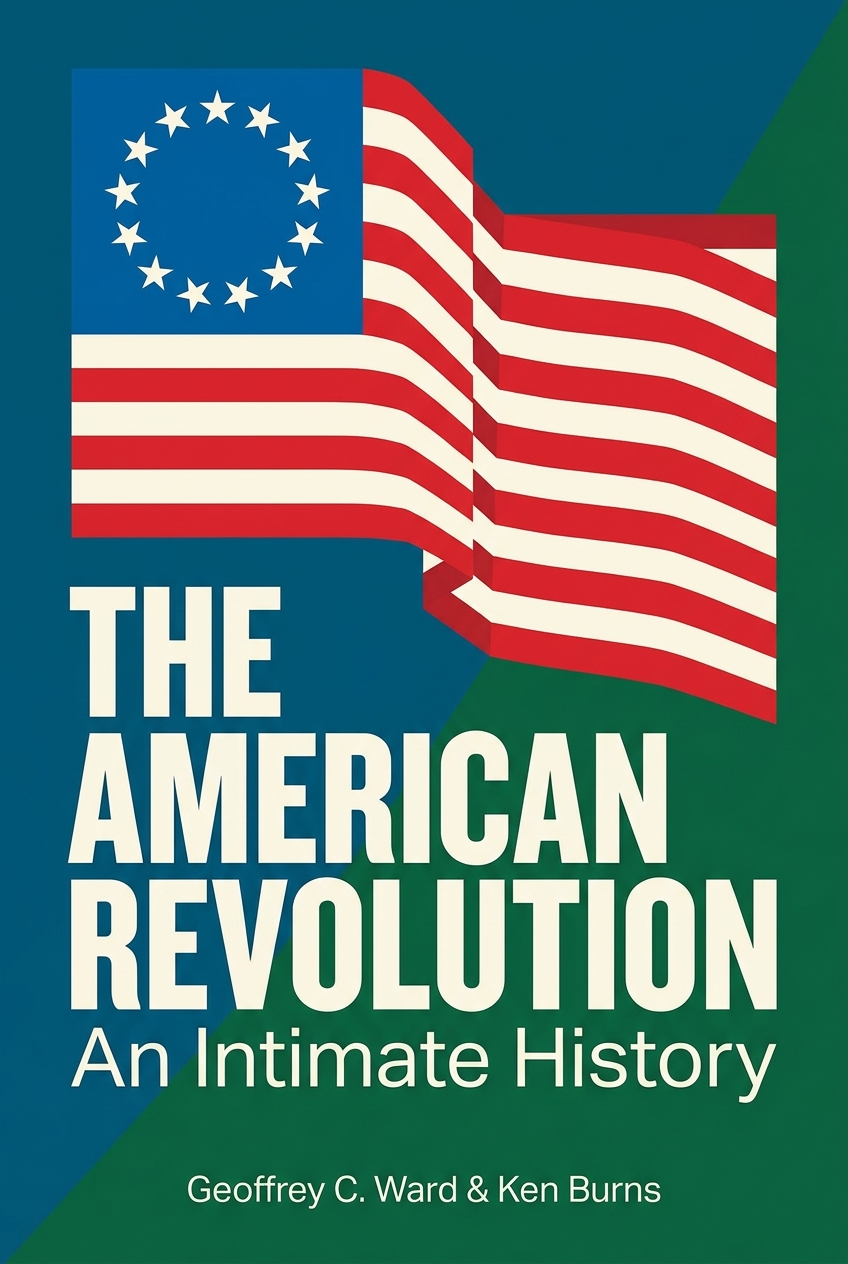
The American Revolution
An Intimate History
What's it about
Think the American Revolution was just about powdered wigs and stuffy speeches? Discover the real, untold stories of the ordinary men and women—farmers, merchants, and enslaved people—whose personal sacrifices and radical choices truly forged a new nation. Go beyond the well-known battles and founding fathers. You'll learn how private letters, diaries, and forgotten accounts reveal the messy, intimate, and often contradictory human drama behind America's fight for independence. This is the Revolution as you've never heard it before.
Meet the author
Geoffrey C. Ward is a renowned historian and seven-time Emmy Award-winning writer, celebrated for his extensive documentary collaborations with filmmaker Ken Burns on American history. Their partnership, built on a shared passion for bringing the past to life, combines Ward's meticulous research and narrative skill with Burns's iconic filmmaking. This unique synergy allows them to unearth the personal, intimate stories that define America's most pivotal moments, transforming complex historical events into deeply human experiences for a new generation.
The Script
Think of a family argument, one that starts small over a forgotten promise or a perceived slight. At first, it’s just whispers and resentful glances across the dinner table. But then it escalates. Voices rise. Old grievances, long buried, are unearthed and thrown like stones. Doors are slammed. Eventually, someone packs a bag and walks out, severing a bond that once felt unbreakable. The family home, once a symbol of unity, becomes two separate, warring territories defined by a line no one can agree on.
This is the very heart of the American Revolution. It was a messy, agonizing, and deeply personal divorce. It was a conflict that pitted neighbors against neighbors, fathers against sons, and colonists against a king they had long called their own. The war was fought not just on battlefields, but in town squares, in churches, and across the dinner tables of thousands of fractured families. The central question was about identity. Who were they, if not British? What did it mean to be something new, something 'American'?
The individuals who spent years wrestling with this very question were historian Geoffrey C. Ward and filmmaker Ken Burns. They saw the Revolution as a sprawling human epic filled with flawed heroes, reluctant rebels, and agonizing choices. Their collaboration, which first began as an acclaimed documentary series, was born from a desire to scrape away the patriotic varnish and reveal the raw, emotional, and often contradictory story underneath. They aimed to create a narrative that felt less like a history lesson and more like a national family album, capturing the painful, uncertain, and ultimately world-changing process of a people deciding to leave home for good.
Module 1: The Revolution Was a Brutal Civil War, Not a Unified Uprising
The popular image of the Revolution is one of united colonists fighting a foreign king. The reality was far messier. It was America’s first civil war.
At the war's start, only about a third of colonists actively supported rebellion. Another third remained loyal to Britain. The final third tried to stay neutral. This created a deeply fractured society. The war was fought between Americans as much as it was against the British. Communities and even families were torn apart. Benjamin Franklin, the Patriot icon, saw his own son William, the royal governor of New Jersey, imprisoned for his loyalty to the Crown. This was personal and it was violent.
This brings us to the brutal nature of this internal conflict. Loyalists, often called Tories, faced severe persecution. Patriot committees hunted them down. Mobs subjected them to public humiliation, like being tarred and feathered. Some were imprisoned in horrific conditions, like an abandoned copper mine in Connecticut that prisoners called "hell." In response, Loyalists formed their own militias. They fought alongside British regulars, seeking revenge and a restoration of order. Patriot and Loyalist militias engaged in a savage cycle of retaliatory violence. In the backcountry of the Carolinas, the war descended into guerrilla warfare. Neighbors ambushed neighbors. Prisoners were executed without trial. Nathanael Greene, a Patriot general, was horrified by the "savage fury" with which Americans hunted each other.
So what does this mean for our understanding of the conflict? It means that for many, the choice of which side to support was a pragmatic one. Personal survival and local circumstances often dictated allegiance. For the artist John Singleton Copley, the conflict was a "family quarrel." His marriage into a wealthy, tea-importing family tied his fate to the British side. He painted portraits for both Patriots and Loyalists, trying to remain neutral. But as Boston descended into chaos, his professional life became impossible. His in-laws were targeted by mobs, and his own home was attacked. He was forced into exile, a casualty of a war he never wanted. His story reminds us that for many, the Revolution was a tragedy that forced agonizing choices.
Finally, we must recognize the sheer scale of the loyalist experience. The war created a massive refugee crisis and a wave of political exile. Tens of thousands of Loyalists fled their homes, seeking safety in British-occupied cities like New York. After the war, an estimated 60,000 civilians, along with 15,000 enslaved people, evacuated with the British. This was a massive displacement, representing about one in forty members of the population. They resettled in Canada, the Bahamas, and Britain, often facing hardship and alienation. They were the losers of America's first civil war, and their stories are an essential, though often forgotten, part of the revolutionary narrative.