All Books
Self-Growth
Business & Career
Health & Wellness
Society & Culture
Money & Finance
Relationships
Science & Tech
Fiction
Topics
Blog
Download on the App Store

The European Dream

How Europe's Vision of the Future Is Quietly Eclipsing the American Dream

17 minJeremy Rifkin

What's it about

Is the American Dream a thing of the past? Discover the European Dream, a bold vision for the future built on community, sustainability, and quality of life. This new model is quietly reshaping global society, and understanding it is key to navigating our changing world. You'll explore why Europe's focus on collective well-being, cultural diversity, and human rights is creating a more resilient and appealing social framework. Learn how this shift challenges American ideals of individual success and endless growth, offering powerful lessons for your own life and community.

Meet the author

Jeremy Rifkin is a renowned economic and social theorist, bestselling author, and advisor to world leaders, including the European Union and the People's Republic of China. His extensive work with European governments and businesses provided him with unparalleled, firsthand access to the continent's evolving social and economic landscape. This unique position allowed him to identify the quiet emergence of a new, post-modern vision of the future, which he compellingly contrasts with the traditional American ethos in his seminal work.
Listen Now

Opens the App Store to download Voxbrief

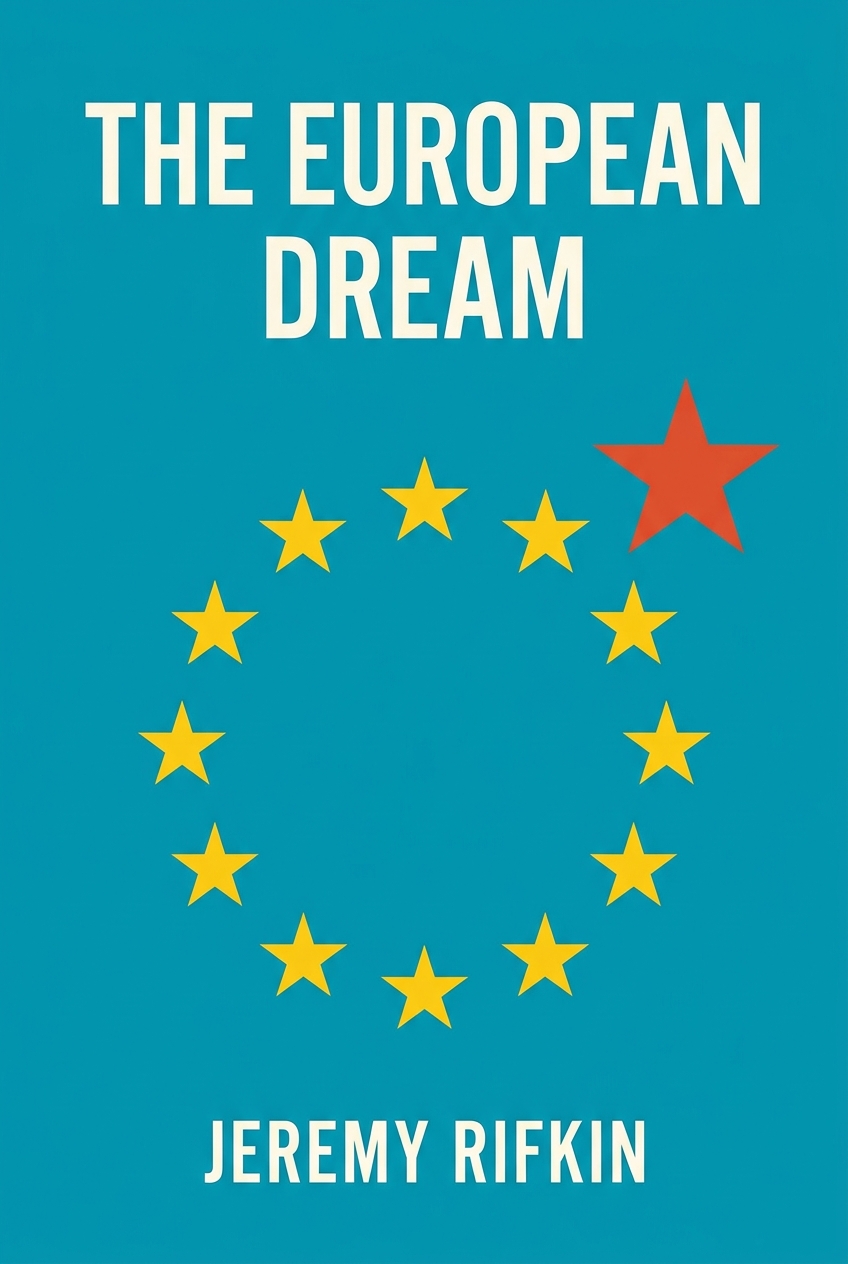
The European Dream book cover

The Script

We often mistake the finish line for the race. The American Dream, with its promise of individual triumph and endless accumulation, has long been presented as the ultimate contest of human ambition. It’s a narrative where success is a private fortress built on personal grit, where more is always better, and where the ultimate prize is to stand alone at the top. But what if this celebrated race is actually a solitary march towards an empty podium? What if the real victory is found in the quality of the journey itself—in the richness of community, the depth of cultural life, and the promise of a sustainable future? This is a call to question the very definition of winning.

This fundamental question—whether the world’s most celebrated model for success was becoming obsolete—is precisely what drove economist and social theorist Jeremy Rifkin to write this book. As a long-time advisor to European Union leaders, Rifkin had a unique vantage point, observing firsthand how a different set of values was quietly taking root across the continent. He saw a new vision emerging from the everyday priorities of its people: a preference for leisure over labor, for universal rights over individual advantage, and for interconnectedness over autonomy. "The European Dream" is his report from the front lines of this quiet but profound cultural and economic shift.

Module 1: The Fading American Dream vs. The Rising European Dream

The core argument of the book is a direct comparison. It pits the classic American Dream against what Rifkin calls the European Dream. These are fundamentally different worldviews.

First, the American Dream prioritizes individual autonomy and wealth, while the European Dream values community belonging and quality of life. The American ideal is freedom from others. It’s about becoming self-reliant. You achieve this through hard work and accumulating property. Security means independence. But flip the coin. The European ideal is freedom through others. It is found in being embedded within a web of relationships. Security comes from inclusivity and social support. This difference is stark. Americans live to work. Europeans work to live.

Second, this leads to a critical insight. The American Dream is losing its relevance in a globally connected world. Its emphasis on rugged individualism and national exclusivity feels out of step. We now face problems that no single person or nation can solve alone. Climate change, pandemics, and global economic shocks require cooperation. The American "go-it-alone" ethos, once a strength, is now a liability. Rifkin points to data showing that for many, the dream is also becoming unattainable. He notes rising inequality and stagnating wages in the U.S. compared to Europe. At the time of writing, 17% of Americans lived in poverty, a rate higher than in 16 European nations. The promise of upward mobility, once an American hallmark, was showing cracks.

Building on that idea, Europe is quietly building a more sustainable and humane form of capitalism. While Americans often view Europe through a historical lens, a place for vacations, they miss the economic revolution happening. The European Union has become an economic superpower. Its GDP now rivals that of the United States. It is the world’s largest internal market. It is also a leader in global trade. But Europe achieves this without sacrificing its social contract. EU countries invest heavily in social benefits. They mandate generous paid parental leave. They provide universal healthcare coverage. This creates a "social market economy." It's an attempt to balance the dynamism of the market with a commitment to social justice. The goal is to ensure no one is left behind.

Finally, here's the bottom line. Traditional metrics like GDP fail to capture the real difference in well-being. The book critiques Gross Domestic Product, or GDP, as a flawed measure. It counts all spending as good. It adds the costs of prisons, pollution cleanup, and obesity-related healthcare. But these don't make life better. Robert F. Kennedy once said GDP measures everything "except that which makes life worthwhile." So, what happens when we use other indicators? Europeans are pioneering alternatives like the Genuine Progress Indicator. These metrics account for social and environmental costs. When you look at quality-of-life data, a different picture emerges. The U.S. spends the most on healthcare but ranks poorly in outcomes. The U.S. homicide rate is nearly four times the EU average. And childhood poverty is significantly higher in America than in most of Western Europe. The European Dream, it turns out, might be delivering a better life.

Read More