All Books
Self-Growth
Business & Career
Health & Wellness
Society & Culture
Money & Finance
Relationships
Science & Tech
Fiction
Topics
Blog
Download on the App Store

The First Phone Call from Heaven

A Novel

12 minMitch Albom

What's it about

What if you could get one more call from a loved one who has passed away? In the small town of Coldwater, Michigan, this miracle is happening. Residents are receiving phone calls from heaven, offering proof of the afterlife and sparking a global phenomenon. As the world watches, a grieving single father named Sully Harding is determined to prove it's all a hoax. Join him on a quest for the truth that will challenge your beliefs about faith, love, and the connections that transcend even death itself.

Meet the author

Mitch Albom is an internationally bestselling author whose books, including the iconic Tuesdays with Morrie, have sold over forty million copies and been translated into forty-seven languages. A celebrated journalist and philanthropist, Albom masterfully explores themes of faith, loss, and human connection in his work. His unique ability to weave profound spiritual questions into compelling, accessible narratives stems from a deep curiosity about what lies beyond our earthly existence, a theme central to his storytelling.
Listen Now

Opens the App Store to download Voxbrief

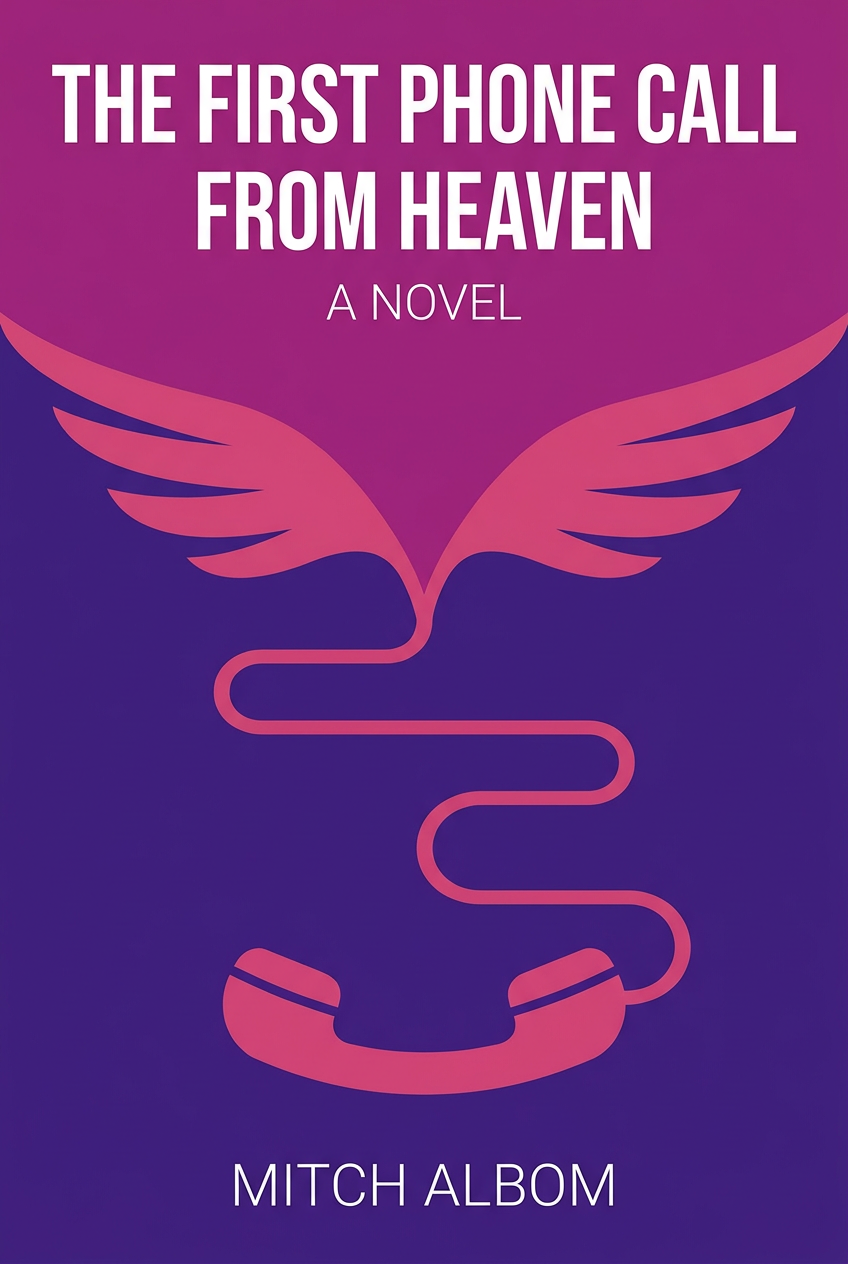
The First Phone Call from Heaven book cover

The Script

At the town diner, there are two kinds of coffee orders. The first is the 'usual,' a simple request that requires no thought. It's the coffee of routine, of a day that promises to be just like the last. The second is the 'thinking coffee.' This is the one you order when the world has tilted on its axis. It’s the coffee you stare into, not at, as you wrestle with an event so profound it has fractured your understanding of what is and isn't possible. It’s the coffee that gets cold while your mind runs hot, replaying a moment—a sound, a voice, a message—that defies all logic. The people of Coldwater, Michigan, were once a town of 'usuals.' Then, one by one, their phones began to ring, and suddenly, the diner was filled with people ordering the thinking coffee, each nursing a cup and a private, earth-shattering miracle.

The question of what we would do if we could hear those voices again—and whether we should believe it if we did—is a deeply personal one for author Mitch Albom. A celebrated journalist and author known for his explorations of faith and human connection in books like Tuesdays with Morrie, Albom has a unique relationship with the idea of a voice that is gone but not forgotten. He once had a beloved radio show, and the disembodied nature of a voice carrying across the airwaves, creating connection without physical presence, stayed with him. He wrote The First Phone Call from Heaven to explore his own longing for one more conversation with those he had lost, wrestling with the hope and the skepticism that such a miracle would inspire in his own heart.

Module 1: The Disruption of the Ordinary

The story begins with small, jarring interruptions. In the quiet town of Coldwater, Michigan, ordinary life is suddenly punctured by the impossible. This is where the narrative’s power lies. It grounds a supernatural event in the most mundane of moments.

One resident, Tess Rafferty, is in her kitchen. She's unwrapping tea bags when her phone rings. The voice on the other end is her mother, who died four years ago. The police chief, Jack Sellers, is in the middle of a loud argument with his officers. His phone rings. It's his son, Robbie, who was killed in Afghanistan. These calls are intimate, personal, and deeply unsettling because they arrive during life's routine hum.

This brings us to the first key insight. Extraordinary events gain their power by disrupting mundane reality. A miracle announced in a cathedral feels expected. A miracle that arrives while you're doing chores feels personal. It shatters your sense of normalcy. The characters don't have time to prepare their skepticism. They are ambushed by grief and hope. Their immediate response is raw emotion. Tess drops the phone, her breath catching in her throat. Jack’s stomach tightens with a mix of pain and euphoria. They recognize the voices instantly.

From this foundation, we see how these private miracles create divergent reactions. Individuals process anomalies through either private withdrawal or public declaration. Tess becomes a shut-in. She is terrified of missing another call from her mother. Her belief is so total that the outside world becomes inconsequential. Jack also retreats, keeping the calls a secret. He guards his connection to his son like a precious, fragile secret.

But flip the coin. Another resident, Katherine Yellin, receives a call from her deceased sister. Her reaction is to proclaim the miracle. She bursts into her church, interrupting the service to announce it. Her faith transforms her grief into a public mission. This single act is the spark that ignites the town. It turns a series of private, isolated events into a public phenomenon, setting the stage for the chaos and conflict that will follow.

Module 2: The Social Amplification Engine

We've seen how the calls began as private disruptions. Now, let's explore how they escalate into a full-blown social spectacle. This is where the story becomes a powerful commentary on our modern world. It shows how belief, media, and commerce can form a rapid, often uncontrollable, amplification loop.

It starts with Katherine’s public declaration in church. This moves the story from personal experience to community news. Soon after, reporter Amy Penn gets an anonymous tip. She is a cynical, ambitious journalist looking for her big break. She heads to Coldwater expecting to find a "crazy" person. Instead, she finds a story with the power to captivate millions. Her shaky, unverified video of Katherine receiving a call goes viral.

This is where we see a critical dynamic at play. Media shapes and accelerates events. The video spreads online at "warp speed." Within a week, Coldwater is the most-searched location on the internet. The story bypasses all traditional filters of vetting and verification. The raw, unedited quality of the footage gives it an "aura of bizarre authenticity." The world doesn't just hear about the miracle; they feel like they are witnessing it.

So what happens next? The digital frenzy translates into a physical invasion. The town is overrun. Cars clog the streets. Strangers camp out on lawns. A mob forms outside the local phone store, desperate to buy "the phone that calls heaven." The narrative shows how quickly a local curiosity can become a global pilgrimage site. And with the pilgrims come the opportunists. The local diner is overwhelmed with customers. Samsung, the maker of one of the phones, sees a sales opportunity and erects a billboard with the word "DIVINE."

Here's the thing. This frenzy forces everyone to take a side. Extraordinary claims polarize communities, creating tribes of believers, skeptics, and opportunists. The town meeting, called to handle logistics, turns into a public forum of faith. One by one, seven residents stand up and claim they too have received calls. The mayor is left whispering, "What do we do now?" Even the local clergy are divided. Some see a divine sign, while others worry about blasphemy and false hope. The phenomenon is no longer a personal matter. It's a social, economic, and spiritual crisis.

Read More