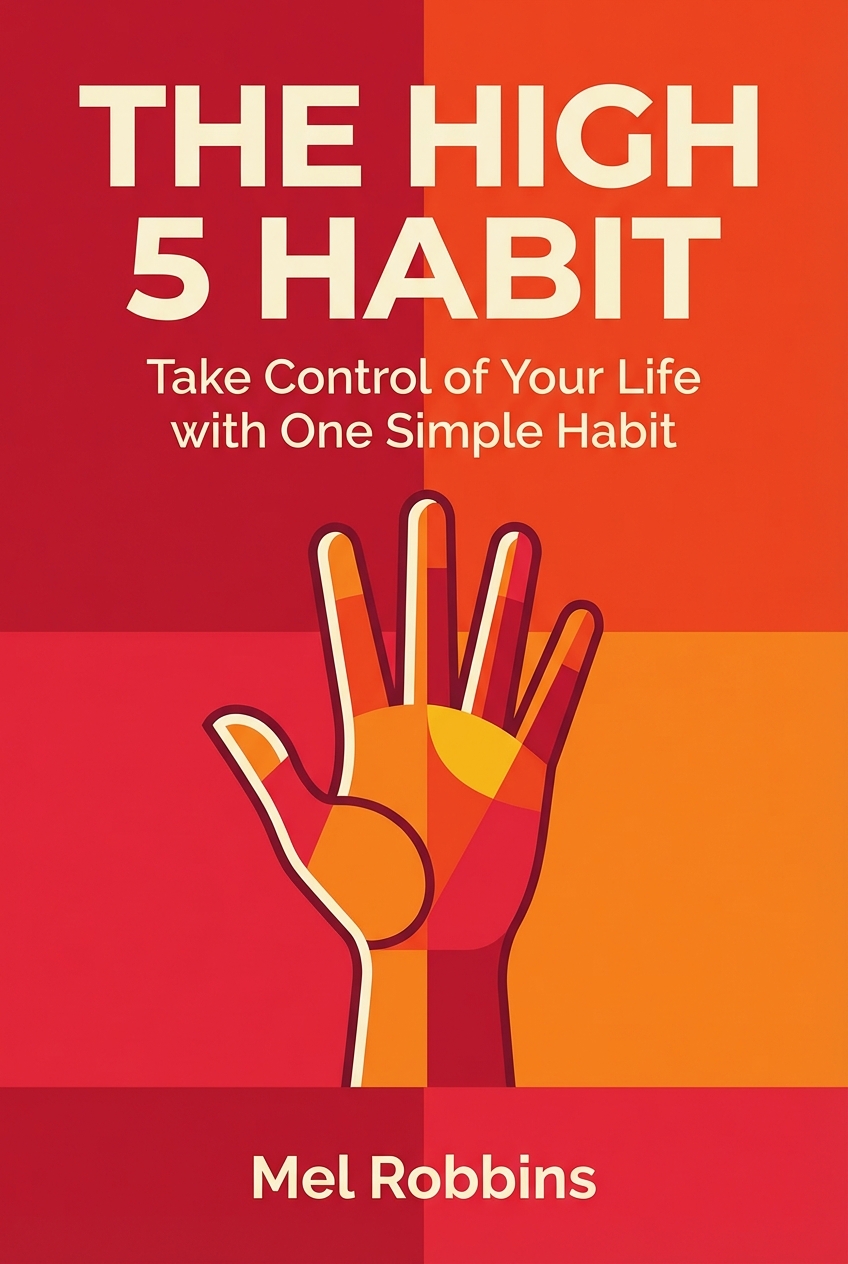
The High 5 Habit
Take Control of Your Life with One Simple Habit
What's it about
Are you your own worst critic? What if you could silence that inner doubter and become your biggest cheerleader with one simple, science-backed action? Discover the secret to building unshakable confidence and taking control of your life, starting today. Learn to transform your relationship with yourself using the powerful High 5 Habit. Mel Robbins reveals how this daily morning ritual rewires your brain for positivity, helping you celebrate your wins, overcome self-sabotage, and build the momentum you need to chase down your dreams. It's time to high-five the person in the mirror.
Meet the author
Mel Robbins is one of the world’s most trusted experts on change and motivation, with her TEDx talk being one of the most popular of all time. After hitting rock bottom in her own life, she created simple, science-backed tools to overcome self-doubt and take action. Her revolutionary "High 5 Habit" emerged from this personal journey, offering a powerful method to silence the inner critic and build the confidence needed to transform your life, one high five in the mirror at a time.
The Script
The antique mirror in the dusty corner of a thrift shop has seen it all. It has reflected joy, despair, and a thousand shades of indifference. Mostly, it reflects a flicker of judgment. A person catches their own eye and almost instantly, a critique forms—a stray hair, a tired expression, a mental list of all the things they haven't done. The gaze is rarely one of partnership or celebration. It's the look of an auditor, tallying up deficits. This silent, daily audit is a habit so ingrained we barely notice it. We look for flaws in our own reflection the way a building inspector looks for cracks in a foundation, assuming something must be wrong and it's our job to find it. But what if that brief, private moment could be something else entirely? What if instead of a critical auditor, the person in the mirror was your most devoted ally?
This is the exact question that confronted Mel Robbins during a particularly brutal chapter of her life. Facing financial ruin, a struggling marriage, and a sense of professional failure that left her unable to get out of bed, her own reflection felt like an enemy. Robbins, already a respected CNN commentator and expert on human behavior, found her own advice failing her. One morning, out of sheer desperation and a flash of absurd inspiration, she raised her hand and gave her reflection a high five. It felt ridiculous, but it broke the pattern. That one, simple, physical act of self-acknowledgment became the seed for a global movement and the core of this book. It was born from the raw, messy reality of one person needing to find a way to cheer for herself when no one else was around.
Module 1: The Science and Psychology of Self-Celebration
So, what is the High 5 Habit, really? It’s a simple, intentional ritual. Every morning, you stand in front of a mirror, look at your reflection, and give yourself a high five. It sounds almost childishly simple. But the power is in the deep-seated psychological associations our brains have with it. For our entire lives, a high five has meant celebration, encouragement, and connection. It’s a transfer of energy and belief.
This brings us to the first crucial insight. The physical act of a high five interrupts negative thought patterns. When you raise your hand to your reflection, your brain can't simultaneously entertain a self-critical thought like "I look tired" or "I'm not good enough." The action itself demands presence. It forces a moment of connection. Robbins shares her experience running the New York City Marathon. She wasn't an elite athlete. What got her across the finish line was the constant stream of high fives from strangers on the sidelines. Each one was a jolt of energy. A message that said, "You can do this. Keep going." The High 5 Habit is about turning that external encouragement inward.
Next, this practice is a powerful neurobic exercise. Neurobics are activities that stimulate the brain by breaking routine. Think of it like brushing your teeth with your non-dominant hand. It forces your brain to wake up and pay attention. Pairing a new action with a routine creates new neural pathways. You look in the mirror every day. That's the routine. High-fiving your reflection is the unexpected action. This pairing forces your brain to link your own image with the positive emotions of a high five. Over time, this rewires the knee-jerk reaction of self-criticism into one of self-acceptance and support. Robbins points to her son's experience at a school for dyslexia, where physical, cross-body exercises were used to build new neural connections. The High 5 Habit works on a similar principle.
But here's the thing. This isn't about "toxic positivity." Robbins is clear on this. The habit is about building the resilience to face reality. She shares the story of Jenn, a woman undergoing chemotherapy. High-fiving herself in the mirror didn't make her cancer disappear. It didn't make the treatment less grueling. What it did was change her relationship with herself. It allowed her to be her own cheerleader through an incredibly difficult fight. It gave her the mental fortitude to show up for herself each day. This is about building an internal support system, especially for the moments when life is genuinely hard.
Finally, the science backs this up. Self-acceptance is the single greatest predictor of life satisfaction. A University of Hertfordshire study reviewed numerous self-improvement behaviors, from exercise to goal-setting. The number one factor correlated with happiness was being kind to yourself. We often treat self-improvement as a punishment. We drink the green smoothie while telling ourselves we’re not healthy enough. We meditate while beating ourselves up for not being more mindful. The High 5 Habit flips the script. It starts with celebration. It’s a daily declaration that you are worthy of support right now, exactly as you are.