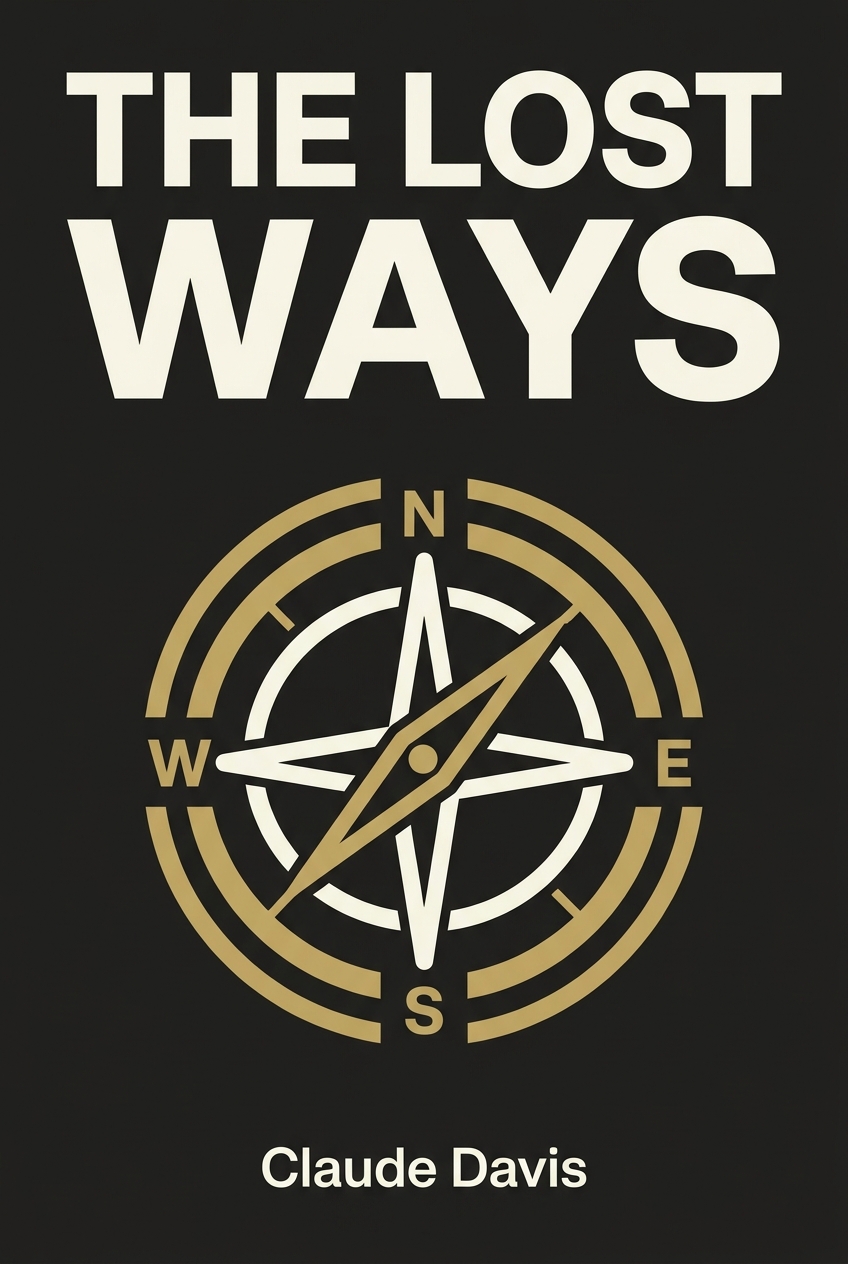
The Lost Ways
What's it about
What if the world's power grid went down tomorrow? Could you protect your family and thrive using only the skills of our ancestors? Discover the forgotten survival techniques that kept generations alive through the harshest conditions, ensuring your self-reliance in any crisis. The Lost Ways reveals hundreds of life-saving skills, from preserving food without refrigeration to building a subterranean roundhouse and making poultices from backyard plants. You'll learn the secrets of pioneer ingenuity to become truly independent and prepared for anything.
Meet the author
Claude Davis is a seasoned survivalist and prepper with over 30 years of hands-on experience, renowned for his deep knowledge of ancestral self-sufficiency skills. He spent decades living off-grid, learning directly from elders and studying historical methods to master the forgotten arts of our forefathers. This unique journey led him to document these invaluable, time-tested techniques, preserving practical wisdom for modern generations seeking true independence and resilience in an uncertain world.
The Script
In a town's archives, two nearly identical ledgers from the late 1800s sit side by side. One, kept by the town clerk, is a pristine record of births, deaths, and property deeds—a clean, official history. The other, kept by the general store owner, is filled with smudges, cryptic notes in the margins, and records of barter. It tracks who needed salt before a storm, whose harvest failed, what remedies were traded for winter wood, and which families knew how to preserve meat without a cellar. The clerk's ledger tells the story of a town that existed. The store owner's ledger tells the story of how it survived.
We live our lives by the clerk's ledger, tracking metrics and milestones, assuming the systems that supply our food, water, and medicine will always be there. But what happens when they aren't? We've forgotten the language of the second ledger—the practical, hands-on knowledge that was once as common as breathing. This growing gap between modern dependence and ancestral self-reliance is what drove Claude Davis to write "The Lost Ways". As a survival expert with a deep respect for history, Davis spent years obsessively researching the ingenious methods our forefathers used to thrive in a world without electricity, pharmacies, or supermarkets. He realized this was a collection of essential life skills, a legacy of resilience on the verge of disappearing forever. The book is his effort to capture that second ledger before its ink fades completely.
Module 1: The Foundation of Self-Reliance—Food & Water
The core of survival is mastering the basics. Food and water are the bedrock of self-sufficiency. The book argues that modern food systems create a dangerous dependency. Reclaiming control over your food supply is the first step toward genuine independence.
This starts with a shift in mindset. You must learn to create and preserve high-energy, long-lasting food sources. Our ancestors couldn't run to a supermarket. They had to make food that could endure long winters, journeys, and times of scarcity. Two powerful examples from the book are pemmican and hardtack. Pemmican was a staple for North American Plains Indians and later, frontiersmen. It's a super-dense food made from dried lean meat and rendered fat. When made correctly with grass-fed animal products, it’s nutritionally complete and can last for years without refrigeration. A ten-pound batch can sustain a person through a week of strenuous activity. Similarly, hardtack, a simple biscuit of flour, water, and salt, was a staple for Civil War soldiers. Its low moisture content makes it almost indestructible. Learning to make these is a practical way to build a food reserve that doesn't rely on a functioning supply chain.
From there, the author moves to preservation. Mastering ancestral food preservation techniques is non-negotiable for food security. Before refrigerators, people used ingenious methods to store their harvests. The book provides detailed guides on building a simple backyard smokehouse. Smoking meat inhibits bacterial growth, preserving it for months. Another key technique is the root cellar. By using the earth's natural insulation, a root cellar keeps produce like carrots, potatoes, and apples fresh through the winter. It maintains a cool, humid, and dark environment, essentially a natural refrigerator. These methods are low-tech, effective, and drastically reduce reliance on the electrical grid.
And here's the thing about food. It's worthless without safe water. You need to know how to find, purify, and store water using historical methods. Seventeenth-century sailors faced this problem on long voyages. They stored water in wooden casks and used various methods to keep it potable. One technique was adding a silver coin to a container, as silver has natural antibacterial properties. The book also details how to build a simple but effective water filter. All you need is a container, charcoal, sand, and cloth. The charcoal acts as an adsorbent, pulling impurities from the water. These are skills that could be critical in an emergency where municipal water systems fail. They transform you from a passive consumer into an active, capable provider.