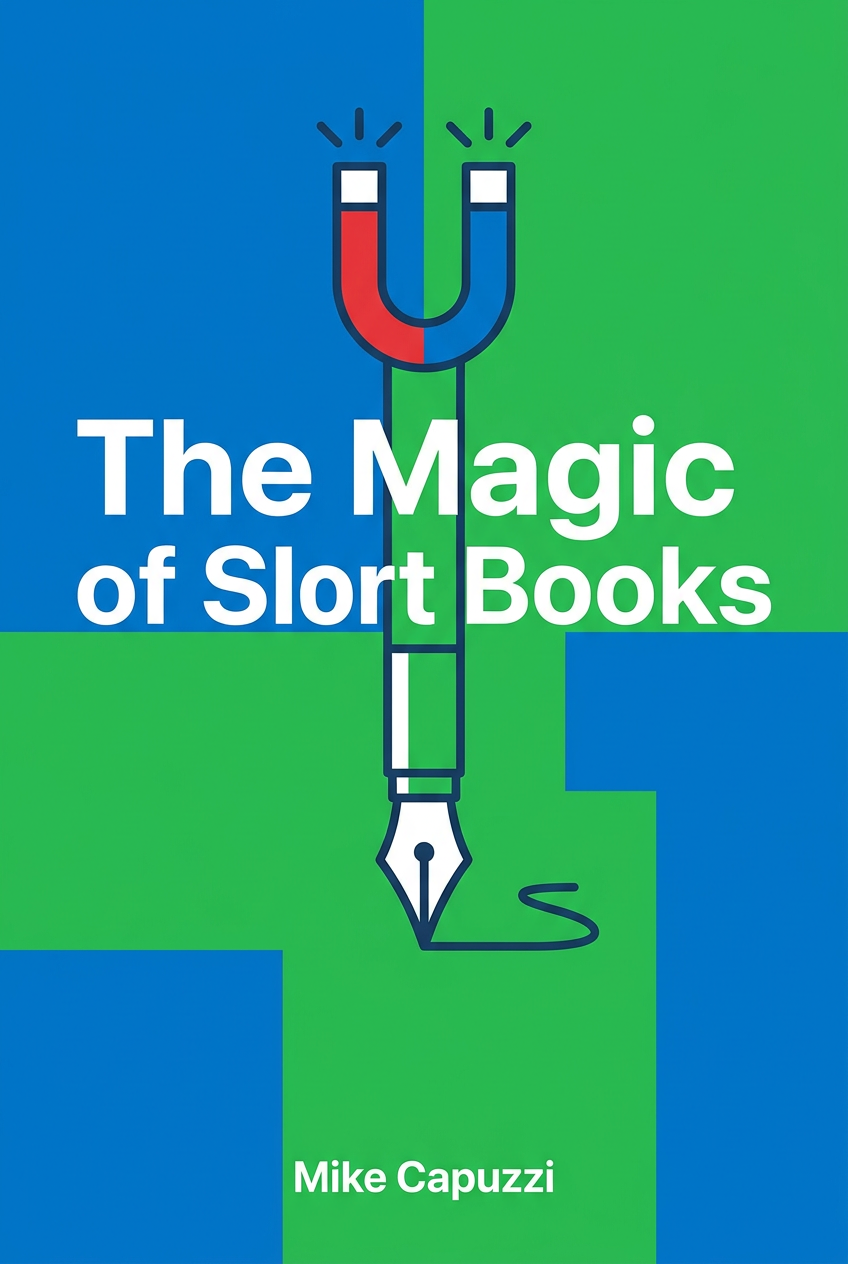
The Magic of Short Books
Discover My Simple, Step-by Step Formula for Creating an Effective Customer Attraction Book
What's it about
Tired of complex marketing that doesn't deliver? Discover how a simple, short book can become your most powerful tool for attracting high-quality clients. This guide offers a proven, step-by-step formula to turn your expertise into a customer-generating machine, effortlessly and effectively. You'll learn Mike Capuzzi's secrets for creating a compelling "shook"—a short, helpful book—that positions you as the go-to authority in your field. Uncover the exact structure, writing process, and marketing strategies to publish a book that builds trust and drives business growth.
Meet the author
Mike Capuzzi is a bestselling author and the creator of the short-book marketing method that has generated millions in sales for entrepreneurs across dozens of industries. Drawing from his 30-year career as a direct response copywriter and marketing strategist, he developed this powerful system after realizing traditional book publishing was too slow and complex for most business owners. His streamlined approach empowers experts to quickly create high-impact books that attract their ideal customers and build lasting authority in their field.
Opens the App Store to download Voxbrief

The Script
The publishing industry is built on a grand, unspoken fiction: that a book's value is measured by its weight. We see it in the heft of a hardcover, the satisfying thickness of a paperback, and the daunting page count that promises exhaustive knowledge. For an author, this translates into a brutal rite of passage—a marathon of writing, editing, and endless revision, often stretching for years, all to produce a tome that, statistically, most readers will never even finish. The very act of writing a 'real' book is positioned as a monumental achievement, a literary Everest to be conquered. But what if this entire model is a relic? What if the assumption that bigger is better is not just inefficient, but actively sabotaging the very purpose of a book: to transfer a valuable idea from one mind to another as quickly and effectively as possible?
This exact question began to haunt Mike Capuzzi. As a marketing consultant and copywriter working with successful entrepreneurs, he noticed a recurring pattern. His clients had brilliant, game-changing ideas, but the traditional publishing path was a non-starter—it was too slow, too complex, and too disconnected from their goal of generating business. They didn't need a literary monument; they needed a powerful, focused tool. So, Capuzzi began to experiment, turning his marketing expertise toward the creation of short, impactful books designed as strategic assets. He discovered that by stripping away the unnecessary bulk, he could create something far more potent: a direct line to a reader's attention and a catalyst for action. This book is the distillation of that discovery—a guide to creating the kind of book that gets read and gets results.
Module 1: The "Shook" as a Strategic Weapon
The first thing to understand is that Capuzzi isn't just talking about writing a shorter book. He introduces a specific, trademarked concept: the "Shook." This is a portmanteau of "short" and "book." A Shook is a short, helpful book engineered from the ground up to be a marketing asset.
This leads to the first core idea. A short, focused book is a superior marketing tool to a brochure or a traditional business card. Think about the last time someone handed you a brochure. It likely ended up in the trash. But a book? A book has perceived value. It isn't discarded lightly. It positions you as an expert. Doug Brown, CEO of BiteFX, shares a powerful story in the foreword. At a conference, only 10-15% of attendees would look at his software. But over 70% bought his short book. The book became the key that unlocked conversations.
Building on that, a Shook is designed to attract ideal customers, not chase them. The book is a filter. It speaks directly to a specific audience with a specific problem. Marketing expert Dan Kennedy is quoted in the book. He argues that the highest-quality clients are book buyers. They are informed. They respect authority. They make thoughtful decisions. A Shook is designed to appeal directly to this valuable demographic. By offering targeted, helpful information, you draw these people to you. You stop pursuing and start attracting.
And here's the thing. This isn't a new idea. Capuzzi points out that companies have used books as marketing tools for over a century. In 1903, the Ostermoor Mattress Company offered a free book called The Test of Time. It helped people sleep better. And it sold mattresses. The principle is the same today. Your Shook should solve a small, specific problem for your ideal reader. It gives them a quick win. It builds trust. It makes them receptive to your message.
Finally, the entire concept rests on a critical insight about modern life. Your target audience lacks the time and attention for long books. Capuzzi shares a survey showing over 80% of business owners haven't finished a business book they started in the past year. A 400-page tome is intimidating. It’s a project. A Shook, by contrast, is a welcome relief. It’s designed to be read in about an hour. This respect for the reader's time is fundamental. It ensures your message is actually consumed, not just shelved.
Module 2: Engineering the Perfect Shook
So, how do you actually create one of these? Capuzzi provides a detailed, step-by-step framework. The process is one of strategic engineering. It starts long before you write a single word.
First, you must strategically plan the book's goals before you start writing. It’s about defining two clear objectives. First, your business goal. What is the number one thing you want this book to accomplish? Is it to generate calls? Drive traffic to a webinar? Get speaking gigs? Be specific. Second, your reader's goal. What is the next step you want your reader to take? The entire book will be built to guide them to that action.
Next, you need to find your core message. Capuzzi calls this the "Shook Hook." Your book's central idea, or "hook," must be emotionally stirring and unique. It’s the big promise. It’s the answer to the question your ideal reader is asking. "What keeps them awake at night?" or "What do they desire most?" The hook must be simple, easy to understand, and instantly appealing. For example, a client's book was titled Snore No More! It's direct. It makes a clear promise. It speaks to a painful problem.
Now, let's turn to the content itself. The key is to strive for personality in your writing. Many potential authors get stuck trying to write the perfect book. Capuzzi argues this is a mistake. Your Shook is a conversation. It’s a printed version of you talking to your ideal prospect. So, write like you talk. Focus on connection. Authenticity is more valuable than flawless prose. The goal is to build trust and rapport, not to win a literary award.
Finally, the book must have a clear purpose. A Shook is a direct response marketing tool designed to start a conversation. It is not a comprehensive encyclopedia. You are giving them just enough valuable information to help them and make them realize they need your expertise for the rest. This is achieved through two specific calls-to-action. The Active CTA is the main thing you want them to do, like "Schedule a Shook Strategy Session." The Passive CTA is a secondary offer, like downloading a free resource in exchange for their email. This structure ensures the book works for your business long after the reader puts it down.