All Books
Self-Growth
Business & Career
Health & Wellness
Society & Culture
Money & Finance
Relationships
Science & Tech
Fiction
Topics
Blog
Download on the App Store

The Match

The Day the Game of Golf Changed Forever

12 minMark Frost

What's it about

Ever wonder what separates the legends from the rest? Imagine being a fly on the wall for a secret, high-stakes golf game between icons like Ben Hogan and Byron Nelson against two brilliant amateurs. This is your chance to learn the mindset that defines greatness under pressure. You'll discover the psychological tactics and shot-making genius that unfolded on one legendary day at Cypress Point. Uncover the strategies used by the pros to dominate the course and their opponents, offering timeless lessons on focus, confidence, and performing when it matters most.

Meet the author

Mark Frost is the acclaimed co-creator of the legendary television series Twin Peaks and a New York Times bestselling author known for his meticulous and compelling nonfiction. A lifelong, passionate golfer, Frost grew up hearing stories about the mythical 1956 match between professionals Ben Hogan and Byron Nelson and amateurs Harvie Ward and Ken Venturi. His deep love for the game and his masterful storytelling ability allowed him to uncover the full, untold story and immortalize this pivotal moment in golf history.
Listen Now

Opens the App Store to download Voxbrief

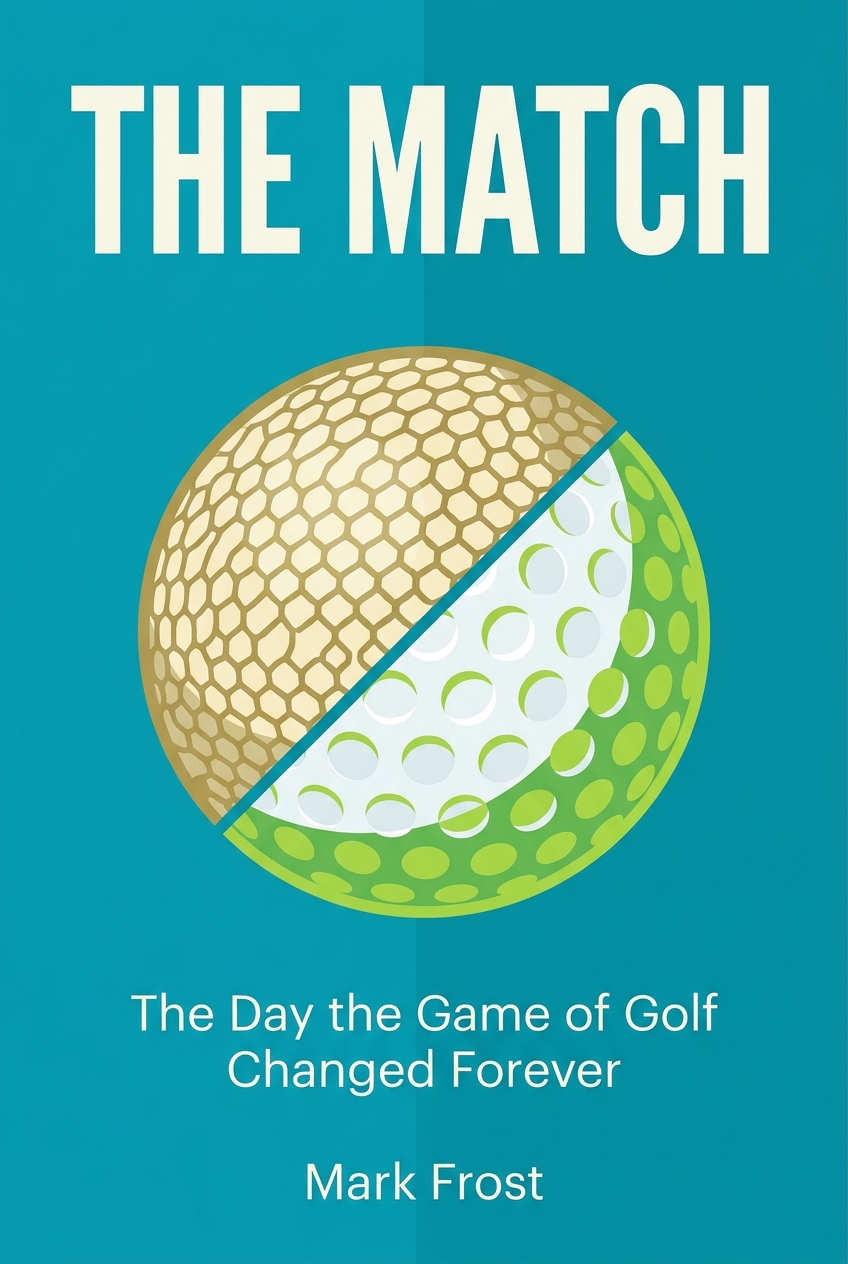
The Match book cover

The Script

It’s a simple, familiar object: a golf ball. For most, it’s a dimpled white sphere, a piece of equipment for a weekend hobby, something to be hit, found, and hit again. But place two identical golf balls in the hands of two different players. One player sees a tool for a game, a physical object governed by the laws of physics and the quality of their swing. The other sees a vessel of personal history, a symbol of a life’s ambition, a tiny planet around which their entire world orbits. The balls are the same. The hands holding them, the eyes staring them down, are not. The weight of a single golf ball can be the weight of a feather or the weight of a legacy. This difference is everything.

That chasm between the casual and the consecrated is precisely what fascinated author and screenwriter Mark Frost. Frost, co-creator of the landmark television series Twin Peaks and a lifelong student of golf, grew up hearing whispers of a legendary, almost mythical, private match that took place in 1956. It was a contest that pitted the game’s old guard against its rising new talent, but it was never televised, never officially recorded, and its details lived only in the memories of the few who were there. For Frost, this was a ghost story, a secret history of a moment when the entire culture of a sport, and perhaps the country, was balanced on the outcome of a few putts. He embarked on a years-long quest, interviewing the last living witnesses and piecing together the fragmented accounts to resurrect a day that defined the past and future of the game.

Module 1: The Catalyst of Curiosity

The story kicks off with a simple premise: a summer trip that promises to be dull. Two friends, Sandy and Eve, are sent to stay with an unfamiliar relative, Aunt Calpurnia. Their initial expectations are low, colored by assumptions about a stern, isolated woman. This setup immediately introduces a core idea: first impressions are often wrong and built on flimsy stereotypes. Sandy and Eve prejudge Aunt Cal as "narrow" and "brooding" before they even meet her. Their minds are already made up. But reality, as it often does, proves more complex.

This initial misjudgment is quickly overshadowed by a small, accidental event that ignites the entire plot. Sandy mistakenly grabs the wrong suitcase from the bus. This is a mundane error. And here's the thing: seemingly trivial accidents can become powerful catalysts for mystery and adventure. The wrong suitcase contains not clothes, but men's apparel and bottles of "Harry's Hair Restorer." This peculiar discovery transforms a simple mistake into a question. Who is this man? Why these items? Suddenly, the boring summer has a thread to pull.

It's Eve's reaction that truly sets the tone. While Sandy is anxious, Eve reframes the situation. She sees an "adventure." This highlights a crucial dynamic. A positive and proactive mindset can transform a challenging situation into an opportunity for discovery. Eve's goal is to "make her [Aunt Cal] glad we’re here." Her optimism and curiosity become the engine of their investigation. When they see a man creeping around the property on their first night, it's the next clue in a mystery that has just begun.

Module 2: The Unraveling Investigation

With the mystery of the suitcase now a full-blown quest, the girls begin their investigation. Their first stop is trying to track down the suitcase's owner, a Mr. Bangs. This leads them to a deserted crossroads and an old, eerie property called Craven House. The house itself seems abandoned, feeding their imagination. But as they explore, they find it feels oddly familiar. This introduces a recurring theme. Abandoned places evoke a powerful mix of nostalgia, unease, and hidden history. The overgrown garden and faded wallpaper are echoes of a past waiting to be understood.

Their investigation is driven by raw initiative. Eve and Sandy demonstrate that curiosity and resourcefulness are the primary tools for amateur problem-solving. When the bus driver gives them a lead, Eve proactively asks questions to narrow the search. When they find Craven House, she pushes past the "No Trespassing" sign, reasoning that finding Mr. Bangs is their priority. They are actively seeking answers.

This proactive spirit leads to direct conflict. They find Mr. Bangs in the garden, and he reacts with anger, accusing them of trespassing. Their attempt to solve one problem—the suitcase—creates another: a tense and unpredictable confrontation. And it doesn't stop there. Eve's curiosity leads them to peek inside the house, only for Mr. Bangs to lock them in. A simple investigation has now escalated into a dangerous predicament. This shows how small intrusions, even when accidental, can escalate into significant conflict. Their journey to return a suitcase has trapped them inside the very mystery they were trying to solve.

Module 3: From Crisis to Collaboration

Locked inside Craven House, the dynamic shifts from investigation to survival. The contrast between the two girls is stark. Sandy panics, imagining headlines and search parties. Eve, however, remains calm and pragmatic. This highlights a critical insight: composure under pressure is essential for effective problem-solving. While Sandy is paralyzed by fear, Eve systematically searches for an escape route. She finds a rusty hammer, and together they work for over an hour to pry open a nailed-shut window. Their escape onto a high porch roof is another phase of the problem.

Their cries for help are eventually answered by a boy named Michael Gilpatrick. His initial response is sarcastic and detached. He doesn't play the hero. This introduces another layer to the story's social dynamics. Initial encounters with strangers are often shaped by skepticism and subtle power plays. Michael is wary, and Eve meets his gruffness with playful banter, testing his character. It’s a negotiation.

Ultimately, Michael helps them, revealing that he already knew who they were through a neighbor. This small connection changes everything. The incident transforms them from strangers into acquaintances, laying the groundwork for future collaboration. A new character has entered the fold as a future ally. The group is expanding, and so is the mystery. But there's another player in this drama, a mysterious cat named Adam, who seems to belong to both Aunt Cal and a crusty neighbor, Captain Trout. This dispute over a pet reveals that personal attachments and memories often fuel conflicts over ownership. The cat becomes a furry, four-legged symbol of the tangled relationships in this small town.

Read More