All Books
Self-Growth
Business & Career
Health & Wellness
Society & Culture
Money & Finance
Relationships
Science & Tech
Fiction
Topics
Blog
Download on the App Store

The New Makers of Modern Strategy

From the Ancient World to the Digital Age

17 minHal Brands

What's it about

Ever wonder how timeless strategies from Sun Tzu or Machiavelli can give you an edge in today's digital world? Discover the enduring principles of strategy that have guided leaders for centuries and learn how to apply them to your modern challenges, from business competition to personal goals. This book summary unpacks the genius of history's greatest strategists, revealing their core methods for navigating conflict, seizing opportunity, and achieving victory. You'll learn how to think strategically, anticipate your rival's next move, and adapt ancient wisdom to master the complexities of the digital age.

Meet the author

Hal Brands is the Henry A. Kissinger Distinguished Professor of Global Affairs at Johns Hopkins University, renowned for his expertise in statecraft and historical strategy. His work in academia and as a former advisor to the U.S. Department of Defense provides a unique blend of scholarly insight and practical experience. This background allows him to bridge the gap between timeless strategic principles and the complex challenges of the modern digital age, offering readers an unparalleled perspective on the evolution of power.
Listen Now

Opens the App Store to download Voxbrief

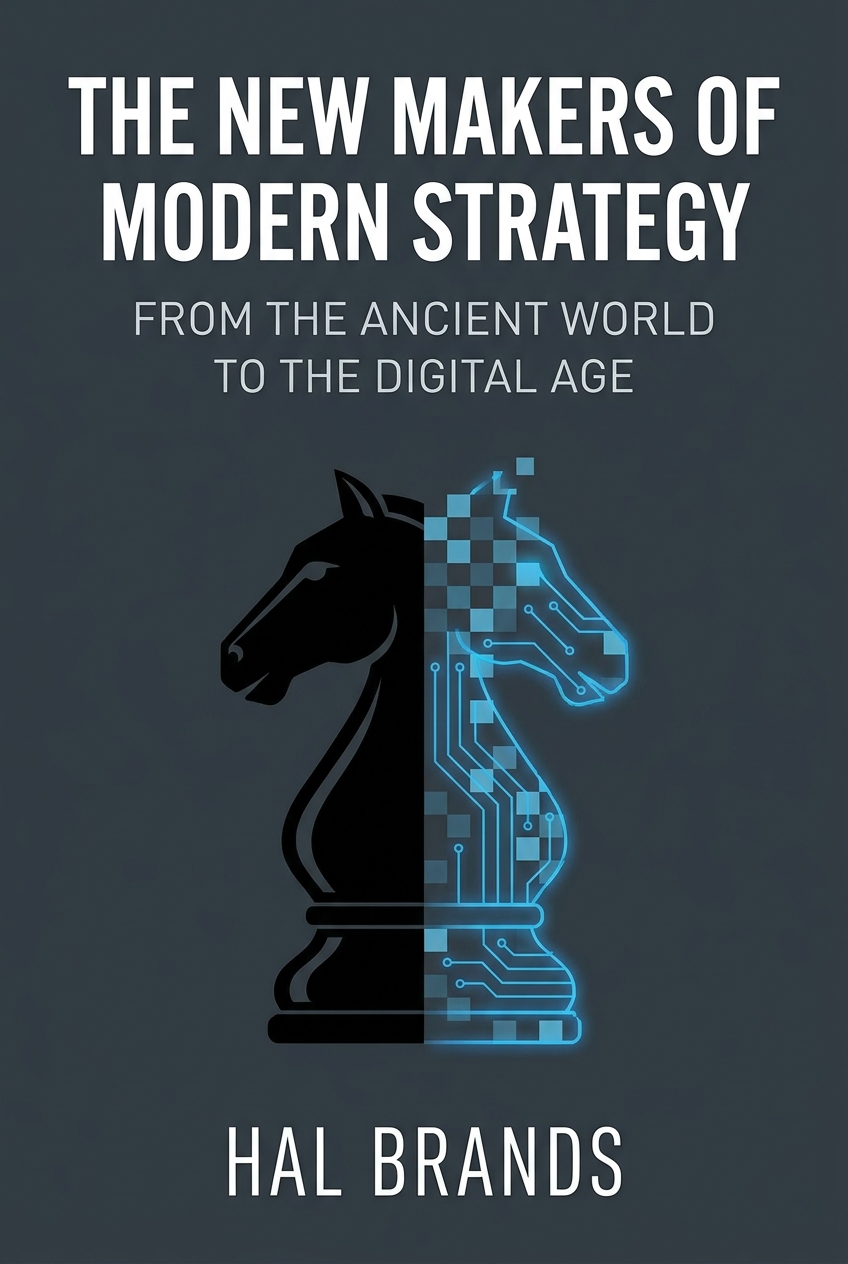
The New Makers of Modern Strategy book cover

The Script

In the early 2000s, as the internet began to reshape the music industry, Metallica faced a strategic crossroads. Their legacy as metal pioneers was secure, but their future was not. Instead of adapting quietly, they launched a high-profile, deeply unpopular lawsuit against Napster, the file-sharing service. The move was widely seen as a public relations disaster, painting the multi-millionaire rock stars as greedy and out of touch. Yet, from another perspective, it was a masterstroke of strategic clarity. It was a defiant declaration of principle about the value of creative work in a new digital age. They were forcing a painful but necessary conversation, drawing a hard line that would influence the next two decades of digital content ownership. This act of confronting a complex, disruptive system head-on—even at the cost of public goodwill—is a rare form of strategic leadership.

This kind of high-stakes decision-making, where history, technology, and human nature collide, fascinated a group of scholars at Johns Hopkins University’s School of Advanced International Studies. They saw that the classic frameworks for understanding strategy, born from the minds of figures like Clausewitz and Sun Tzu, were struggling to explain a world being reshaped by cyber warfare, economic interdependence, and non-state actors. The original "Makers of Modern Strategy," a landmark book from the 1940s, needed a successor. Hal Brands, a distinguished professor of global affairs and a prolific historian, spearheaded the effort. He and his colleagues gathered today’s sharpest strategic thinkers to create a complete reimagining—a new collection for a new era of complex challenges, moving from the battlefield to the boardroom and beyond.

Module 1: The DNA of Strategy — Timeless Principles and Tensions

Strategy is an ancient craft. But what are its core components? The book begins by dissecting the foundational ideas that have shaped strategic thought for centuries. It argues that all strategy, regardless of era, is a messy blend of theory and reality.

The first core insight is that strategy is the art of linking means to ends in a competitive world. It’s about getting what you want with what you have. This sounds simple. But its practice is endlessly complex. The book highlights Niccolò Machiavelli as a pivotal figure. Machiavelli separated strategy from morality. He argued that actions must be judged by their outcomes, not their ethical purity. This created the intellectual space for leaders to analyze power pragmatically. A ruler, he argued, must be both a lion and a fox. He must use both force and cunning. This consequentialist logic is the bedrock of modern strategic analysis.

But which means are most effective? This leads to the next insight. Strategy is an interactive process, not a rigid science. There is no universal formula for success. The most brilliant plan can fail because you always have a thinking adversary. Carl von Clausewitz, the Prussian military theorist, is central here. His work On War introduced the concept of "friction." Friction is the idea that in war, everything is simple, but the simplest thing is difficult. Unforeseen events, chance, and human error will always disrupt your plans. Because of friction, successful strategy requires flexibility. It demands judgment and the ability to adapt. As the book shows, leaders who forget this, like Napoleon in Russia, court disaster.

So what happens next? The book reveals a recurring tension. Politics is the master of strategy, not its servant. Clausewitz famously said war is the continuation of policy by other means. This means military action must serve a political purpose. It is an instrument of policy. When generals or strategists forget this, they fail. The book points to Germany in both World Wars. Germany achieved tactical and operational brilliance. Its armies won stunning victories. But it was all undone by catastrophic strategic miscalculations. The military’s goals became disconnected from a viable political end-state. This highlights a critical lesson for any organization. Your operational plan must always serve your ultimate political objective.

And here’s the thing. This political dimension means strategy is never purely military. Effective strategy integrates all instruments of national power. The book expands beyond traditional military thinkers. It includes chapters on economic strategists like Alexander Hamilton. He understood that a nation's financial system—its public credit, its ability to fund armies—was a decisive weapon. This is what the book calls the "financial sinews of strategy." True grand strategy coordinates everything. It brings together diplomatic, informational, military, and economic tools into a coherent whole.

Read More