All Books
Self-Growth
Business & Career
Health & Wellness
Society & Culture
Money & Finance
Relationships
Science & Tech
Fiction
Topics
Blog
Download on the App Store

The Therapist

An absolutely gripping psychological thriller

12 minNicole Trope

What's it about

What would you do if you were trapped in your therapist's office, and the person holding the key was the one who destroyed your life? This is the terrifying reality for Ray, who confronts his therapist, Nora, convinced she is the woman who shattered his family years ago. You'll be plunged into a tense, high-stakes confrontation where every word is a weapon. As Ray's chilling story unfolds, you'll uncover the dark secrets and devastating lies that connect them, forcing you to question who is the victim and who is the villain in this deadly game.

Meet the author

Nicole Trope is a USA Today and Amazon bestselling author whose psychological thrillers have captivated millions of readers and been translated into over a dozen languages worldwide. A former high school teacher with a background in performing arts, she has always been fascinated by the complexities of human relationships and what happens when ordinary people are pushed to their absolute limits. This deep curiosity about the darker side of human nature fuels her suspenseful, character-driven stories, making them both thrilling and intensely relatable.
Listen Now

Opens the App Store to download Voxbrief

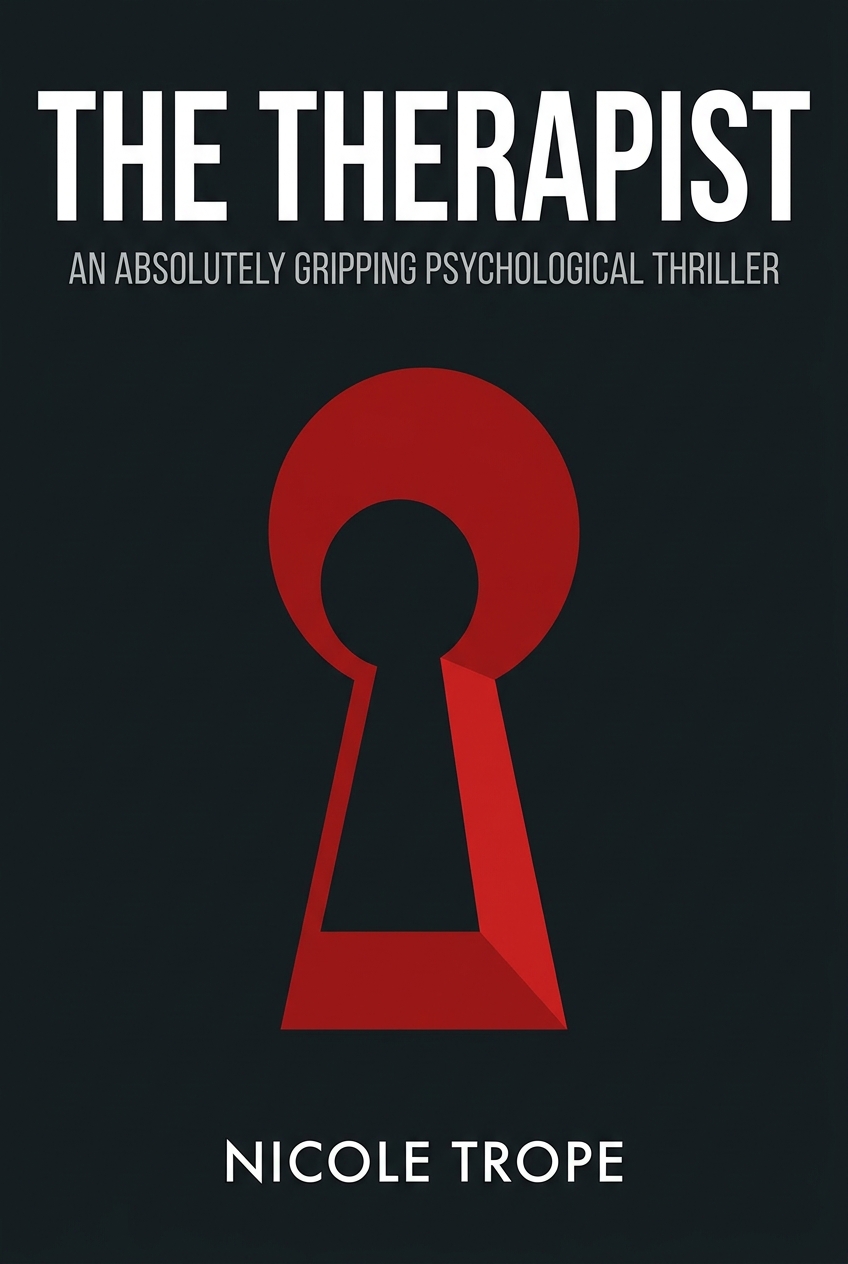
The Therapist book cover

The Script

You’re running late. You grab a coffee from your favorite cafe, the one where the barista knows your order. He smiles, hands you the cup with your name neatly written on the side, and you rush out the door. A block later, you take a sip. It’s wrong. Bitter, burnt—not your usual at all. It’s a small thing, a tiny tear in the fabric of your morning routine. But the wrongness of it lingers. You start to notice other things. The traffic light that seems to stay red a few seconds longer. The strange silence in the normally bustling lobby of your office. Each detail is small, insignificant on its own, but together they create a sense of deep unease, a feeling that the world you woke up in is no longer the one you’re moving through.

This creeping dread—the slow realization that the familiar has become menacing—is the territory Nicole Trope masterfully explores. Trope, an author known for her gripping domestic thrillers, has a unique talent for taking the ordinary and twisting it into something terrifying. She finds horror in the people and places we trust the most: the friendly neighbor, the perfect husband, the safe new home. Her work stems from a fascination with the secrets that lie just beneath the surface of everyday life, and a keen understanding of how quickly a dream can curdle into a nightmare when one small, wrong detail is pulled loose.

Module 1: The Anatomy of a Toxic Marriage

The story plunges us into the marriage of Sandy and Mike, a relationship that appears picture-perfect from the outside but is decaying from within. It's a masterclass in psychological warfare, where love has been replaced by a grim, daily dance of manipulation and resentment. The first crucial insight is that toxic relationships often operate on a system of mutual blame and provocation. Sandy and Mike don't communicate; they score points. Sandy admits to fabricating stories just to upset her husband, a behavior she justifies by pointing out his own lies. Their arguments are cyclical and predictable, with each partner using the other's vulnerabilities as ammunition. It's a closed loop of resentment where neither takes responsibility, and both feel perpetually wronged.

This leads to a second, darker reality. For some, parenthood is a trap that fuels detachment and resentment. Sandy views her son, Felix, as the anchor that ended her dreams. She sees her children as tasks to be managed—fed, schooled, and gotten "out of her hair." This profound emotional distance is a core part of her identity. She resents the sacrifice motherhood demands, a feeling that directly contradicts the societal expectation of maternal love. This detachment allows her to see her family as an obstacle to her desired life.

So what happens when reality becomes this unbearable? The characters turn to escapism. And here's the thing: External validation and fantasy become primary coping mechanisms in a broken life. Sandy doesn't seek therapy for healing. She seeks it for an audience. She craves a professional who will validate her narrative, telling her she is perfect and the world around her is damaged. Her therapy sessions are the highlight of her bleak week, a stage for her performance of victimhood. Alongside this, she nurtures a secret plan for revenge against her husband, a fantasy of exposure that gives her a sense of power and purpose. These external outlets—the therapist's ear and the private revenge plot—are the only things keeping her fragile sense of self intact.

Module 2: The Therapist's Burden

Now, let's turn to the other side of the couch. The book provides a stark look at the therapist's world, reminding us that professionals are not immune to the very human struggles they treat. A key principle here is that therapists must constantly manage their own personal struggles to maintain professional objectivity. Lana, the central therapist, is a single mother grappling with her own history of being bullied, insecurities about her appearance, and lingering resentment from her divorce. She feels guilt for taking a holiday, the very self-care she prescribes to patients. Her past trauma makes her empathetic, but it also makes her vulnerable. She projects her own insecurities onto others, assuming her patient Sandy must have been a popular girl, which fuels a subtle envy that clouds her judgment.

This internal conflict creates a constant tension. This brings us to a critical aspect of the therapeutic process: Maintaining professional boundaries is an essential but relentlessly tested discipline. Patients may develop feelings for their therapists, a phenomenon called transference. Therapists, too, can experience emotional responses, known as countertransference. Lana’s colleague, Ben, admits he is attracted to a client and seeks Lana's advice on referring her elsewhere. Lana herself has dealt with clients professing their love for her. The ethical path requires them to recognize these feelings as projections to be explored within the therapy itself. When Ben asks Lana to take on his client, she refuses, knowing that her prior knowledge of the attraction would compromise the integrity of the therapy. It's a hard "no," but it's a necessary one to protect the patient and the process.

And it doesn't stop there. The pressure on a therapist is immense, and sometimes their own history can dangerously blur their judgment. This is a powerful lesson: A therapist's past trauma can fuel a powerful drive to help, but it also risks over-involvement. Lana is haunted by the memory of a childhood friend who died by suicide. She carries the guilt of not answering her friend's final, desperate phone call. This decades-old regret now fuels an intense, almost obsessive concern for her patients. She creates "official worry time" with her own therapist to manage this anxiety. But when her patient Sandy goes missing, this past trauma kicks into high gear. It compels Lana to break professional protocol, to call the police, and eventually, to drive to Sandy’s house. Her desire to not fail someone again pushes her across a boundary from professional concern into personal, dangerous territory.

Read More