All Books
Self-Growth
Business & Career
Health & Wellness
Society & Culture
Money & Finance
Relationships
Science & Tech
Fiction
Topics
Blog
Download on the App Store

The White Book

A Novel

13 minHan Kang

What's it about

Have you ever wondered how to transform grief into something beautiful? This profound meditation explores how we can find resilience and meaning in the face of profound loss, using the color white as a powerful symbol for rebirth, memory, and the fragility of life. You'll join the narrator on a journey through a European city, uncovering a deeply personal story of a sister who died just hours after birth. This lyrical exploration reveals how confronting painful memories and embracing their starkness can lead to a powerful and unexpected form of healing.

Meet the author

Han Kang is the first Korean author to win the prestigious Man Booker International Prize, cementing her status as a monumental voice in contemporary world literature. A professor in creative writing at the Seoul Institute of the Arts, her work often explores profound questions of human suffering, memory, and fragility. The White Book is a deeply personal meditation on grief, stemming from the loss of her older sister, transforming personal tragedy into a luminous and poetic exploration of life and death.
Listen Now

Opens the App Store to download Voxbrief

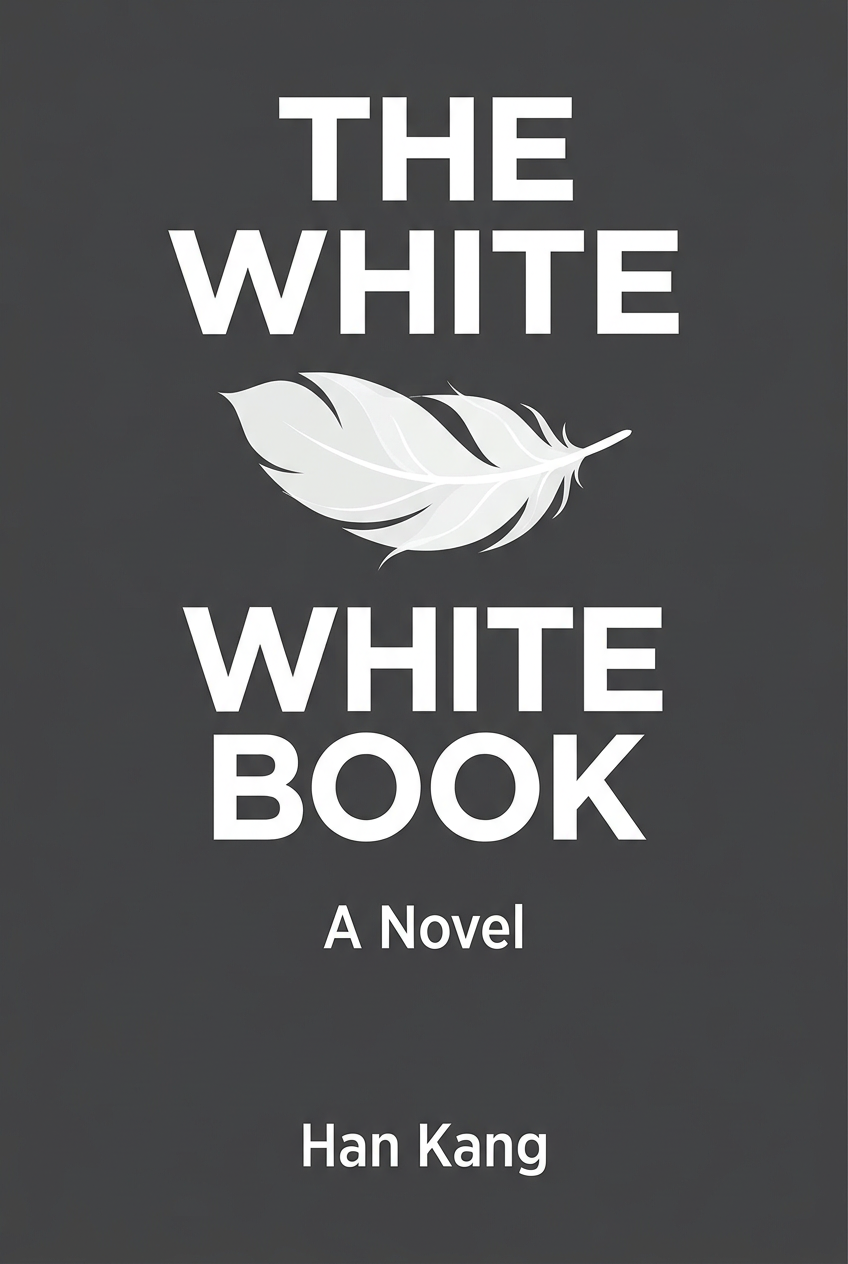
The White Book book cover

The Script

Imagine two identical porcelain rice bowls, fired in the same kiln from the same clay. One is wrapped in silk and placed in a cabinet, a pristine artifact to be admired but never touched. It remains perfect, sterile, a testament to its own form. The other bowl is used every day. It holds steaming rice, is washed by hand, and warms a person’s palms. Over the years, a hairline crack appears, not from a catastrophic drop, but from the accumulated, invisible stresses of countless meals, of being filled and emptied, of heat and cold. The crack doesn't diminish the bowl; it becomes part of its story. It is a record of a life lived.

This book is a meditation on such a life—one that was never lived. It is an exploration of the hairline crack that runs through a family, the ghost of an infant sister who survived for only two hours. South Korean author Han Kang, acclaimed for her visceral and poetic explorations of the human body and spirit, began this book with a list. She catalogued everything white that she could think of: swaddling bands, salt, snow, rice cakes. Each white object became a vessel, a way to hold the memory of the sister she never knew, to give her a life, however fragile, through language. The result is a quiet, devastatingly beautiful book that is part memoir, part novel, and part prose poem—an attempt to build a world for a ghost out of the whitest words imaginable.

Module 1: White as a Symbol of Concealment and Renewal

The book opens with the narrator in a new apartment, confronting stained walls and a damaged door. This scene introduces a core idea. White is a tool to cover, erase, and start again. The narrator decides to paint over the grime. She reasons that "white splotches are better than dirty ones." This is about making a deliberate choice to conceal the past, to impose a clean surface over a history of neglect and decay. This act of painting is a small, personal attempt at purification. It’s a fresh start, even if it’s just a layer of paint.

But the book immediately complicates this idea. As she paints, the white paint runs. It doesn't perfectly cover the deep scratches on the door. This shows us that renewal is often an imperfect and temporary process. The attempt to create a blank slate is flawed. The scars of the past remain visible just beneath the surface. The paint can’t fully erase the "violently scratched numbers" on the door, which seemed to express a history of anger and disregard. This suggests that our attempts to heal and move on are never complete. Traces of the old trauma always remain.

So what happens next? The scene concludes as snow begins to fall outside. The artificial whiteness of the paint is contrasted with the natural whiteness of the snow. The author describes the snow as "hundreds of feathers feathering down," covering the city. This introduces a final, crucial insight for this module. Nature's whiteness offers a different kind of renewal, one that is vast, ephemeral, and indifferent. Unlike the narrator's deliberate act of painting, the snow covers everything without judgment. It temporarily obscures the world, creating a sense of peace and stillness. But we know the snow will melt. This reinforces the idea that all forms of whiteness, all attempts at renewal, are ultimately transient. They offer a momentary reprieve, not a permanent solution. For anyone trying to rebuild a project, a team, or even a part of their own life after a setback, this is a powerful reminder. The first step is often to create a clean surface, but true resilience comes from accepting that the old lines will still show through.

Module 2: The Body as a Vessel for Trauma and Time

This book is deeply rooted in physical experience. Han Kang uses the body to explore how we process pain and the passage of time. One of the most striking concepts is how acute physical suffering sharpens the perception of time. The narrator suffers from migraines. She describes the pain making time feel like "discrete drops as razor-sharp gemstones." Each second is distinct, agonizing, and impossible to ignore. This is a profound insight for anyone who has pushed through intense pressure or burnout. Pain forces you into the present moment. It strips away the future and the past, leaving only the raw, immediate now.

This heightened awareness leads to another realization. Moving forward through life is often an act of necessity. The narrator describes each moment of her life as "a leap forward from the brink of an invisible cliff." She isn't leaping because she is brave. She is leaping because there is no other choice. Time moves forward, and we are carried along with it, whether we feel ready or not. This feeling is especially strong when she is in a foreign city, a place where the language and culture are unfamiliar. Her own body becomes a "sealed chamber" of memories and her mother tongue. She retreats inward, making her interior world more vivid and sometimes more oppressive. This isolation distorts her perception of the outside world, making it feel alien and mysterious.

And it doesn't stop there. The book also examines the very beginning of life, portraying it as a state of extreme vulnerability. The transition into the world is a profound shock that requires protection. A newborn is described as "the most helpless of all young animals," swaddled tightly in white bands to mitigate the "shock of its abrupt projection into limitlessness." This image of the swaddled infant connects back to the idea of the body as a fragile vessel. But it also introduces the theme of connection. The newborn quiets in its mother's arms because of a primal connection, "because of some smell" or because "the two are still connected." They communicate in a silence deeper than words. This suggests that even in our most isolated moments, there are invisible threads that tie us to others, grounded in the physical, sensory world.

Read More