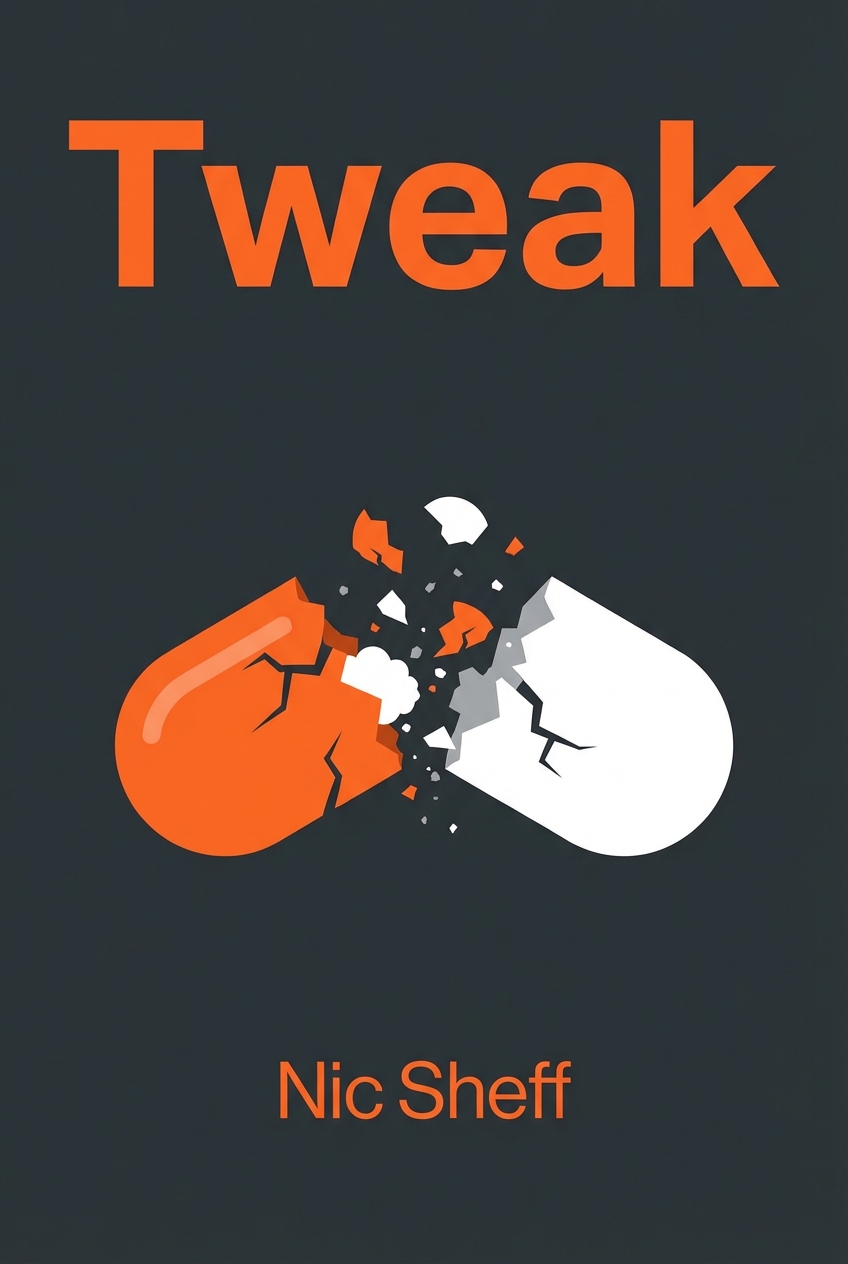
Tweak
Growing Up on Methamphetamines
What's it about
Ever wondered what the terrifying descent into drug addiction truly feels like from the inside? Tweak pulls back the curtain on the brutal, moment-by-moment reality of a young life consumed by methamphetamines, revealing the raw truth behind the cycle of relapse and recovery. This isn't just a cautionary tale; it's a visceral journey into the mind of an addict. You'll uncover the psychological triggers, the fleeting highs, and the devastating lows that define the struggle. Discover the complex family dynamics and the glimmers of hope that persist even in the darkest moments.
Meet the author
Nic Sheff is a New York Times bestselling author whose raw, unflinching memoir Tweak vividly chronicles his harrowing descent into methamphetamine addiction and his arduous journey toward recovery. Drawing directly from his own lived experience with substance abuse, relapse, and the complex path to sobriety, Sheff provides an unparalleled and deeply personal account of addiction from the inside. His work offers a powerful, humanizing perspective, giving voice to the struggles faced by countless individuals and their families.
Opens the App Store to download Voxbrief

The Script
Think of your brain as the most sophisticated security system ever designed, with one catastrophic flaw. Deep in its code, there's a switch that, once flipped, re-routes every command. The primary directive is no longer to protect the body, to nurture relationships, or to build a future. Instead, every circuit, every alarm, every ounce of energy is redirected to serve a new, singular purpose: acquire the substance that flipped the switch. The system will lie to its closest allies, dismantle its own fortifications, and trigger self-destruct sequences, all while reporting that everything is functioning perfectly. It will trade long-term survival for short-term relief, convincing itself that the poison is the cure. This is the lived reality of addiction, a complete hijacking of the self where the person you were becomes a ghost haunting the machinery.
The most harrowing account of this internal hijacking comes from someone who spent his youth systematically dismantling his own life, piece by piece. Nic Sheff didn't just theorize about this neurological coup; he documented it from the inside as it was happening. "Tweak" is a raw, real-time transmission from the heart of the storm. Written in the brief, lucid moments between relapses, the book is a collection of journal entries that capture the frantic, paranoid, and desperate reality of a young man addicted to methamphetamine. It exists because Sheff, in the midst of his addiction, felt an urgent need to record the truth of his experience, creating a brutal and unfiltered chronicle of his descent.
Module 1: The Gradual Descent and the Illusion of Control
Addiction rarely announces itself. It creeps in, often disguised as something else. For Nic Sheff, it started with socially acceptable substances in his youth. He got drunk for the first time at eleven. In high school, he smoked pot daily, framing it as a well-deserved reward for good grades. It was a habit his social circle and even his family accepted. This normalization is the first critical misstep. Substance use often begins with the false belief that it is a harmless, controllable part of life.
This belief creates a dangerous blind spot. Nic felt he was in charge. He could quit anytime, he told himself. But his progression tells a different story. From marijuana, he moved to cocaine, Ecstasy, and eventually to crystal meth and heroin. Each step down was rationalized. Each new substance was just an experiment. What’s truly unsettling is how this mirrors decision-making in other high-stakes environments. We often believe we can manage a risky project, a toxic work culture, or a burnout-inducing pace, telling ourselves we can pull back at any moment. Sheff’s story is a stark reminder that gradual escalation can completely erode control before we even realize it's gone.
This leads to a profound disconnect between our internal state and our outward actions. Addiction systematically dismantles personal values, relationships, and self-worth in a self-perpetuating cycle of harm and guilt. Nic didn't want to hurt his family. He didn't want to steal from his father or get arrested in front of his younger siblings. Yet, he did. He describes the feeling of being held captive by an "insatiable monster." After each harmful act, the shame and guilt were so overwhelming that the only escape he knew was to get high again. This creates a vicious feedback loop. The drug becomes both the source of the pain and the only perceived solution to it. It’s a cycle of causing harm, feeling shame, and using again to numb that shame.
And here's the thing: the drug itself provides a powerful, deceptive reward. The high offers an illusory feeling of perfection and wholeness that becomes the primary driver of the addiction. Nic’s first time using crystal meth made him feel "whole for the first time." He describes the high as "perfection," a state where the world feels miraculous and new. It’s a feeling of childlike wonder, free from the anxiety and inhibitions of sober life. This is the magnetic pull that keeps the cycle going. The addict is desperately chasing an elusive, perfect feeling they once experienced. Understanding this dual motivation is key. They are pursuing a powerful, albeit fleeting, positive.
Module 2: The Anatomy of Relapse and the Sobering Reality
Sobriety isn't a finish line. It's the starting point of a new, ongoing battle. "Tweak" provides a granular look at why relapse happens, and it’s rarely a single moment of weakness. It’s a slow drift, a series of small compromises that build up over time.
Before a major relapse, Nic had been sober for 18 months. He was doing well. But then, the subtle erosion began. Relapse is often preceded by the neglect of support systems and the re-emergence of emotional turmoil. He stopped calling his sponsor, a key figure in his recovery. He attended meetings less frequently. He went off his prescribed psychiatric medication. Simultaneously, he became obsessively entangled in a painful, unrequited romance. When the woman rejected him, the emotional devastation was the final trigger. He was isolated from his support network and emotionally vulnerable. The foundation for sobriety had crumbled long before he picked up a drug.
Building on that idea, a deceptive thought pattern takes hold. The illusion of controlled use is a primary catalyst for relapse. After 18 months of sobriety, Nic convinced himself he was different now. He believed he could return to "casual use." He thought he had learned his lesson and could manage it this time. This is what one character in the book calls the "disease of amnesia." The addict forgets. They forget the desperation, the pain, the humiliation. The memory of the suffering fades, and the romanticized memory of the high remains. He notes that after months of sobriety, "The bad shit starts to not seem really that bad." This cognitive distortion is a fatal flaw in self-assessment.
So what happens next? The relapse itself is a violent, transformative crisis. It's not a gentle slide. For Nic, it was a brutal summer that shattered any remaining illusions of control. This experience forced him to confront a terrifying truth: he could not simply quit at will. This was a matter of powerlessness over his addiction. This moment of "hitting bottom" is often misunderstood. Hitting bottom is the cumulative, unbearable weight of physical agony and psychological despair. For Nic, it manifested as the unrelenting sickness of withdrawal: vomiting, shaking, hallucinations, and a feeling of profound hopelessness. It’s a state of complete physical and emotional defeat. And in that moment of absolute brokenness, something new becomes possible.