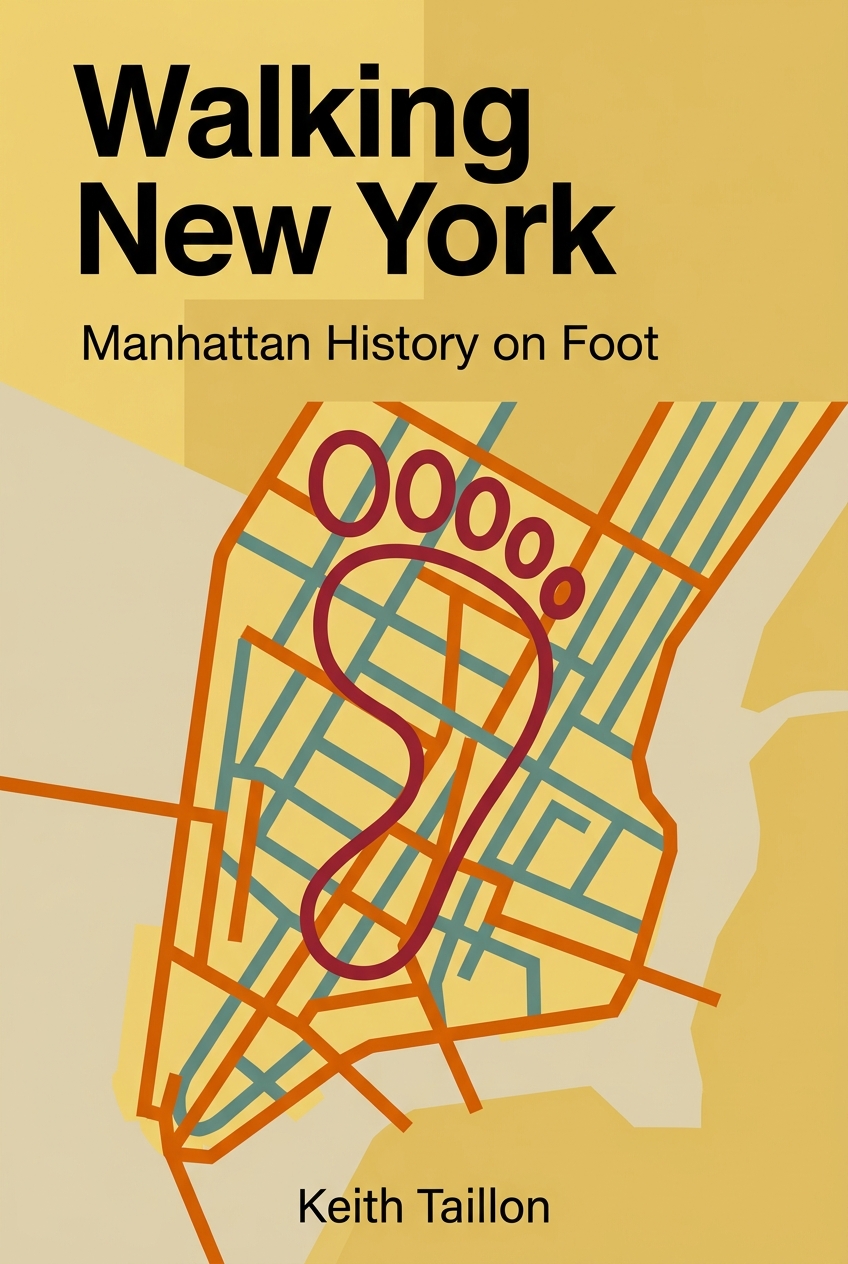
Walking New York
Manhattan History on Foot
What's it about
Ever wondered what stories are hidden beneath your feet on the streets of Manhattan? Discover the city's secret history, from forgotten colonial-era scandals to the birth of iconic skyscrapers, all by simply taking a walk. This is your guide to seeing New York like never before. You'll learn how to trace the evolution of neighborhoods like Greenwich Village and the Financial District through their architecture and layout. Uncover the exact spots where pivotal historical events unfolded, transforming ordinary street corners into living museums. Get ready to turn your next stroll into a fascinating journey through time.
Meet the author
As a licensed New York City tour guide with over two decades of experience, Keith Taillon has led thousands of visitors through the five boroughs on foot. His passion for urban history began while researching his own family's roots in the Lower East Side, leading him to uncover the countless hidden stories embedded in Manhattan's streets. Keith combines his deep historical knowledge with a storyteller's gift, transforming a simple walk into an unforgettable journey through the city's rich and layered past.
What's it about
Ever wondered what stories are hidden beneath your feet on the streets of Manhattan? Discover the city's secret history, from forgotten colonial-era scandals to the birth of iconic skyscrapers, all by simply taking a walk. This is your guide to seeing New York like never before. You'll learn how to trace the evolution of neighborhoods like Greenwich Village and the Financial District through their architecture and layout. Uncover the exact spots where pivotal historical events unfolded, transforming ordinary street corners into living museums. Get ready to turn your next stroll into a fascinating journey through time.
Meet the author
As a licensed New York City tour guide with over two decades of experience, Keith Taillon has led thousands of visitors through the five boroughs on foot. His passion for urban history began while researching his own family's roots in the Lower East Side, leading him to uncover the countless hidden stories embedded in Manhattan's streets. Keith combines his deep historical knowledge with a storyteller's gift, transforming a simple walk into an unforgettable journey through the city's rich and layered past.
The Script
You've reached the end of the free preview.