All Books
Self-Growth
Business & Career
Health & Wellness
Society & Culture
Money & Finance
Relationships
Science & Tech
Fiction
Topics
Blog
Download on the App Store

Washington

A Life

12 minRon Chernow, Scott Brick

What's it about

Think you know the real George Washington? This fresh biography peels back the layers of the stoic figure on the dollar bill to reveal a passionate, ambitious, and surprisingly flawed man whose fierce drive forged a nation. You'll discover the untold stories behind his greatest triumphs and most painful setbacks. Learn how his early military blunders shaped his leadership, how he navigated treacherous political rivalries, and how his personal struggles with power, wealth, and slavery defined his complicated legacy. This is the definitive portrait of the leader you only thought you knew.

Meet the author

Ron Chernow is the Pulitzer Prize-winning historian whose definitive biographies have reshaped our understanding of America's most influential figures, including George Washington and Alexander Hamilton. A former journalist, Chernow applies his investigative rigor to history, meticulously researching archives to uncover the nuanced, human stories behind the public myths. This unique approach allows him to bring historical giants to life with psychological depth and narrative power, revealing the individuals who forged a nation.
Listen Now

Opens the App Store to download Voxbrief

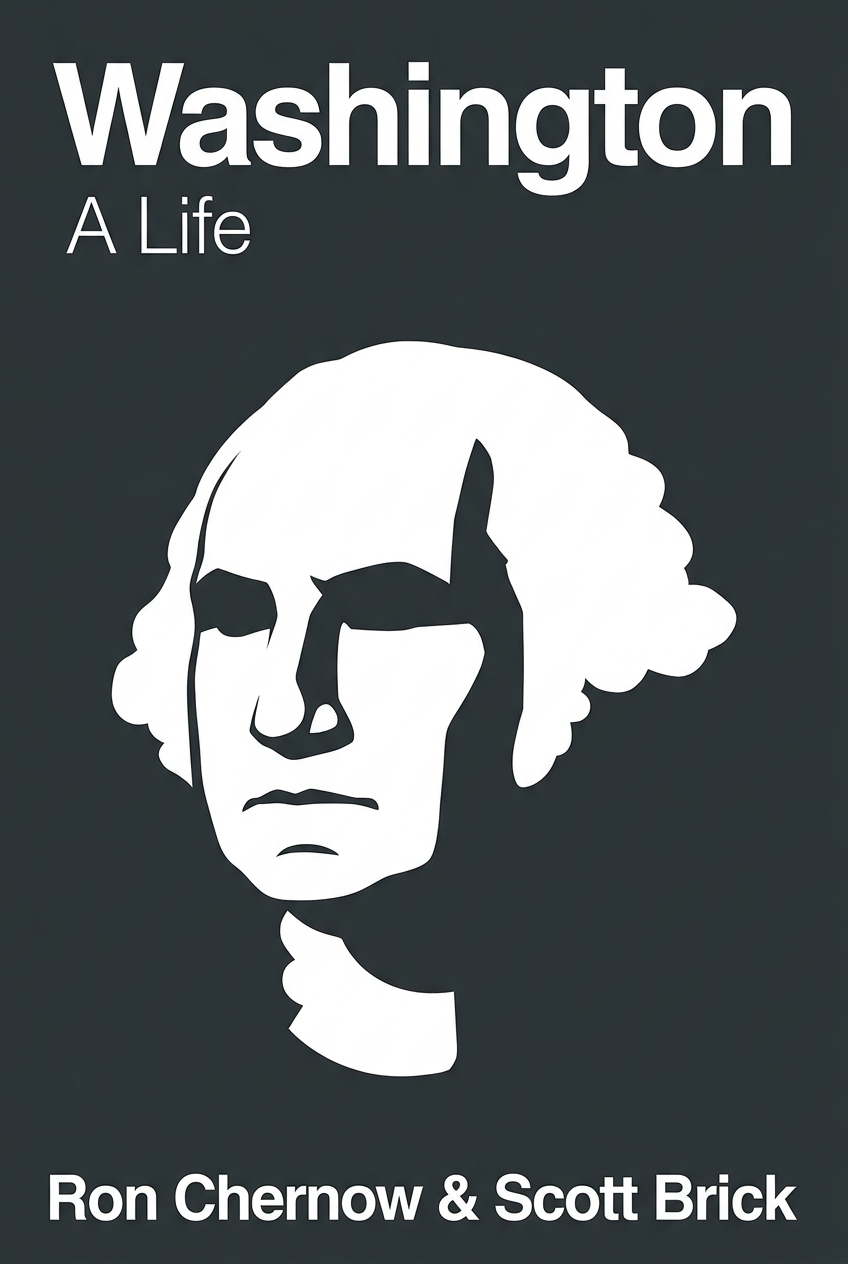
Washington book cover

The Script

Think of the most famous person you can. Now imagine that their entire public persona—the one etched into history books and national holidays—is a carefully constructed performance. This was a lifelong, disciplined effort to suppress a fiery, ambitious, and sometimes insecure personality beneath a veneer of stoic, republican virtue. It's like finding out that a beloved, stoic film icon known for quiet dignity was, in private, a passionate, restless soul who spent every waking moment consciously taming their own nature for the camera and for the public good. This person was forging a new archetype of leadership in real time, with the future of a nation as the ultimate audience.

That hidden, intensely human figure is the George Washington that Pulitzer Prize-winning biographer Ron Chernow felt was missing from the American story. After penning acclaimed biographies on figures like Alexander Hamilton and John D. Rockefeller, Chernow noticed that Washington had become a 'marble man'—imposing but cold, admirable but distant. He was driven to chisel away that marble to reveal the flesh-and-blood man underneath: the passionate young officer, the shrewd businessman, the masterful political operator who understood that his every action, from his battlefield conduct to his quiet retirement, was setting a precedent. Chernow spent years immersing himself in Washington's vast personal papers to understand the immense internal struggle required to become an icon.

Module 1: The Forge of Ambition

Before he was a general or a president, Washington was a young man consumed by ambition. His early life was a relentless quest for status, wealth, and military honor. This drive was forged in the insecurity of his youth. Unlike his older half-brothers, he did not receive a classical European education. His father’s early death left him with a lesser inheritance. This sense of being second-best ignited a fire in him.

His first major test came during the French and Indian War. Here, we see a young, often rash, officer. He makes significant blunders, including a disastrous expedition to Fort Duquesne that resulted in a bloody defeat. But his defining quality is how he responds. Washington relentlessly cultivated his reputation and learned from every mistake. He wrote detailed reports of his exploits, often casting himself in the most heroic light possible. He understood public perception. He lobbied tirelessly for a commission in the regular British army, an honor he desperately craved but was repeatedly denied. This rejection was a pivotal moment. It taught him a bitter lesson about the glass ceiling for colonials in the British Empire. It planted the seeds of a revolutionary identity.

From this foundation, Washington focused on building his personal empire. He mastered the art of strategic self-control to achieve his goals. He was a man of intense passions and a formidable temper. But he learned to keep these emotions under a tight leash. He projected an aura of cool, stoic dignity. This was a calculated performance. It was a tool he used to command respect and project authority. Whether managing his Mount Vernon plantation or navigating social circles, he was always conscious of the image he was presenting. This discipline would become his most powerful weapon as a leader.

And here's the thing. His ambition was deeply tied to his land. Washington’s pursuit of wealth through land speculation was central to his identity and power. He was obsessed with westward expansion. He acquired hundreds of thousands of acres across the frontier. This pursuit of wealth was deeply tied to his vision for America. For Washington, land represented independence, legacy, and the future of America itself. His vision of an expanding, agrarian republic was born from his own experience as a planter and surveyor. This relentless drive for more land also put him in direct conflict with British policies that restricted settlement, further pushing him toward the patriot cause.

Module 2: The Revolutionary Leader

When the Second Continental Congress needed a commander for its fledgling army, Washington was the obvious choice. He had military experience, a commanding presence, and, crucially, he was a Virginian. His appointment helped unite the southern colonies with the rebellion brewing in New England. He arrived in Cambridge wearing his military uniform, signaling his readiness for the role.

Washington’s leadership during the Revolutionary War was defined by his strategic genius for survival. In fact, he lost more battles than he won. His true genius lay elsewhere. Washington’s greatest strategic achievement was simply keeping the Continental Army intact. This was his primary objective. He knew he just had to outlast the British army. He had to keep a credible fighting force in the field until the British will to fight, and their treasury, was exhausted. This meant executing strategic retreats, avoiding decisive engagements he couldn't win, and enduring brutal winters like the one at Valley Forge. His perseverance in the face of starvation, disease, and mutiny was the glue that held the revolution together.

Building on that idea, we see another core strength. He mastered the difficult art of managing political relationships. Washington served a fractious Continental Congress that often failed to provide the funds, supplies, and soldiers he desperately needed. He was constantly navigating the egos of his subordinate generals, some of whom conspired to replace him. Through it all, Washington wrote thousands of letters. He pleaded, cajoled, and reasoned with politicians. He skillfully managed his public image to maintain popular support. He understood that the war was as much a political struggle as a military one. His deference to civilian authority, even when it infuriated him, set a crucial precedent for civil-military relations in the new republic.

So what happens next? The war is won, and Washington faces his most important moment. After the victory at Yorktown, some of his officers, frustrated with Congress’s inaction on their pay, considered a military coup. They floated the idea of making Washington a king. Washington’s response was swift and decisive. He gathered his officers at Newburgh, New York. He gave a passionate speech condemning their proposal as a betrayal of everything they had fought for. In a moment of high drama, he fumbled for his spectacles, remarking, “I have not only grown gray but almost blind in the service of my country.” This display of vulnerability and unwavering principle shattered the conspiracy. By publicly rejecting absolute power, Washington cemented the republic’s foundation on civilian rule. He voluntarily resigned his commission and returned to his farm at Mount Vernon. This act stunned the world. It was his most powerful statement, proving the revolution was about liberty.

Read More