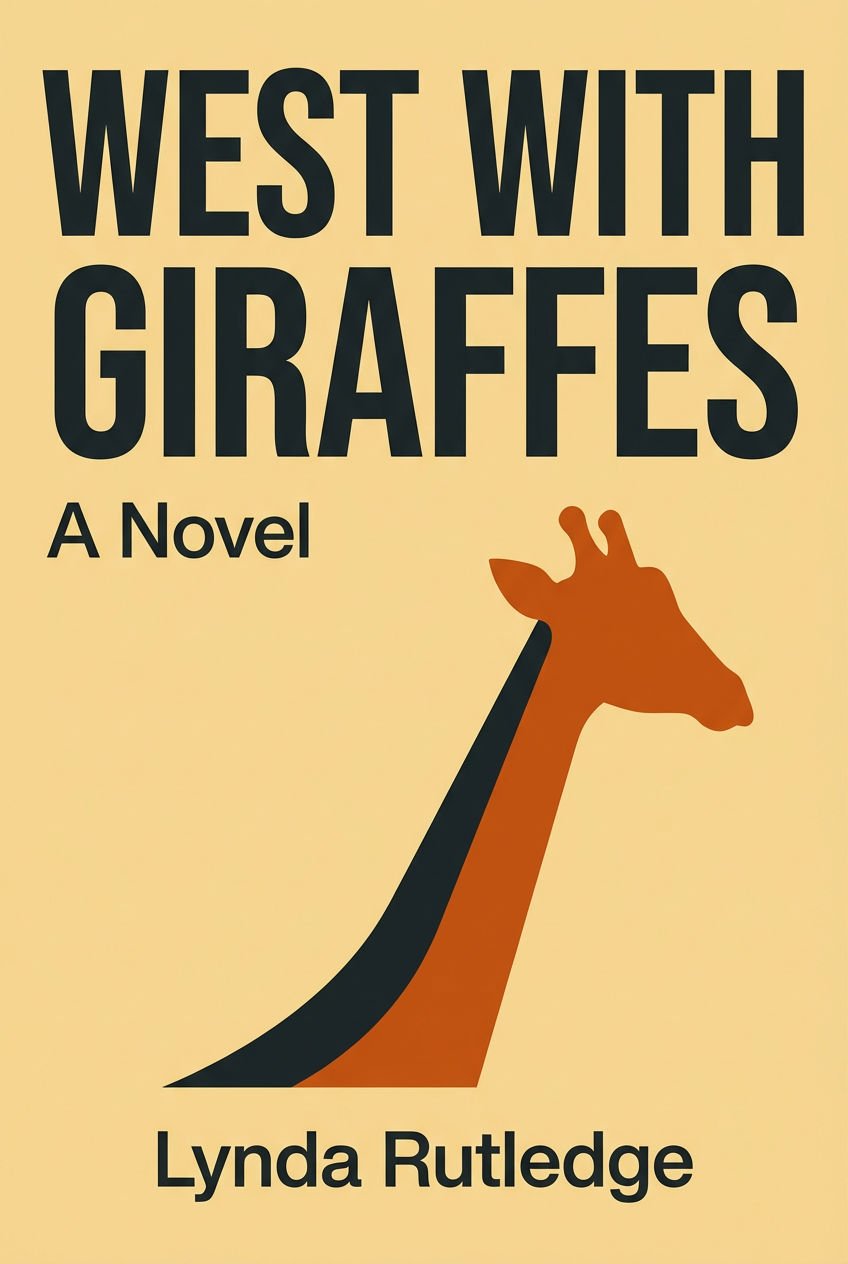
West with Giraffes
A Novel
What's it about
Ever wondered what it would take to transport two giraffes across the country during the Great Depression? Get ready for an unforgettable journey inspired by a true story, where the greatest adventure isn't the destination, but the humanity and hope discovered along the way. You'll join a 17-year-old Dust Bowl survivor and a crusty zookeeper on their perilous 12-day road trip from New York to the San Diego Zoo. Discover how this unlikely trio navigates hurricanes, misadventures, and unexpected kindness, revealing powerful lessons about resilience, connection, and finding your own way home.
Meet the author
Lynda Rutledge is a lifelong animal lover and the award-winning author of seven books, including the international bestseller West with Giraffes, which has sold over one million copies. Her extensive career as a professional writer, including work as a journalist, copywriter, and book reviewer, honed her remarkable storytelling abilities. Rutledge’s deep research into the true story of the giraffes’ cross-country journey, combined with her passion for untold histories, allowed her to bring this forgotten slice of Americana to vibrant life.
Opens the App Store to download Voxbrief

The Script
In the middle of the Great Depression, with dust storms choking the sky and hope in short supply, a strange caravan set out from the East Coast. Its cargo was two young giraffes, survivors of a hurricane that had wrecked their ship. Their destination was the fledgling San Diego Zoo, a cross-country journey of over 3,000 miles in a specially built truck. To the people who saw them pass—farmers whose fields had turned to grit, families living out of jalopies, children who had never seen such a creature—they were a spectacle of impossible grace, a two-headed, eighteen-foot-tall rumor of a world beyond the dust.
The sight of these animals, serene and otherworldly against a backdrop of national despair, sparked a kind of collective wonder. They were a traveling miracle, a reminder that something beautiful and strange could not only exist, but endure. This incredible, almost-forgotten true story is what captivated author Lynda Rutledge. A lifelong animal lover and former journalist, Rutledge stumbled upon the historical account of the giraffes' journey and was stunned that such an epic migration had been largely lost to time. She saw a powerful narrative about resilience, unlikely friendships, and the search for beauty in the hardest of times. Rutledge spent years piecing together the fragments, using the real-life event as a framework to imagine the inner lives of the people who undertook this remarkable, quixotic quest.
Module 1: The Power of an Unlikely Purpose
The story begins with a 105-year-old man named Woodrow Wilson Nickel. He's at the end of his life, living in a Veterans Affairs hospital. He hears a news report that giraffes are facing extinction. This news ignites something in him. He feels a desperate need to write down his story. His story is about a journey he took almost ninety years earlier. It was a journey with two giraffes.
This sets up the first major idea. A compelling purpose can emerge from the most unexpected places. For Woodrow, the catalyst is the potential loss of a creature he once knew. He writes, "Few true friends have I known and two were giraffes." This statement is profound. It shows that his connection to these animals defined his life. He feels if his story dies with him, it would be a "crying shame." His writing becomes an act of defiance against forgetting, a way to preserve a legacy tied to a connection with the natural world.
This leads to a second insight. Personal stories are vital legacies that must be preserved. Woodrow writes so his memories might "find their way to you," an unknown future reader. This highlights the human need to transmit experience. In a world of fleeting data, a personal narrative becomes a tangible artifact. It’s a bridge across time. The story shows its power when a VA liaison, buried in paperwork, finds Woodrow's writing. She forgets her schedule. She becomes completely absorbed in his tale. The story itself has a magnetic pull.
And here's the thing. Resilience often anchors itself in a single, vivid memory. Woodrow has lived through the Dust Bowl, a World War, and a century of turmoil. Many of his memories have faded. But his journey with the giraffes remains in "living technicolor." He says it's "always with me, always alive, always within reach." This specific, positive memory became his psychological anchor. It sustained him through decades of hardship. For anyone navigating high-stress environments, this is a powerful reminder. The experiences that truly shape us are often the moments of unexpected wonder and connection.
Module 2: Survival, Hope, and the Human-Animal Bond
Now, let's go back to 1938. We meet a young Woodrow, a seventeen-year-old orphan of the Dust Bowl. He’s tough, scrappy, and alone. He survives a hurricane in New York that kills his cousin and leaves him homeless. Amidst the chaos, he sees something impossible. Two giraffes, survivors of the same storm, being loaded onto a truck.
This encounter introduces a critical theme. Encounters with the natural world can spark transformative hope. For Woodrow, the giraffes are a "storybook" reality in a bleak world. He had been taught that animals were just tools or food. But when he locks eyes with the injured female giraffe, he feels a soulful connection. It pulls him out of his own misery. He learns they are headed to California, the "Promised Land" for Dust Bowl migrants like him. Suddenly, he has a purpose. This flickering hope drives him to chase the truck, steal a motorcycle, and do whatever it takes to be part of their journey.
Building on that idea, the journey becomes a crucible for empathy. We see a spectrum of human behavior toward animals. On one end, there's the cruel driver, Earl, who taunts the giraffes. On the other is the Old Man, Riley Jones, the gruff zookeeper in charge. He speaks to the giraffes in a gentle "giraffe-speak." He tends to their wounds with skilled compassion. Empathy is a choice, especially under pressure. Woodrow finds himself caught in the middle. His survivalist instincts tell him to be selfish. But his growing bond with the giraffes awakens a protective urge. He starts to see them as fellow travelers.
So here's what that means for us. In our own "journeys," whether it's a project or a career, we encounter obstacles. The book suggests that the path forward is about what we choose to connect with. Woodrow's journey is a physical one, but it’s also an internal one. A journey in pursuit of a meaningful goal shapes your identity. He starts as a passive victim of his circumstances. By choosing to follow the giraffes, he becomes an active participant in his own story. He moves from being a lost orphan to a young man with direction, a man finding his place in the world alongside these magnificent creatures.