All BooksSelf-GrowthBusiness & CareerHealth & WellnessSociety & CultureMoney & FinanceRelationshipsScience & TechFiction
Download on the App Store

Wuthering Heights

14 minEmily Brontë

What's it about

Ever wondered why some connections turn destructive, consuming everything in their path? This summary of Wuthering Heights unpacks the dark side of obsessive love and how it can poison generations. Get ready to explore the untamed passion that both binds and destroys. You'll discover the psychological forces driving Catherine and Heathcliff's toxic relationship, a story of social ambition, betrayal, and relentless revenge. Learn how childhood wounds and class divisions fuel a cycle of cruelty that echoes through the wild, desolate moors of northern England.

Meet the author

Emily Brontë was an English novelist and poet whose only novel, Wuthering Heights, is now considered a masterpiece of English literature. A reclusive and intensely private figure, Brontë drew inspiration from the wild, desolate beauty of the Yorkshire moors surrounding her isolated home. This stark, windswept landscape profoundly shaped her literary vision, infusing her work with its gothic atmosphere, untamed passion, and revolutionary narrative structure. Her unique genius created a timeless story of love, obsession, and revenge that continues to haunt and captivate readers worldwide.
Listen Now
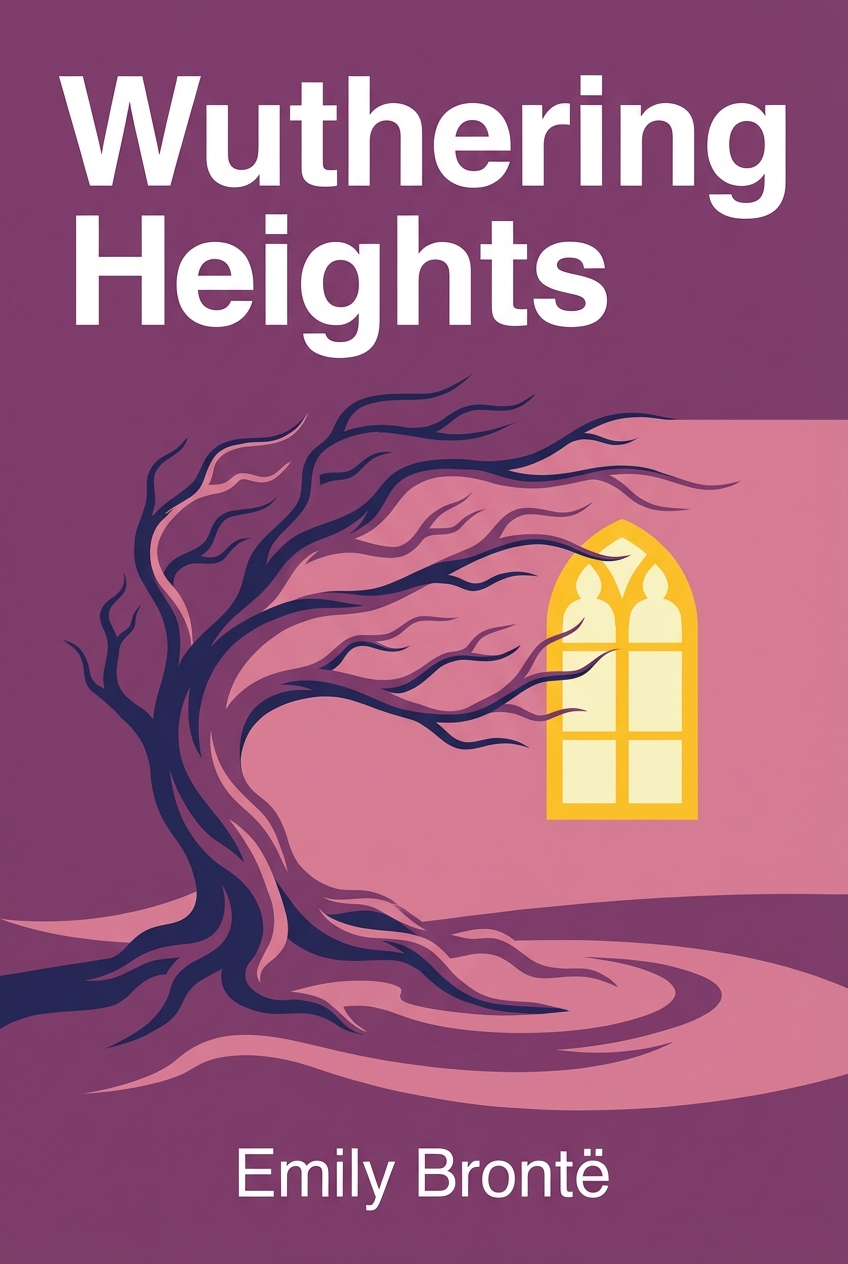
Wuthering Heights book cover

The Script

In a remote country house, a child’s imaginary world is born of fierce, spectral figures locked in an endless cycle of revenge. This is an entire kingdom, complete with its own history, laws of nature, and a brutal, passionate logic. The characters who roam its moors are forces of nature, their love as destructive as a wildfire, their hatred as enduring as the stone walls that enclose them. This private universe, created out of isolation and fierce intellect, becomes so real that its boundaries blur with the outside world, pulling visitors into its turbulent orbit and staining the very landscape with its passions.

The story of this haunting, self-contained world is inseparable from the mind that conceived it. Emily Brontë, a reclusive and intensely private woman, spent most of her life on the isolated Yorkshire moors, a landscape as stark and wild as the one she would immortalize in fiction. Alongside her brilliant siblings, she created the fictional world of Gondal, a sprawling saga of war and romance that served as the training ground for her literary genius. Her only novel, Wuthering Heights, was a piece of that fiercely guarded inner world made public—a world where the raw, untamed passions, deemed too savage for polite society, were allowed to run their devastating course.

Module 1: The Environment as a Character

The first thing to understand is that the setting is an active force shaping the people within it. Brontë presents two starkly different environments: Wuthering Heights and Thrushcross Grange.

First, let's look at Wuthering Heights. The name itself comes from a local word, "wuthering," describing the ferocious wind that batters the house. It's isolated, stark, and built to withstand a constant storm. The trees are permanently bent. The architecture is defensive. Inside, it’s just as harsh. It's a primitive, unwelcoming space filled with aggressive dogs and grim furniture. The physical environment directly mirrors the psychology of its inhabitants. People raised at the Heights—like Heathcliff and the elder Catherine—are wild, passionate, and resistant to social norms. They are products of a world that is constantly at war with the elements.

This leads to a critical insight. A hostile environment breeds hostility. The characters at the Heights are suspicious, rude, and inhospitable. When the narrator, Lockwood, first arrives, he is met with chained gates and snarling servants. Heathcliff, the master, greets him with closed teeth. The household operates on a baseline of conflict. It’s a perfect incubator for the resentment and violence that drive the novel. For any leader, this is a powerful reminder. The culture and physical environment you create aren’t neutral. They actively shape behavior, either fostering collaboration or breeding suspicion and turf wars.

But flip the coin, and we have Thrushcross Grange. It’s the complete opposite. The Grange is a place of refined luxury. It has crimson carpets, crystal chandeliers, and a sense of calm, ordered civilization. Its residents, the Lintons, are gentle, well-mannered, and physically frail. They represent social grace and restraint. However, Brontë shows us the weakness in this cultivated world. Civilized comfort can foster weakness and an inability to handle conflict. When Heathcliff and Catherine first spy on the Linton children, they see them crying and fighting over a lapdog. Their problems are petty. Their courage is non-existent. When confronted with real danger, they shrink.

So here's what that means for us. The novel sets up a fundamental tension between two operating models. There’s the raw, authentic, but brutal world of Wuthering Heights. And then there's the comfortable, stable, but shallow world of Thrushcross Grange. Catherine Earnshaw’s tragedy begins the moment she tries to belong to both.

Read More