All Books
Self-Growth
Business & Career
Health & Wellness
Society & Culture
Money & Finance
Relationships
Science & Tech
Fiction
Topics
Blog
Download on the App Store

Zero Limits

The Secret Hawaiian System for Wealth, Health, Peace, and More

12 minJoe Vitale, Ihaleakala Hew Len

What's it about

What if you could erase the hidden mental blocks holding you back from success, wealth, and inner peace? Discover the ancient Hawaiian secret of Ho'oponopono, a surprisingly simple method for clearing subconscious negativity and taking 100% responsibility for your reality to unlock unlimited potential. Learn the four magic phrases—"I'm sorry, please forgive me, thank you, I love you"—that Dr. Ihaleakala Hew Len used to heal an entire ward of criminally insane patients without ever meeting them. This summary teaches you how to apply this powerful technique to cleanse your own perceptions and manifest a life with zero limits.

Meet the author

Dr. Ihaleakala Hew Len was a master teacher of the updated Ho'oponopono practice, famously credited with helping to heal an entire ward of criminally insane patients using this ancient Hawaiian method. His profound journey with this spiritual cleansing process led him to partner with marketing guru and author Joe Vitale. Together, they distilled these once-secret principles into Zero Limits, sharing a powerful system for removing mental obstacles to achieve wealth, health, and profound inner peace for a global audience.
Listen Now

Opens the App Store to download Voxbrief

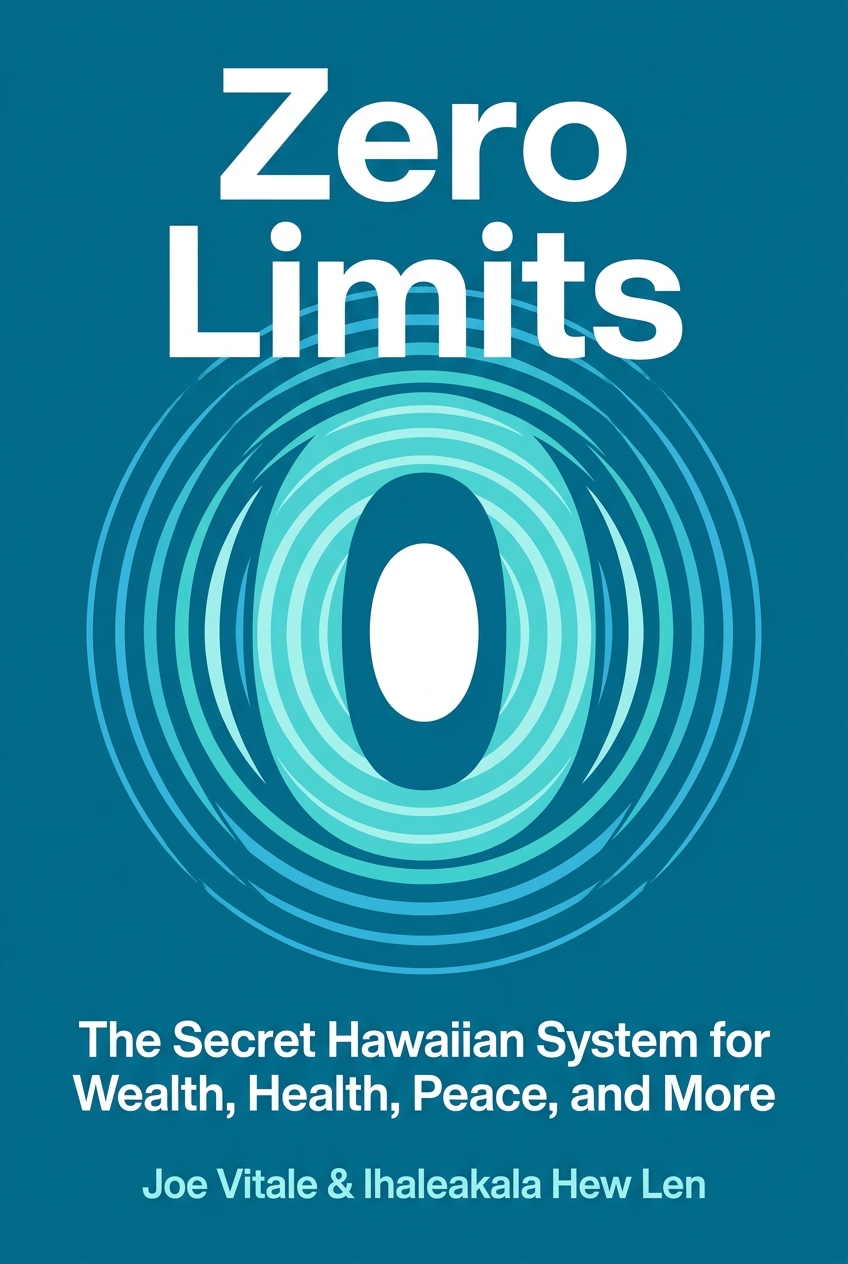
Zero Limits book cover

The Script

We treat our minds like an unruly courtroom, where we are simultaneously the judge, the prosecutor, and the defendant on trial for our own thoughts and feelings. We relentlessly cross-examine our anxieties, present evidence against our past mistakes, and pass harsh sentences of guilt and regret. This internal legal battle is exhausting, and it’s based on a fundamental error: the belief that we are somehow separate from the 'data' being presented. We think we are in control, presiding over the case, when in reality, we are simply experiencing the echoes of a program running on repeat. The most radical idea is that to find peace, we don't need a better legal strategy or a more lenient judge; we need to fire the entire court.

This exact predicament is what baffled marketer and author Joe Vitale when he first heard about a therapist who had apparently healed an entire ward of criminally insane patients without ever meeting them in person. The story seemed impossible, a violation of every known psychological principle. This therapist, Dr. Ihaleakala Hew Len, didn't analyze, diagnose, or counsel his patients. Instead, he worked on himself, using a simple yet profound Hawaiian method of forgiveness and cleaning called Ho’oponopono. His claim was that the turmoil he saw in the patients was simply a reflection of turmoil within himself. By taking 100% responsibility and cleaning his own internal 'data,' the outside world—including the patients—began to heal. Vitale's skepticism drove him to investigate, and what he discovered became the foundation of "Zero Limits," a book that documents his journey from disbelief to understanding this bizarre yet powerful approach to total responsibility.

Module 1: The World of Problems and the Burden of Memory

We first meet Ted Mendez at a low point. He's a university student adrift, nursing a hangover and a broken heart. His academic career is failing. His personal life is a mess. His story illustrates a familiar state of being. It's a world where problems are external. They are caused by other people, difficult circumstances, or bad luck.

This is the default human condition, according to the book. We are run by subconscious programs, or "memories," that dictate our reality. They are energetic data, patterns of thought and emotion inherited from our ancestors and accumulated throughout our lives. They replay constantly, creating our experiences of conflict, lack, and pain. Ted’s story is a perfect example. He is devastated when he learns the woman he likes, Julia, is with someone else. He blames his academic tutor for his poor job prospects. He feels like a victim of circumstance.

This leads to a crucial insight. Problems are memories replaying within us. When Ted feels anger toward his academic rival, Professor Anderson, the book suggests this is a memory of being belittled replaying inside Ted. When Governor Ramón Villacrés engages in corrupt political dealings, he is acting from a memory that says "everyone has a price." His jealousy toward his superior, Alina Cicerón, is another program replaying.

So, what happens next? These replaying memories lead to predictable, often destructive behaviors. Ted drinks to numb his emotional pain. Ramón risks his family and career for power. These are automatic reactions driven by old data, not conscious choices made in a clear state of mind. The book argues that as long as we are run by these memories, we are not truly free. We are living in a prison of the past, constantly reacting instead of creating.

Read More